












Project Background
Hangzhou Xiaoshan International Airport is a major aviation hub in the Yangtze River Delta region, with an existing annual passenger throughput capacity of 33 million for terminals T1, T2, and T3. To meet growing aviation demand, the airport launched its Phase III expansion project, including the construction of a new Terminal 4. With a total floor area of approximately 670,000 square meters, the project comprises multiple functional zones such as the terminal building, south corridor, finger corridors, transportation center, energy center, and passenger overnight building. It includes six substations, housing a large number of low-voltage distribution cabinets and UPS cabinets.
Project Requirements
The safe and stable operation of the airport’s power supply and distribution system is critical. Electrical connection points inside low-voltage switchgear are prone to increased contact resistance and localized overheating due to oxidation, loosening, dust, and other factors, which may lead to fire hazards. Therefore, real-time temperature monitoring of sensitive equipment is required. The key requirements for wireless temperature measurement products in this project include:
- Non-battery powered (inductive power harvesting), with a starting current ≥5A
- Wireless frequency: 470MHz
- Temperature measurement range: -50℃ to +125℃, accuracy ±1℃
- Transmission distance ≥150 meters in open space
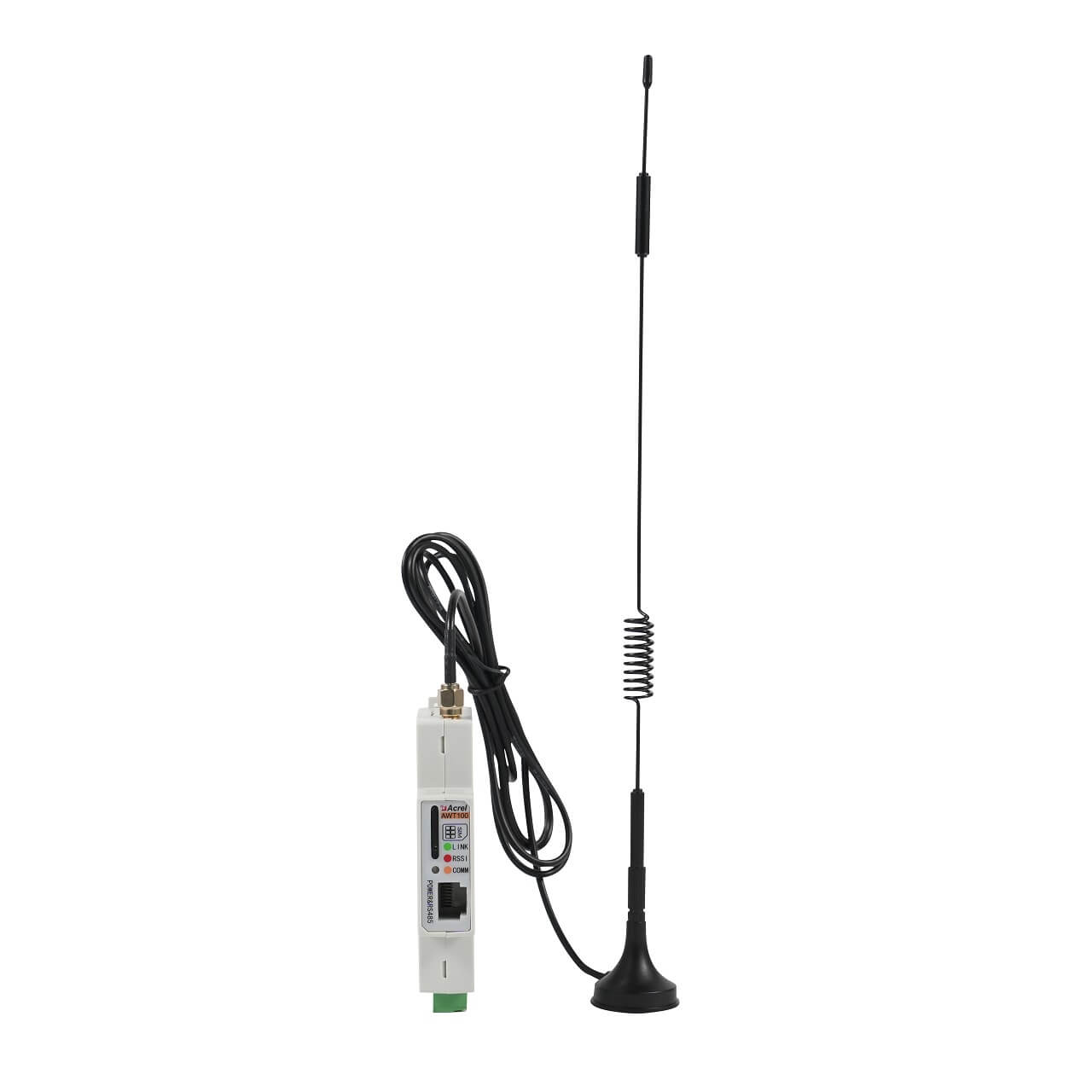
- Receiver supports DC 24V power supply and RS485 communication
- Temperature monitoring device supports at least 240 measuring points, with Ethernet port, alarm output, temperature curve, and data logging functions
Product Drawing Scheme
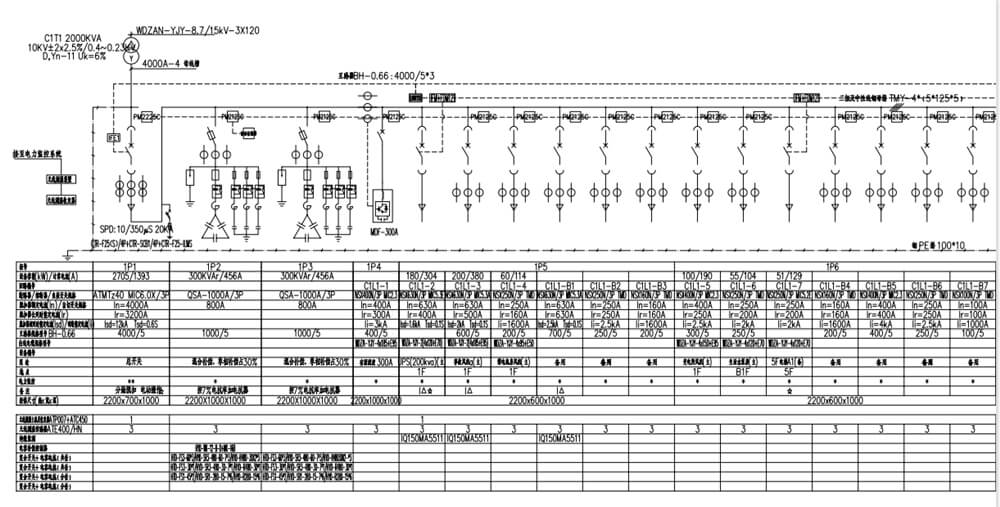
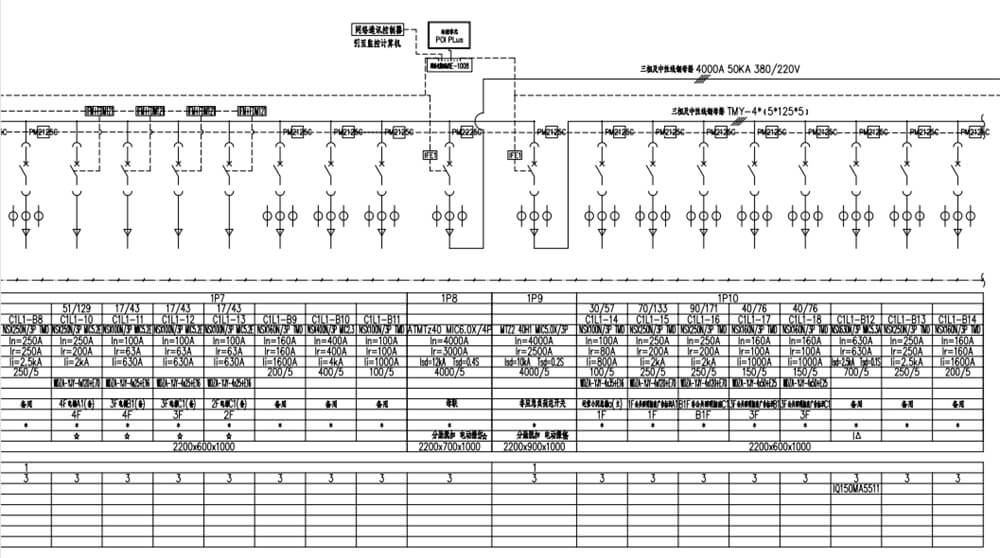
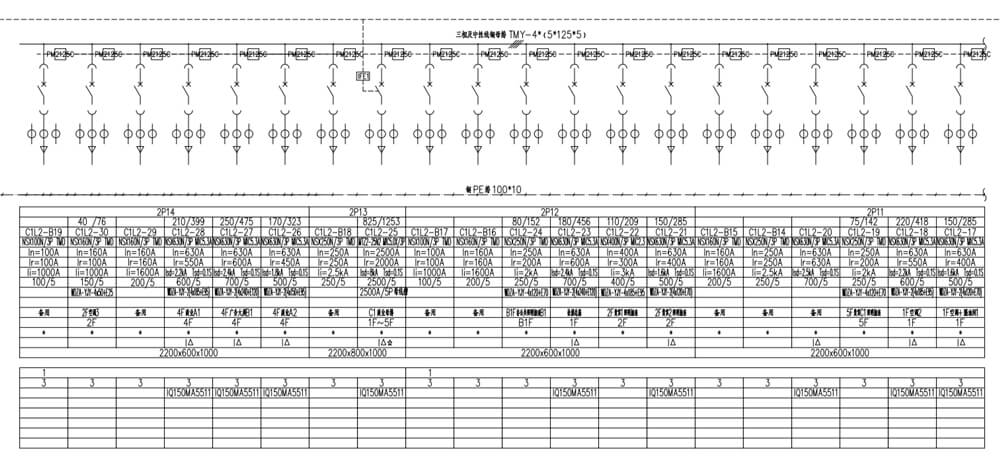
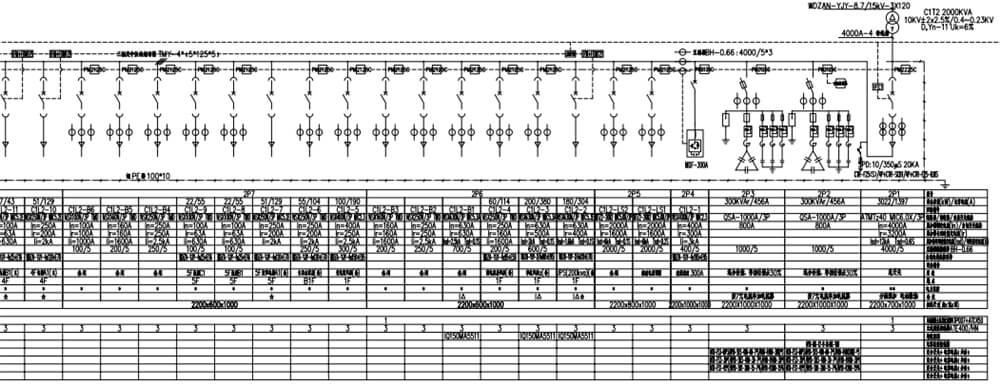
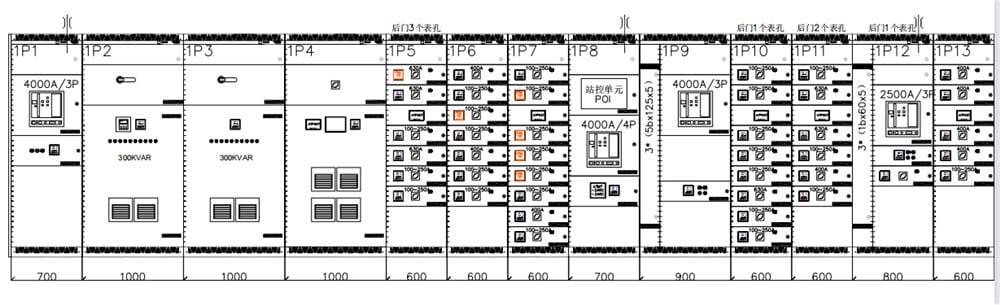
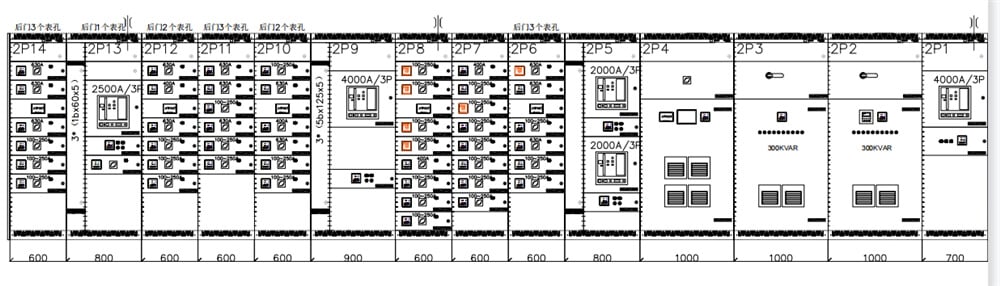
The power distribution rooms of this project are: terminal building C1–C6, south corridor S1–S2, finger corridor connecting corridor N1–N4, transportation center N1–N3 OC–OD S1–S3, energy center, UPS cabinets C1–C5 N1–N4 S1–S2, and passenger overnight building A and B. Taking the terminal building C1 low-voltage power distribution room as an example, the wireless temperature measurement product drawing is as follows:
Product Solution
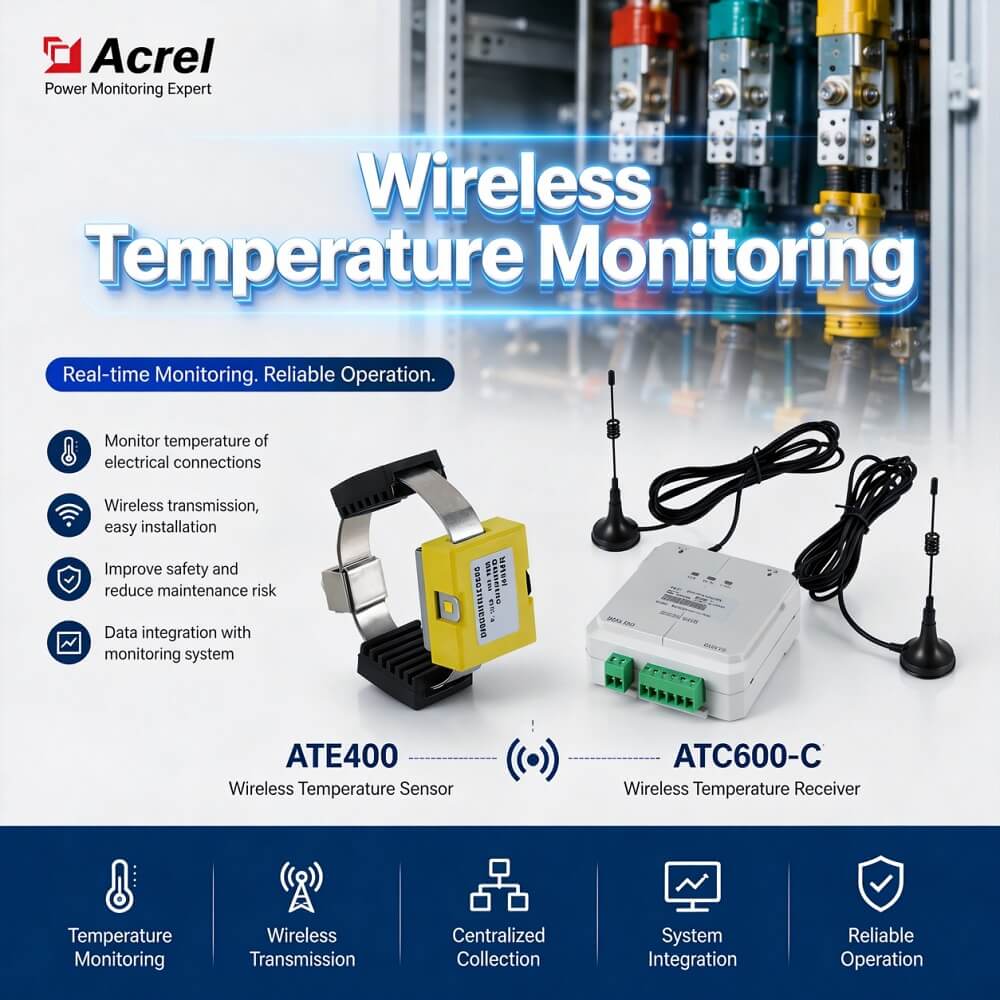
Based on project requirements, the following Acrel wireless temperature measurement products were selected:
| Model | Key Parameters | Installation |
|---|---|---|
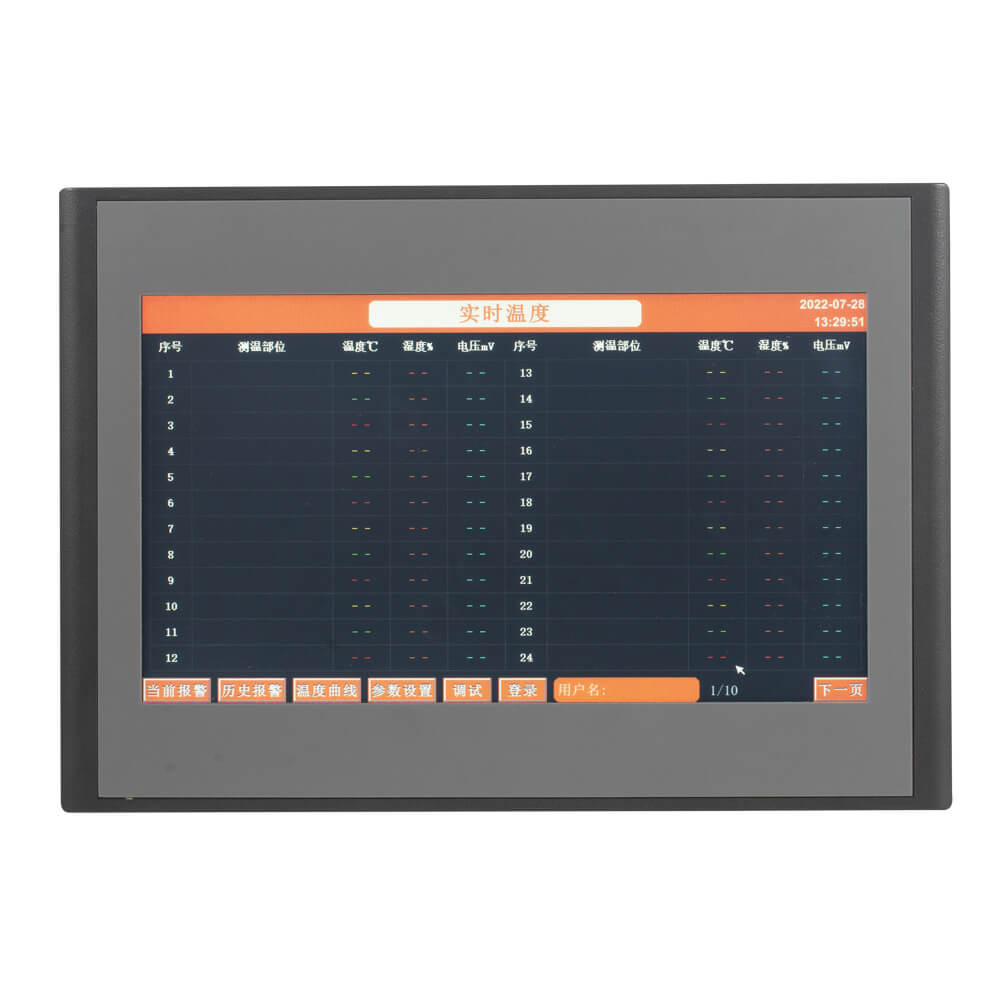
| ATP007 | 7-inch touch screen, DC24V power, Ethernet+RS485, receives up to 4 ATC450-C or 1 ATC600-C | Flush mounting |
| ATC450-C | Wireless receiver, DC24V power, receives 60 sensors, Modbus protocol | 35mm DIN rail / screw fixing |
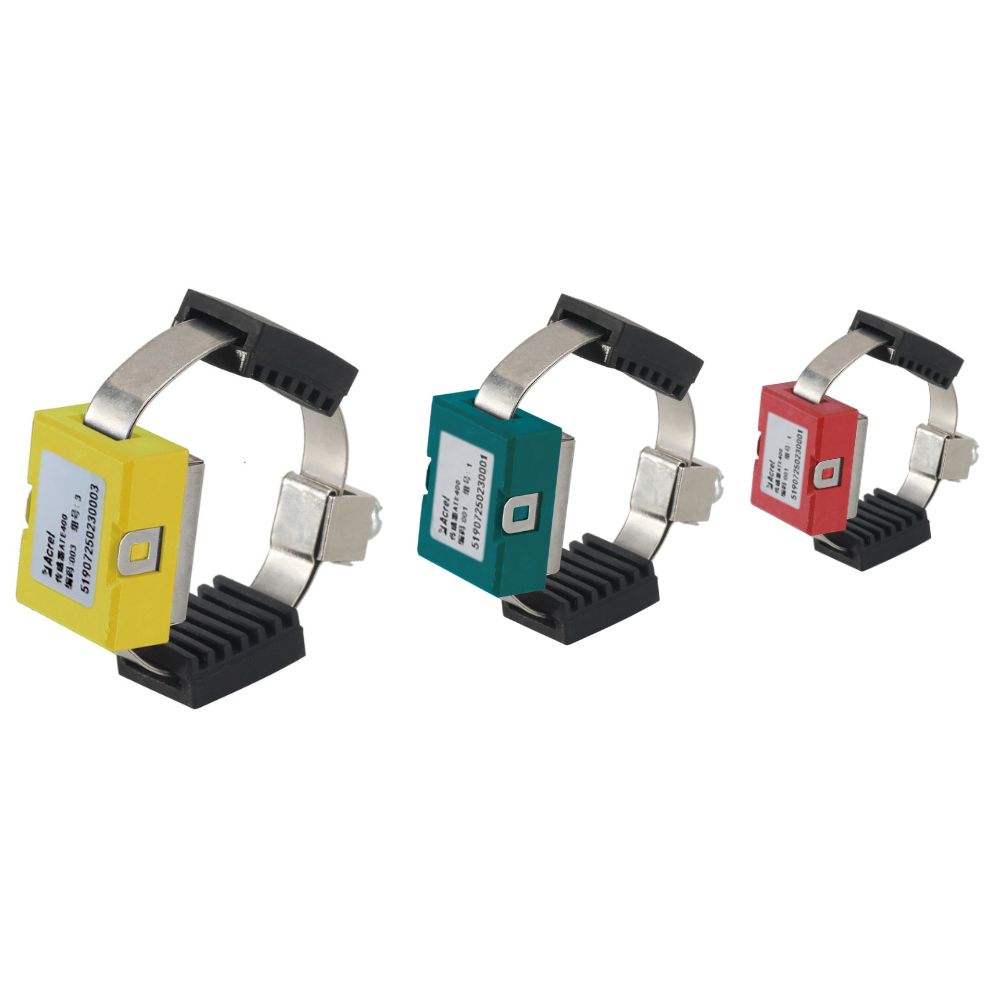
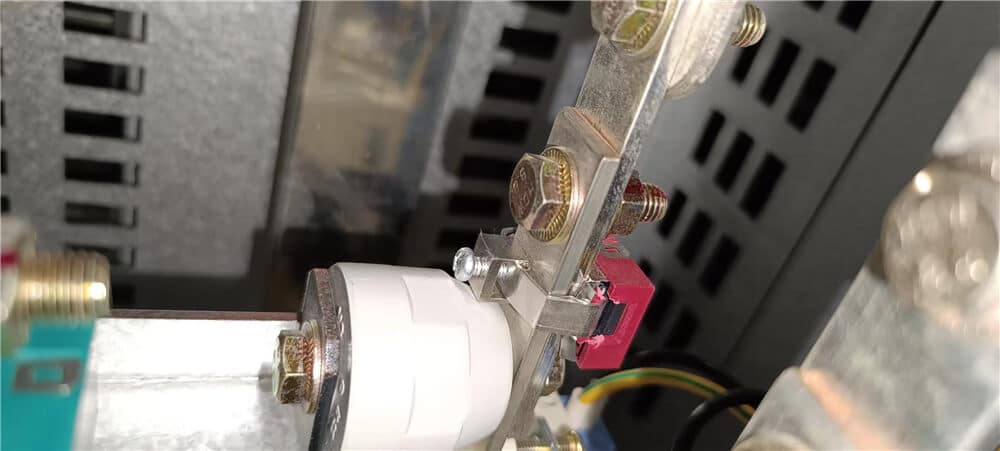
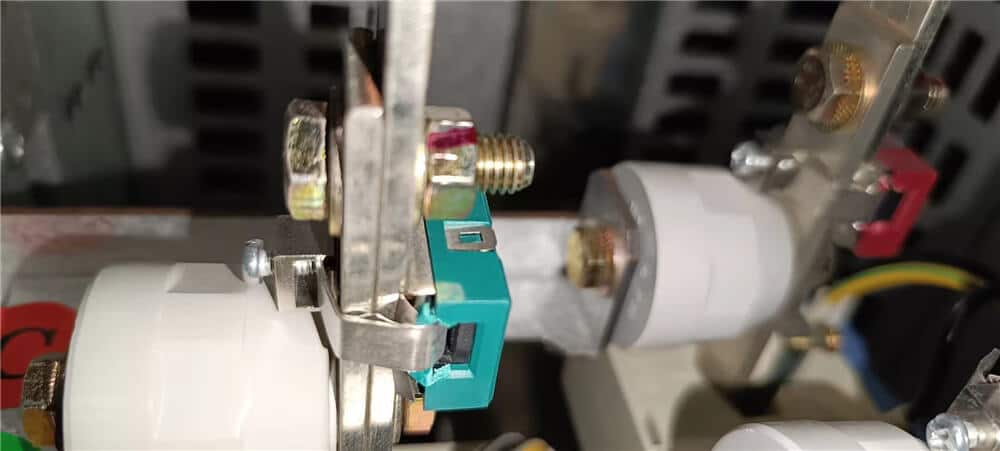
| ATE400 | CT inductive power harvesting (starting current ≥5A), 470MHz, 150m range in open space | Alloy strip fixing & power harvesting |
Application Scale
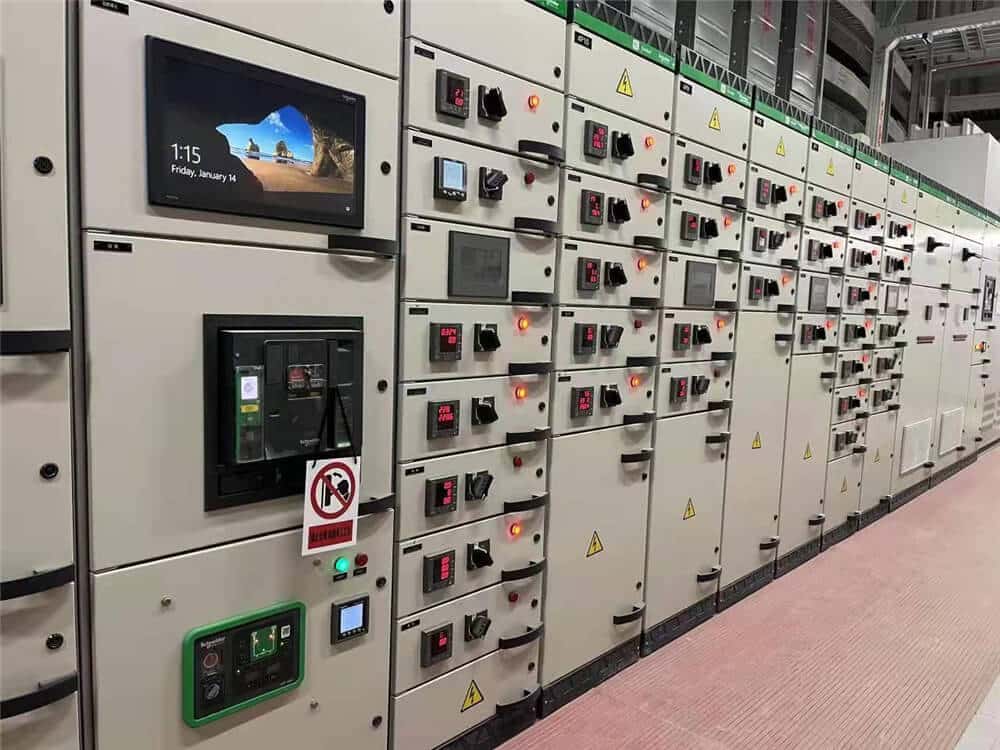
A total of 12,366 wireless passive temperature sensors, 471 wireless receivers, 471 power supply modules, and 471 touch screens were installed across the entire project. Taking the C1 low-voltage distribution room in the terminal building as an example, each incoming/ bus-tie circuit breaker cabinet was equipped with 6 temperature measuring points, each active filter compensation cabinet with 3 points, and each outgoing drawer cabinet with 3 points per circuit. Receivers and power modules were installed inside the cable compartment, while touch screens were flush-mounted on the cabinet front.
System Functions
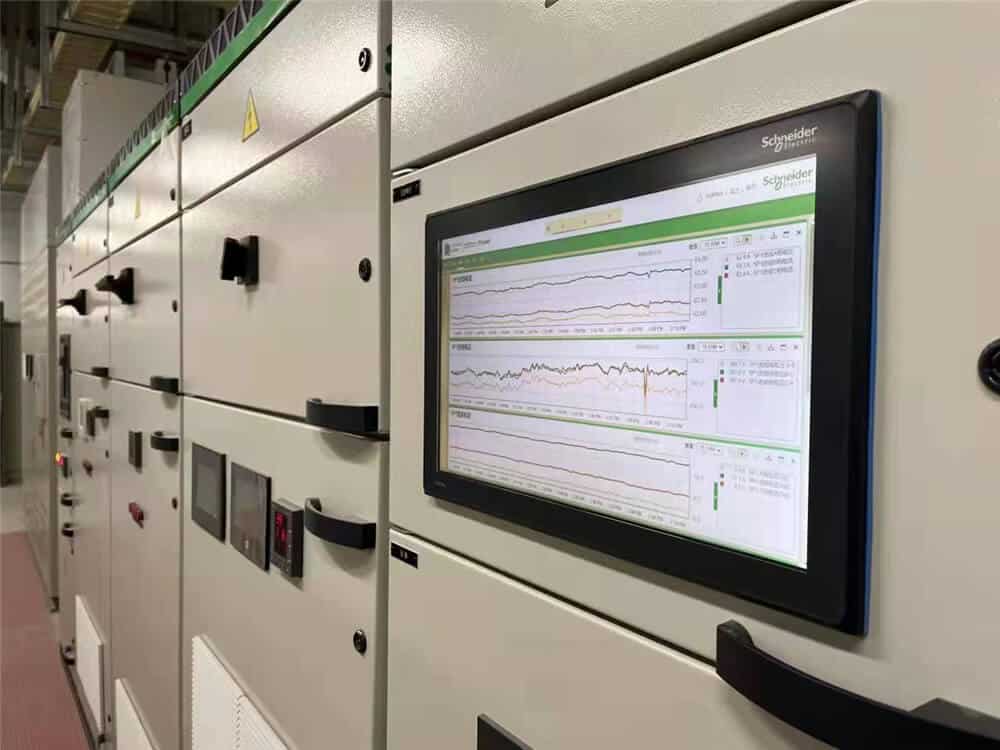
Upon power-on, the touch screen displays the “Real-time Temperature” interface, allowing users to view temperature values from all measuring points. After logging in, users can set high-temperature alarm thresholds and sensor names via the “Parameter Settings” menu. When temperature exceeds the set threshold, the screen shows an alarm and the buzzer sounds. The system provides “Current Alarm” and “Historical Alarm” logs (at least 120 records), as well as a temperature curve function that records data every 5 minutes and stores up to 300 days of history.
On-site Installation Photos
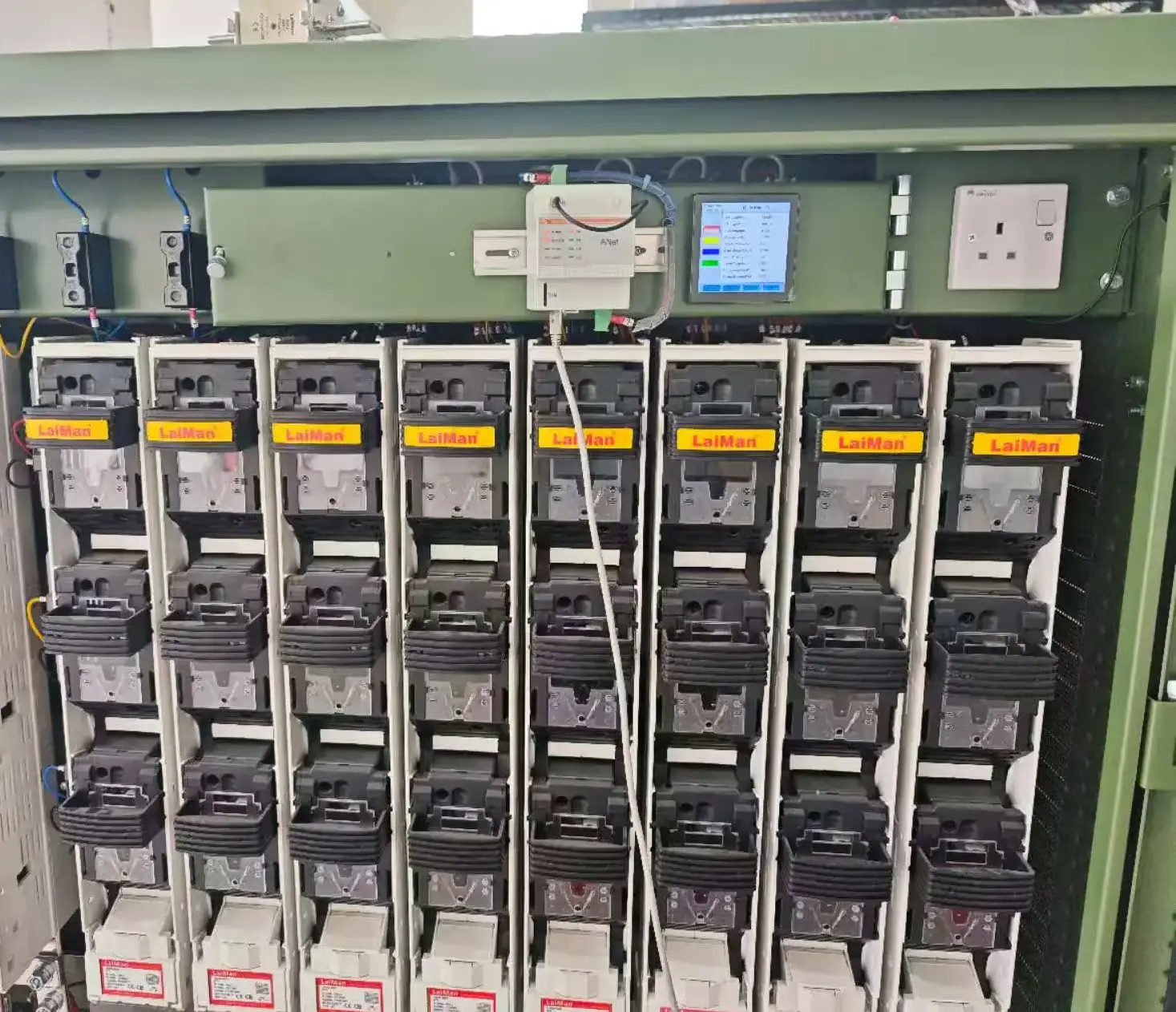
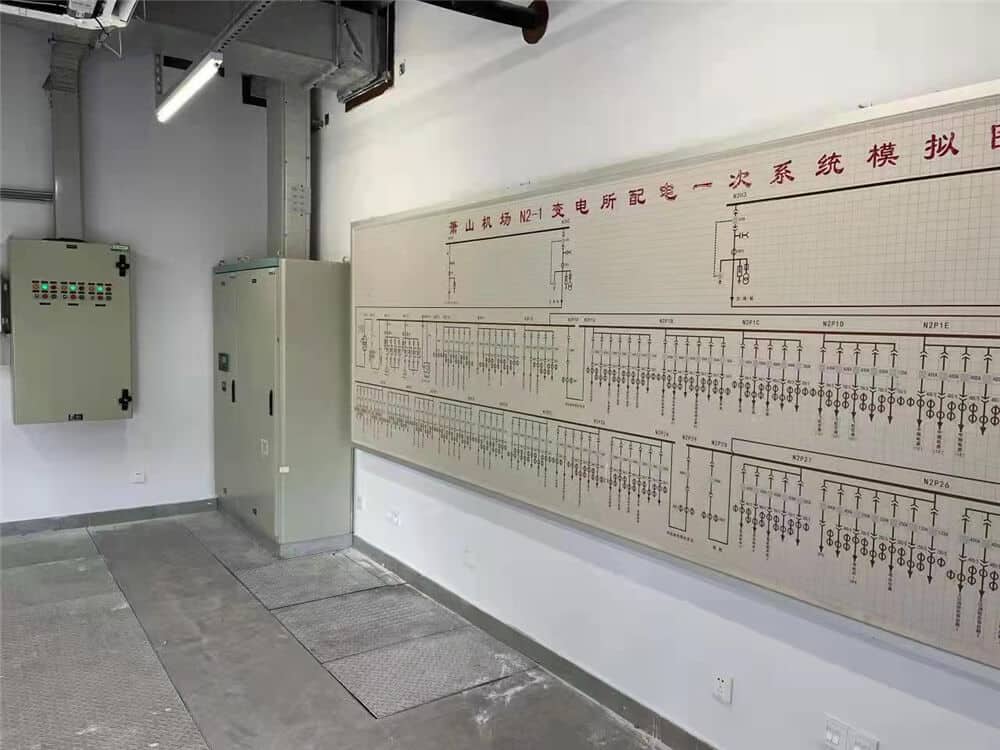
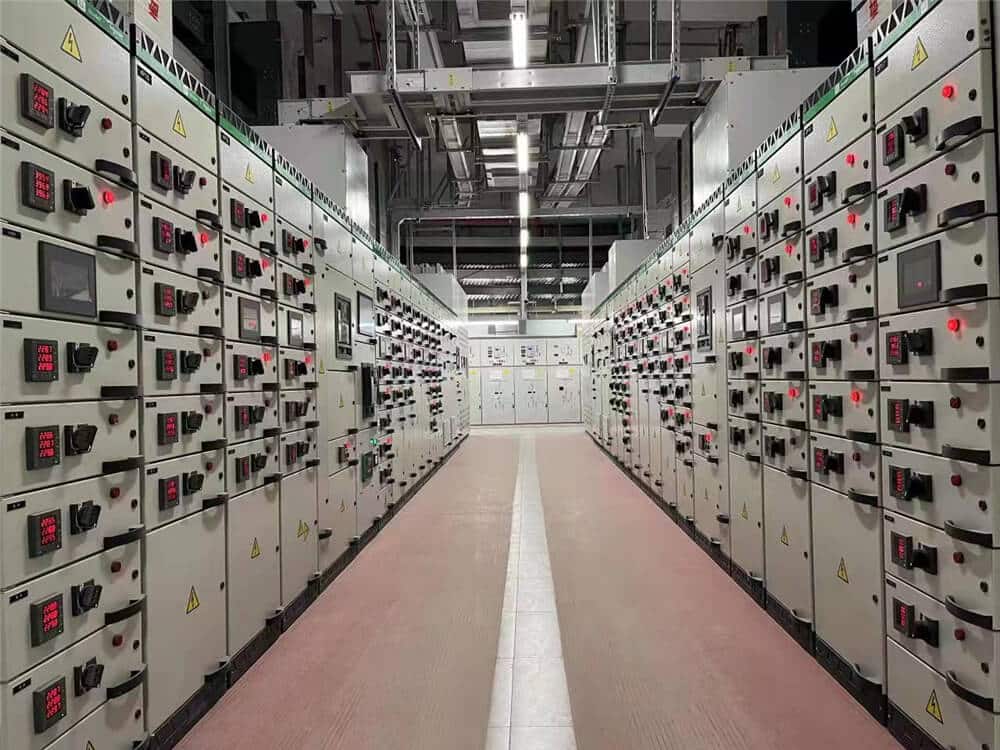
Low-voltage incoming/bus-tie circuit breaker cabinets: 6-point temperature measurement; compensation and active filter cabinets: 3-point temperature measurement; outgoing drawer cabinet each circuit: 3-point temperature measurement.
Wireless temperature transceivers and power supply modules are installed in the cable compartment inside the cabinet, while the touch screen is flush-mounted on the cabinet front.
Conclusion
The successful application of Acrel wireless temperature measurement products in the Hangzhou Xiaoshan International Airport Phase III expansion project demonstrates their suitability and reliability in large-scale transportation hub power distribution systems. The battery-free solution offers easy installation, real-time accurate data, and strong support for safe airport power equipment operation. Online temperature monitoring enables timely, continuous, and accurate reflection of equipment status, effectively reducing incident rates, and holds broad promotional value.