
What Is an LV Feeder Pillar Monitoring System?
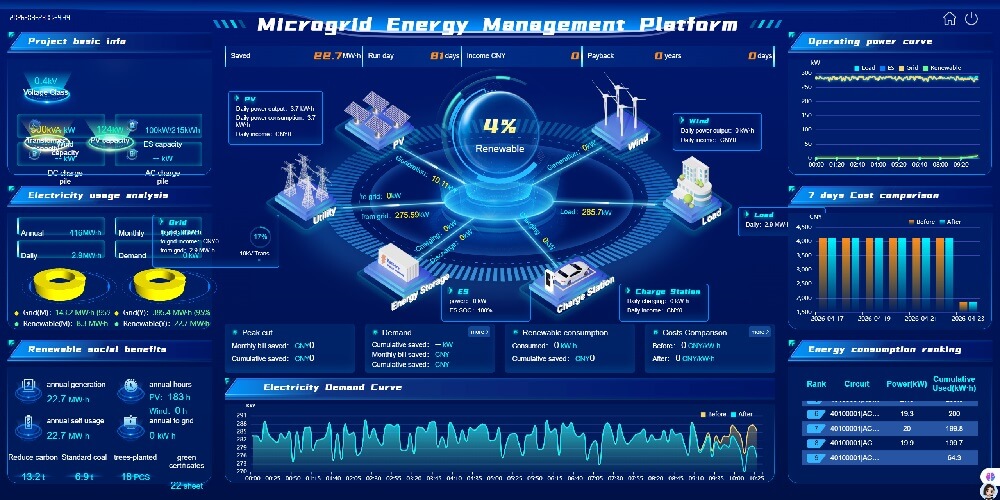
An LV Feeder Pillar Monitoring System is a digital monitoring solution used to collect and transmit electrical operating data from low-voltage feeder pillars.
It typically combines energy meters, current transformers or sensors, communication gateways and a monitoring platform to measure electrical parameters across multiple outgoing feeders.
Depending on the project configuration, the system can provide:
- Voltage and current monitoring
- Active and reactive power measurement
- Energy consumption monitoring
- Power factor and frequency measurement
- Electrical alarm and status monitoring
- Historical data analysis
- Remote communication
- SCADA, DMS, EMS or IoT platform integration
For utility operators, the main purpose is to replace periodic manual inspection with continuous remote visibility of LV distribution assets.
Problems with Conventional LV Feeder Pillars
As distribution networks become increasingly digitalized, traditional feeder pillars provide limited operational visibility. Intelligent monitoring enables utilities to make faster, data-driven decisions while improving grid reliability.
Traditional Feeder Pillar
Operators cannot continuously see feeder voltage, current, power and energy from the control center.
Technicians need to visit feeder pillar locations to collect operating information or investigate abnormal conditions.
Without remote monitoring, abnormal electrical conditions may remain unnoticed until inspection or customer complaints.
A feeder pillar may contain multiple outgoing circuits, making individual feeder monitoring difficult with conventional meters.
Legacy feeder pillars may not provide data interfaces for SCADA, DMS, EMS or IoT platforms.
Outdoor feeder pillars in GCC projects may be exposed to high ambient temperatures, dust and sand, requiring appropriate equipment selection and enclosure protection.
Acrel Smart Feeder Pillar Monitoring System
Deploy smart energy meters and communication gateways to continuously collect feeder voltage, current, power, energy and other electrical parameters. Operators can access real-time feeder data remotely instead of relying on periodic site inspections.
Connect feeder pillar meters to an industrial IoT gateway for automatic data acquisition and remote transmission. Maintenance teams can check feeder operating conditions remotely before deciding whether a site visit is required.
Monitor key electrical parameters continuously and configure alarms for abnormal operating conditions. When a predefined threshold is exceeded, the monitoring system can provide timely alerts to help operators identify potential problems earlier.
Use multi-circuit metering to monitor multiple outgoing feeders within the same feeder pillar. This reduces the need for separate meters for every circuit while providing individual feeder-level electrical data.
Connect field meters to an industrial IoT gateway and transmit feeder data to SCADA, DMS, EMS or cloud platforms through standard communication interfaces and protocols. Typical communication: Meter → RS485 / Modbus RTU → Gateway → Ethernet / 4G → SCADA / DMS / EMS / IoT Platform
Select meters, gateways, sensors and enclosures according to the feeder pillar installation environment, including ambient temperature, dust, sand and enclosure protection requirements. The system architecture can be configured for outdoor LV distribution applications in GCC projects.
Key Benefits
Compared with traditional feeder pillar management, the Acrel solution helps utilities achieve:
- Improved visibility of low-voltage distribution networks
- Faster fault detection and restoration
- Reduced operation and maintenance costs
- Enhanced power quality monitoring
- Easier integration with existing SCADA and IoT platforms
- Better support for distribution network digitalization
- Scalable architecture for future smart grid expansion
Key Features of Acrel LV Feeder Pillar Monitoring System
01. Multi-Circuit Energy Monitoring
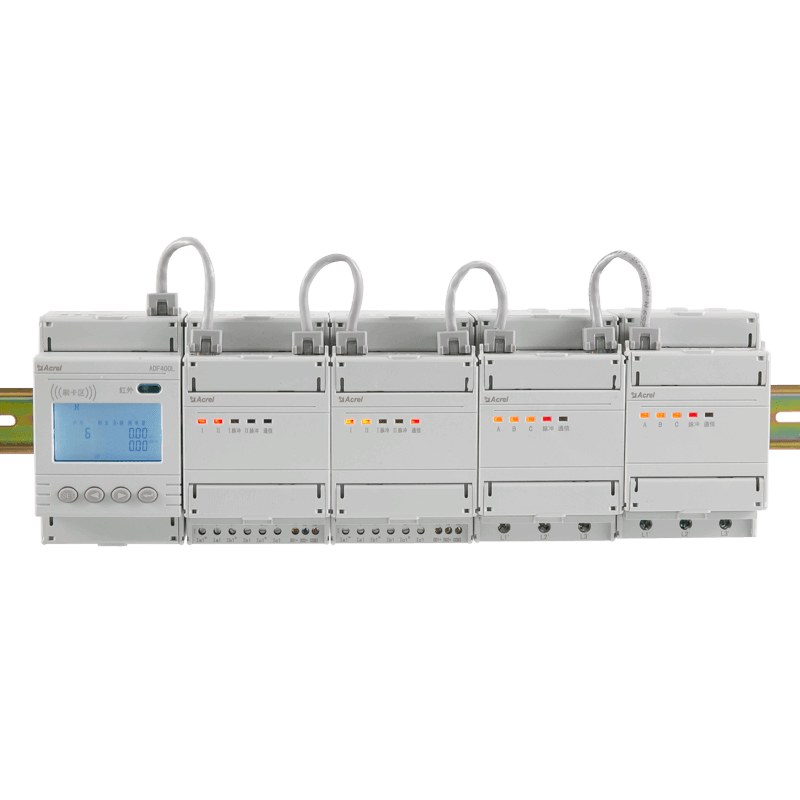
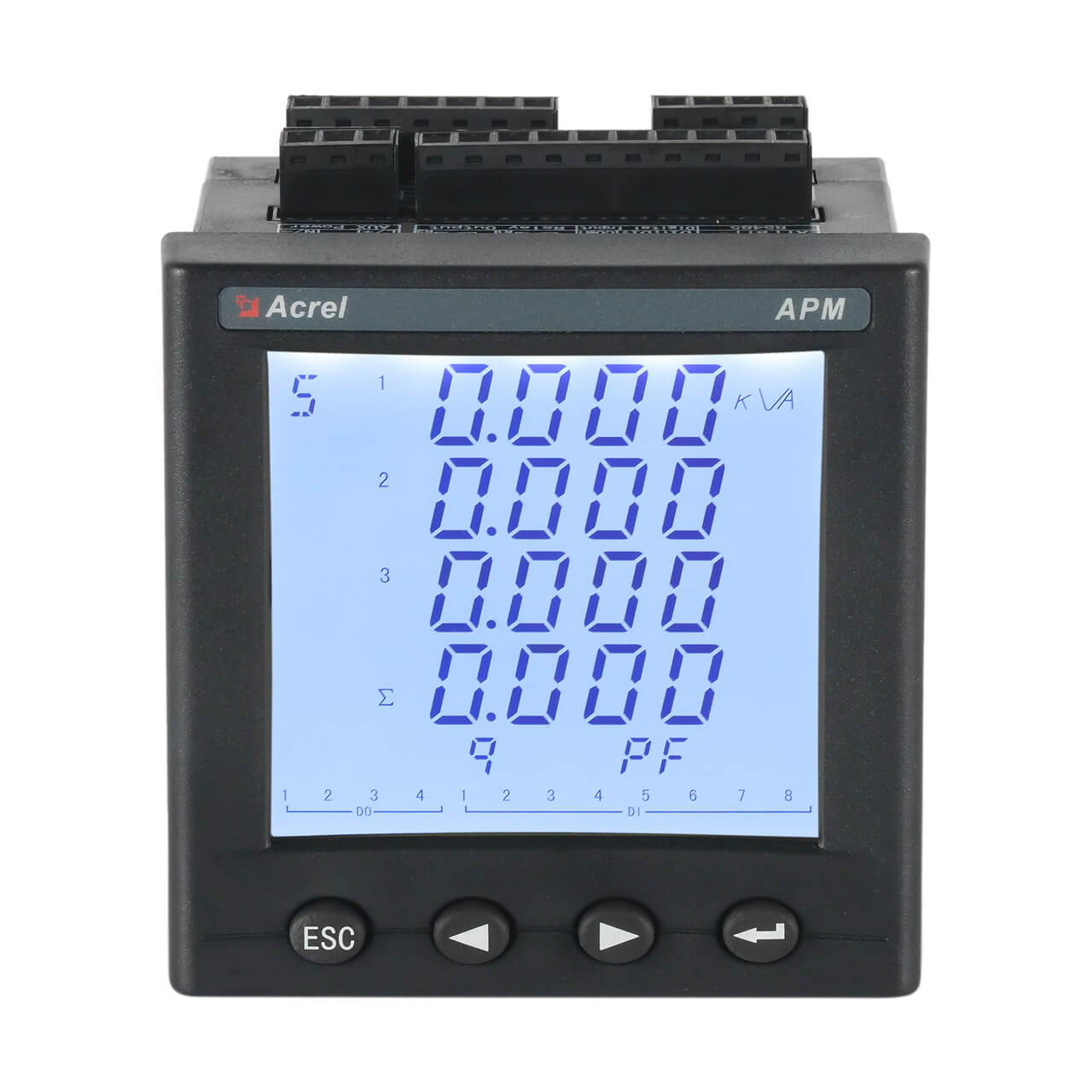
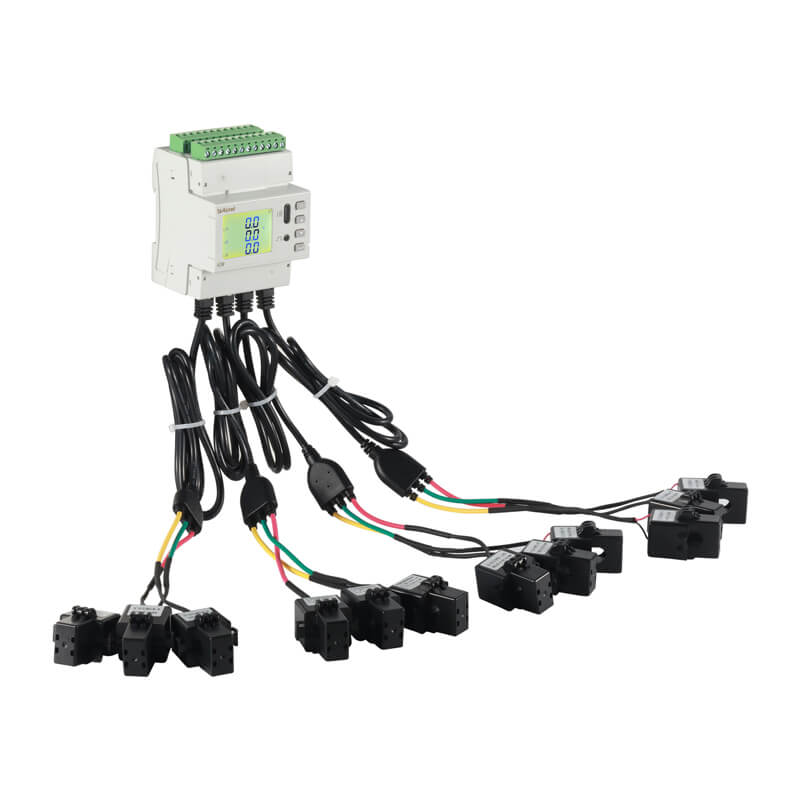
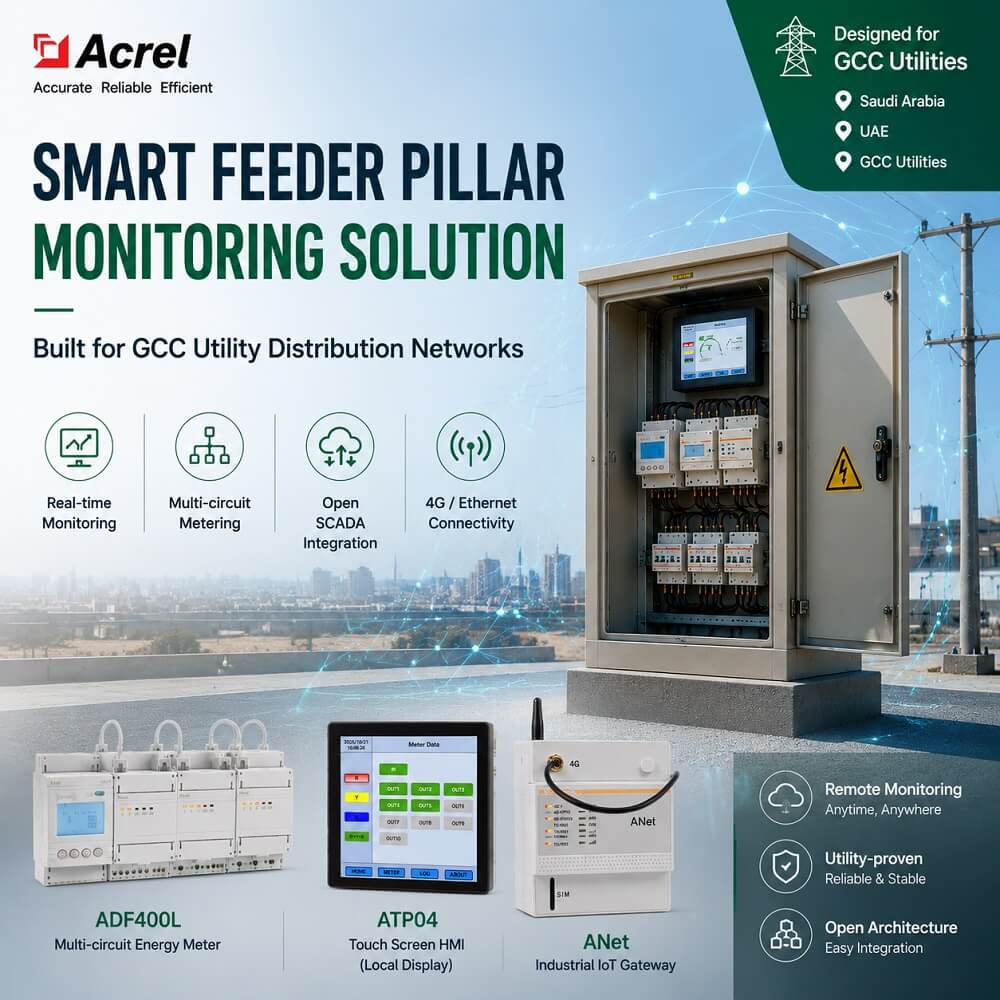
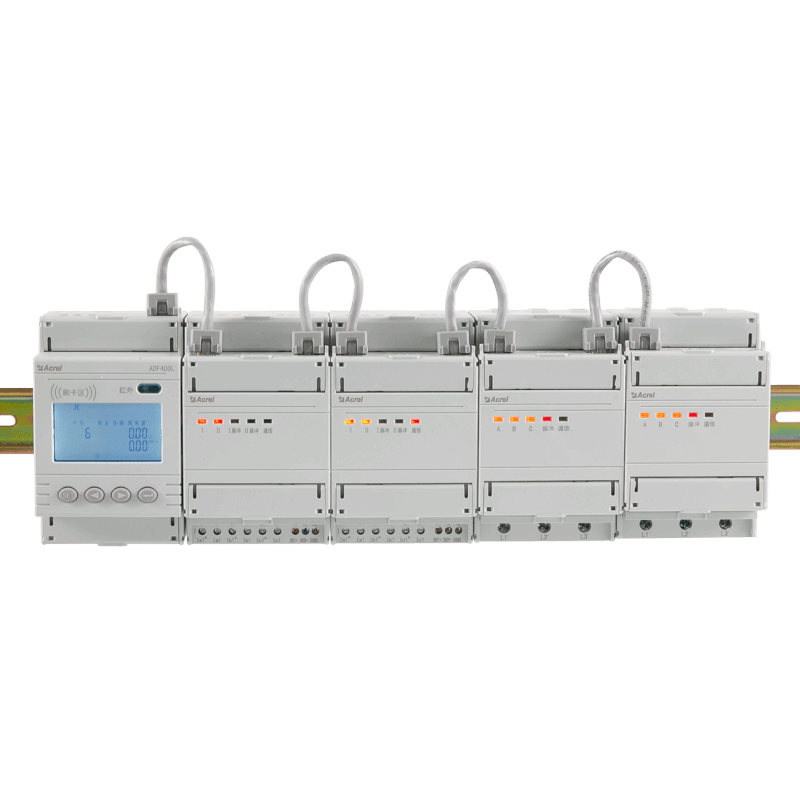
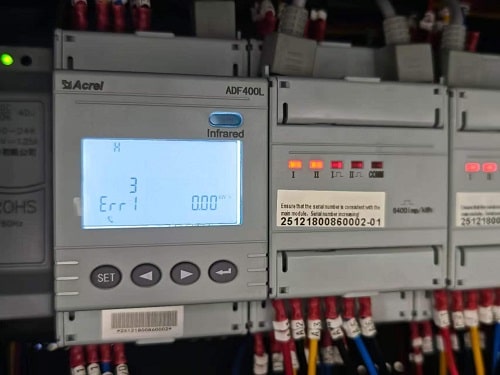
The system utilizes the ADF400L Multi-circuit Energy Meter, allowing simultaneous monitoring of multiple outgoing feeders while significantly reducing installation space compared with conventional single-circuit meters.
Measured parameters include:
Voltage
Current
Active Energy
Reactive Energy
Power
Power Factor
Frequency
Depending on the configuration, one ADF400L can monitor up to 12 three-phase circuits or 36 single-phase circuits, helping reduce the number of individual meters required inside a feeder pillar.
Why use a multi-circuit meter?
A multi-circuit meter can reduce panel space and simplify wiring when a feeder pillar contains multiple outgoing circuits. It is particularly useful for distribution cabinets where individual feeder measurement is required but available installation space is limited.
02. Intelligent Data Collection & Remote Communication
How does an LV feeder pillar connect to SCADA?
Energy meters installed in the feeder pillar collect electrical data through field measurement.
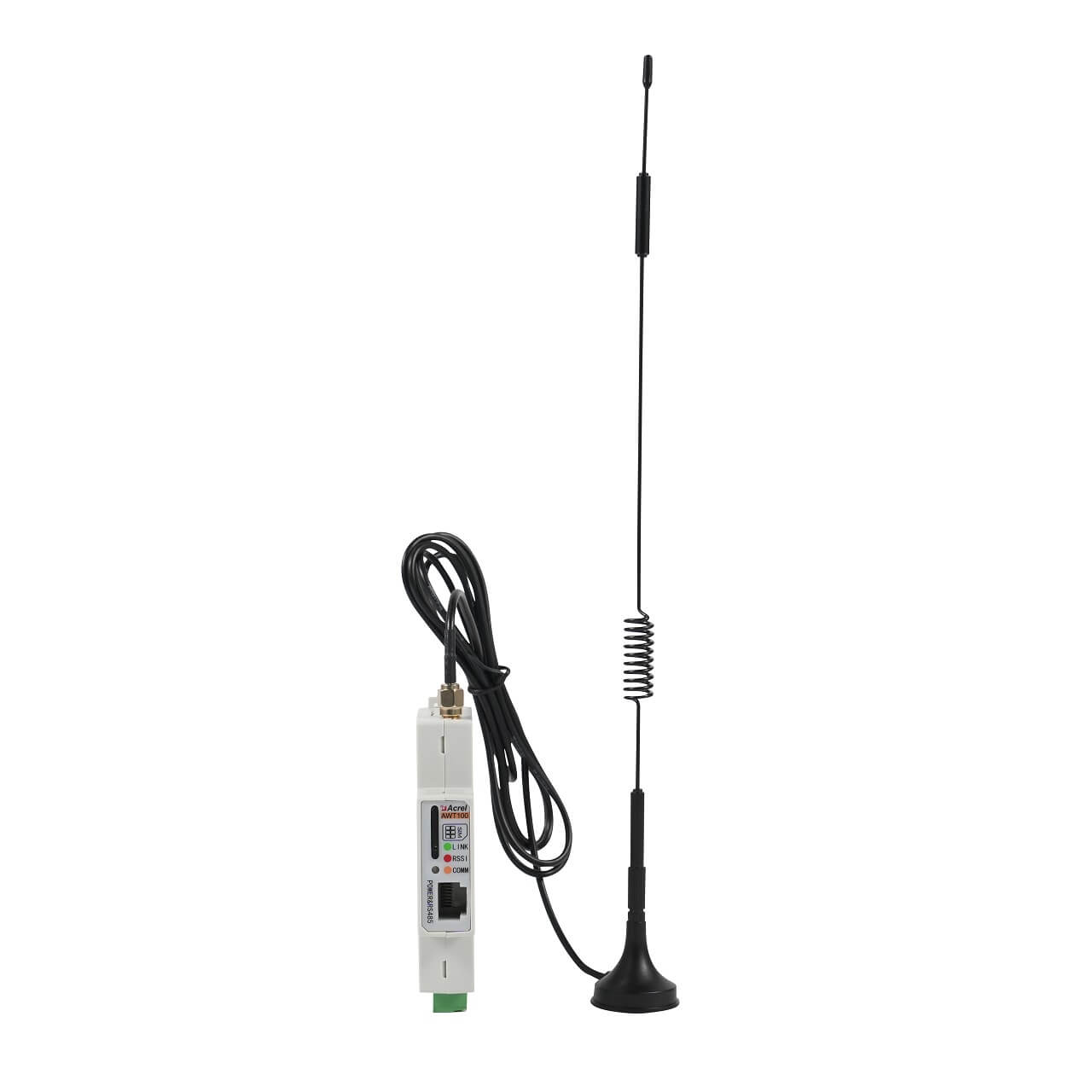
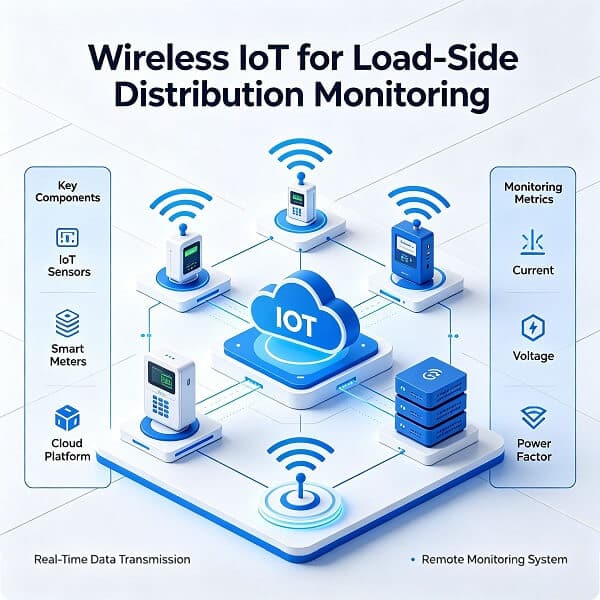
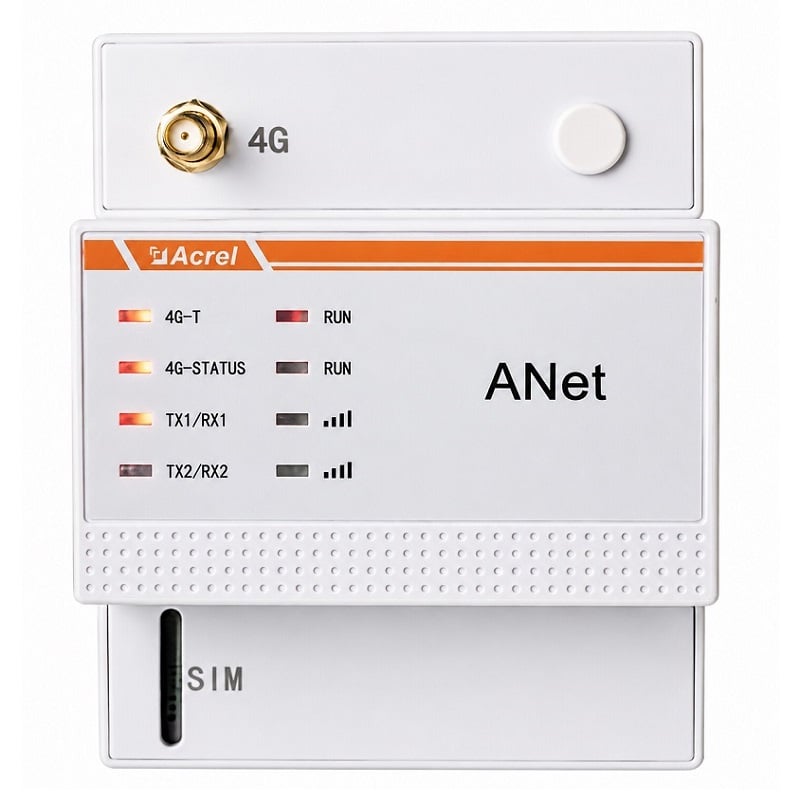
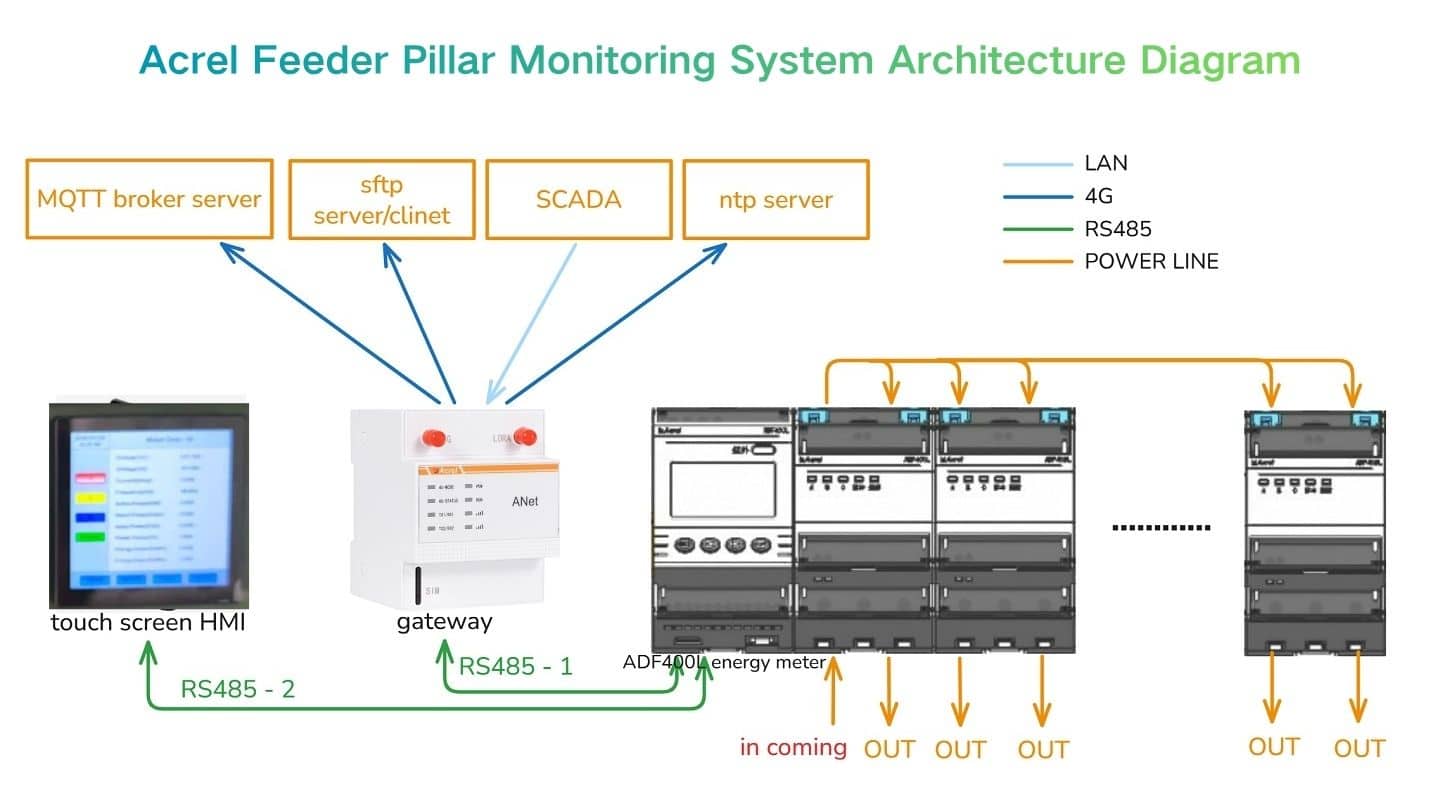
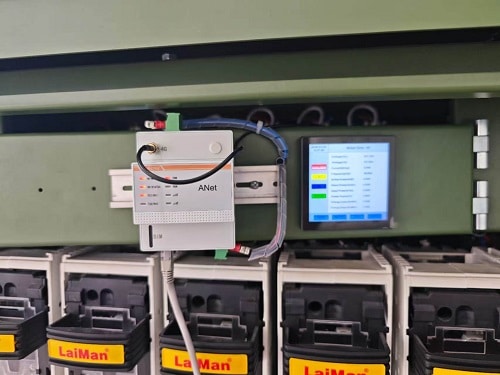
The ANet gateway collects data through RS485 and forwards it through Ethernet, 4G or other configured communication networks to SCADA, DMS, EMS, IoT or cloud platforms.
Ethernet
4G LTE
Private Network
Meter → RS485 → ANet Gateway → Ethernet/4G → SCADA/DMS/EMS/Cloud
03. Local Visualization & Maintenance
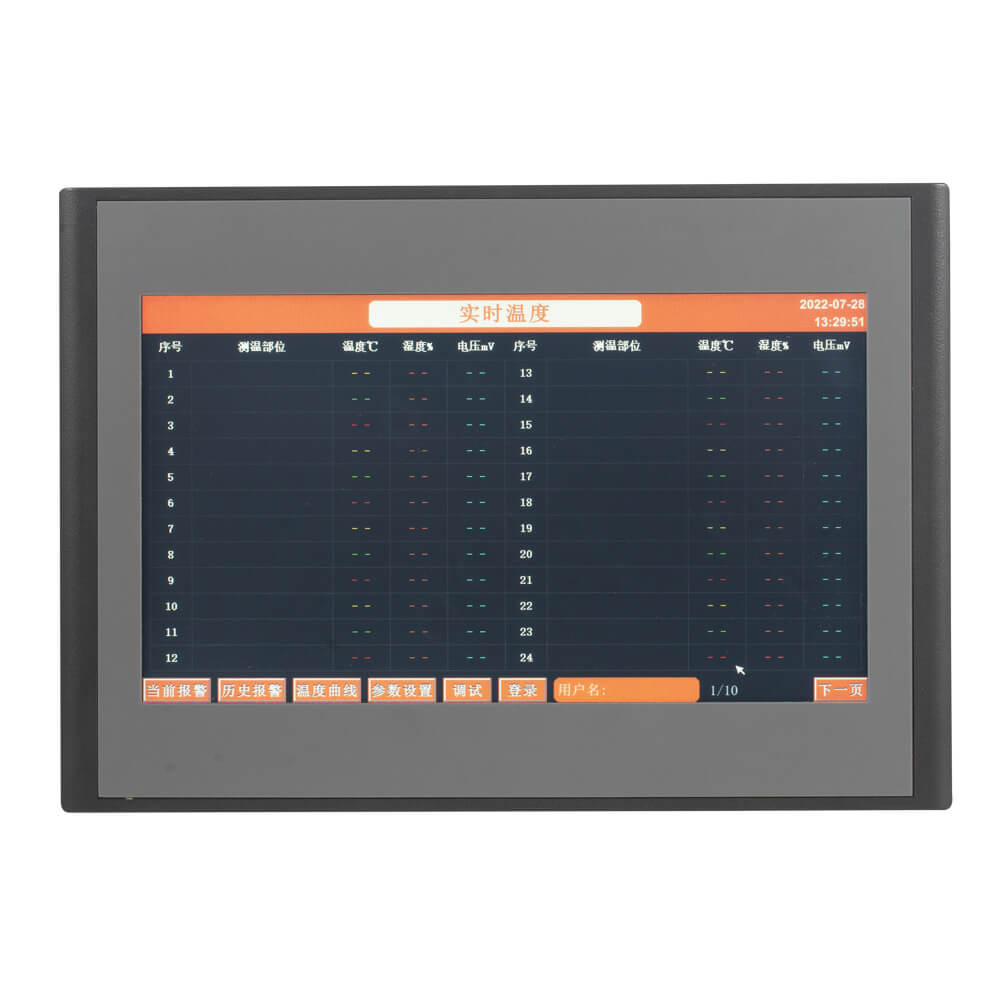
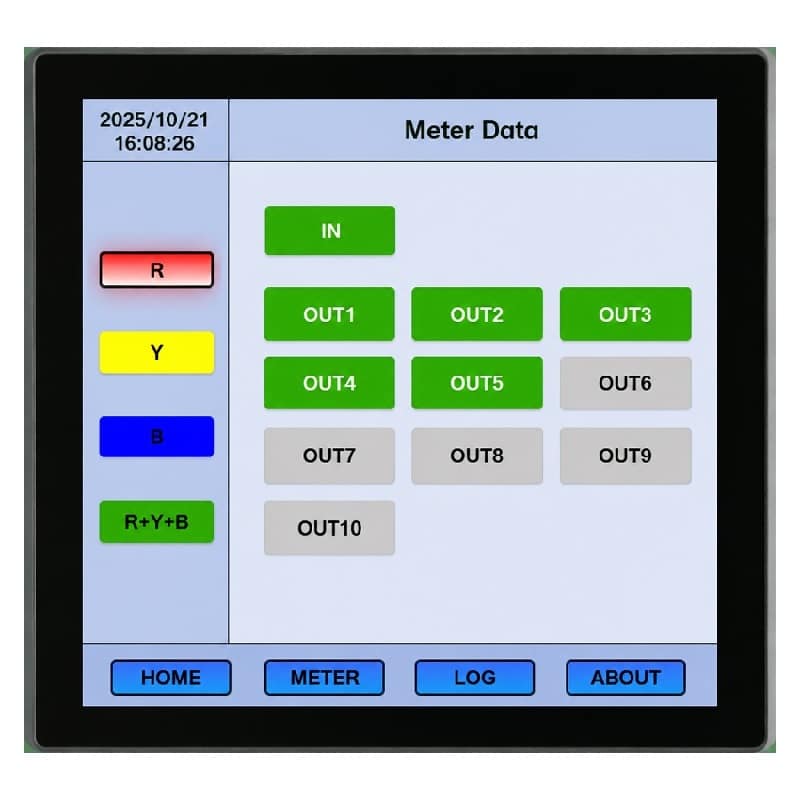
The optional ATP04 Touch Screen HMI provides maintenance personnel with an intuitive local interface for:
Real-time operating status
Parameter configuration
Device diagnostics
Maintenance commissioning
Local troubleshooting
Typical System Architecture
The Acrel Feeder Pillar Monitoring System adopts a three-layer architecture designed for high reliability and flexible expansion.
Acrel LV Feeder Pillar Monitoring System
LV Feeder Pillar → Metering → Edge Gateway → Network → Control Platform
Intelligent Gateway
Data Acquisition
Edge Computing
Protocol Conversion
Secure Communication
Utility Platform
SCADA
Distribution Management System (DMS)
IoT Platform
Energy Management System (EMS)
Cloud Platform
Measured Parameters
| Measurement | Purpose |
|---|---|
| Voltage | Monitor feeder voltage |
| Current | Monitor feeder loading |
| Active Power | Analyze real-time load |
| Reactive Power | Monitor reactive demand |
| Active Energy | Track energy consumption |
| Reactive Energy | Analyze reactive energy |
| Power Factor | Evaluate electrical efficiency |
| Frequency | Monitor supply frequency |
Open Communication Protocols
To simplify system integration with existing utility infrastructure, Acrel supports multiple industry-standard communication protocols.
| Layer | Interface / Protocol | Application |
|---|---|---|
| Meter | RS485 | Field data acquisition |
| Meter | Modbus RTU | Meter communication |
| Gateway | Ethernet | Network communication |
| Gateway | 4G | Remote feeder sites |
| Platform | Modbus TCP | SCADA integration |
| Platform | MQTT | IoT / cloud integration |
| Data | SFTP | Data transfer |
| Time | NTP | Time synchronization |
These open protocols enable easy integration into existing utility SCADA systems and third-party software platforms.
Proven Feeder Pillar Monitoring Experience
TNB Malaysia
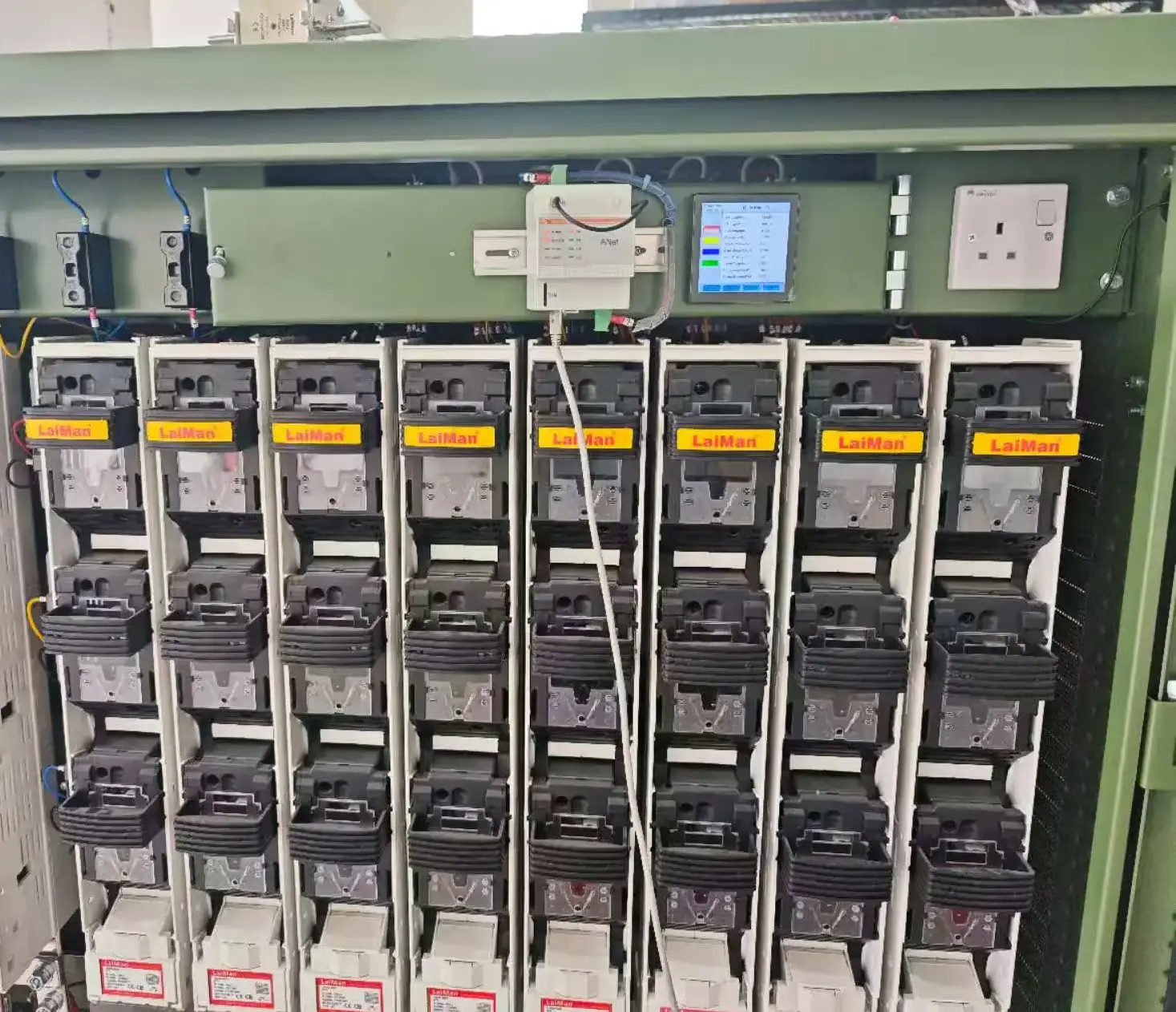
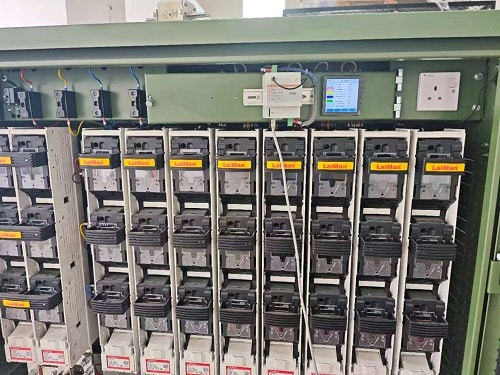
Acrel supplies more than 1,200 feeder pillar monitoring systems annually for Tenaga Nasional Berhad (TNB), Malaysia’s national electricity utility.
Application
- LV feeder monitoring
- Multi-circuit energy measurement
- Remote data acquisition
- Utility distribution monitoring
Why this matters
This deployment demonstrates Acrel’s experience in large-scale utility feeder monitoring and provides a proven reference for smart distribution projects.
Designed for GCC Distribution Projects
LV feeder pillars are widely used in outdoor low-voltage distribution applications across utility, infrastructure and commercial projects.
For projects in Saudi Arabia, the UAE and other GCC markets, feeder pillar monitoring may need to account for:
- Outdoor installation conditions
- High ambient temperatures
- Dust and sand exposure
- Remote feeder locations
- Limited access for routine inspection
- Integration with existing SCADA or utility platforms
- Reliable communication over Ethernet, 4G or private networks
Acrel provides configurable metering, communication and gateway options to adapt the monitoring architecture to project-specific requirements.
Who Needs an LV Feeder Pillar Monitoring System?
The Acrel Feeder Pillar Monitoring System is suitable for various utility and infrastructure projects, including:
| Customer | Typical Requirement |
|---|---|
| Electricity Utilities | Remote LV feeder monitoring |
| Distribution Network Operators | Feeder visibility and fault awareness |
| EPC Contractors | Metering and SCADA integration |
| System Integrators | Open communication interfaces |
| Industrial Parks | Multi-feeder energy monitoring |
| Infrastructure Developers | Remote distribution monitoring |
| Smart City Projects | Digital LV distribution |
| O&M Companies | Reduce field inspection |
Supporting remote monitoring and digital management of LV distribution networks.
Enabling smart grid development with real-time feeder monitoring and SCADA integration.
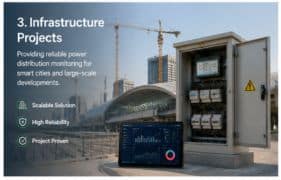
Providing reliable power distribution monitoring for smart cities and large-scale developments.
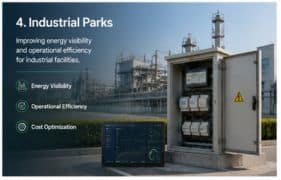
Improving energy visibility and operational efficiency for industrial facilities.
Benefits for Utility Operators
Compared with conventional feeder pillar monitoring approaches, the Acrel solution provides:
| Feature | Customer Benefit |
|---|---|
| Multi-circuit Monitoring | Reduced cabinet space |
| Remote Monitoring | Lower maintenance cost |
| Real-time Alarms | Faster fault response |
| Open Protocols | Easy SCADA integration |
| Modular Architecture | Flexible expansion |
| Industrial Design | High system reliability |
| Standard Communication | Easy third-party integration |
Selection Guide
How to Select a Feeder Pillar Monitoring System?
Step 1 — How many feeders need to be monitored?
- 1–4 circuits
- Multiple circuits
- High-density feeder pillar
Step 2 — What electrical parameters are required?
- Energy only
- Full electrical parameters
- Power quality
- Temperature / additional sensors
Step 3 — How will data be transmitted?
- RS485
- Ethernet
- 4G
- Private network
Step 4 — Where will data go?
- SCADA
- DMS
- EMS
- IoT platform
- Cloud
Step 5 — What are the environmental requirements?
- Indoor
- Outdoor
- High-temperature environment
- Dust/sand exposure
Need a Feeder Pillar Monitoring Solution?
Send us your feeder pillarspecifications. Our team can recommend the suitable meter, CT, communication gateway and SCADA integration architecture.
- Number of feeder circuits
- Voltage and current rating
- Metering requirements
- Communication method
- Existing SCADA/DMS/EMS
- Outdoor/indoor installation
- Project location
You don’t need a complete specification to start.
FAQ
An LV feeder pillar monitoring system is a digital monitoring solution for low-voltage distribution feeder pillars. It collects electrical data such as voltage, current, power and energy from outgoing feeders and transmits the data to SCADA, DMS, EMS or IoT platforms for remote monitoring and analysis.
Depending on the selected meter and configuration, the system can monitor voltage, current, active power, reactive power, active energy, reactive energy, power factor and frequency. Additional status or alarm information can also be integrated according to the project requirements.
A typical architecture is energy meter → RS485 / Modbus RTU → Acrel gateway → Ethernet or 4G → SCADA/DMS/EMS. The gateway collects field data and provides protocol conversion and communication functions for integration with the utility or third-party monitoring platform.
Yes. A multi-circuit energy meter can monitor multiple outgoing feeders within the same feeder pillar. This provides individual feeder-level electrical data while reducing the space, wiring and installation requirements compared with using a separate meter for every circuit.
The ADF400L is designed for multi-circuit energy metering in applications such as feeder pillars and distribution cabinets. The available circuit configuration depends on the specific ADF400L model and project requirements. Please confirm the required number of single-phase and three-phase circuits when selecting the meter.
The feeder pillar monitoring system can support communication through RS485, Modbus RTU, Modbus TCP and MQTT, depending on the selected devices and system architecture. SFTP and NTP can also be used for specific data transmission and time-synchronization requirements.
Yes. An Acrel industrial IoT gateway can collect data from field meters through RS485 and transmit the data through 4G LTE, Ethernet or other available communication networks, depending on the gateway configuration and project requirements.
Yes. The system can be configured for outdoor LV feeder pillar applications. Equipment selection should consider the installation environment, including ambient temperature, dust, sand, enclosure protection and other site conditions. For GCC projects, these environmental requirements should be confirmed during system selection.
Yes. Acrel’s open communication architecture is designed to support integration with existing SCADA and other third-party platforms. The specific interface and protocol should be confirmed according to the customer’s SCADA system, data points and communication requirements.
Feeder pillar monitoring can be used in utility distribution networks, smart grid projects, distribution automation, residential communities, commercial complexes, industrial parks, airports, oil and gas facilities, renewable energy projects and other infrastructure applications where remote LV distribution monitoring is required.
The following information is helpful for system selection:
- Number of outgoing feeders
- Single-phase or three-phase circuits
- Rated voltage and current
- CT specifications, if required
- Electrical parameters to be monitored
- Required communication method, such as Ethernet or 4G
- Existing SCADA, DMS, EMS or IoT platform
- Required communication protocol
- Indoor or outdoor installation
- Project location and environmental conditions
A complete specification is not always required to start. Acrel can recommend a suitable meter, gateway and communication architecture based on the available project information.
Yes. The solution can be configured according to the project’s feeder quantity, electrical parameters, communication network, SCADA/EMS integration requirements and installation environment. Acrel can help select the appropriate metering devices, CTs, communication gateway and system architecture for the project.
Quick Answer
LV Feeder Pillar Monitoring System — Quick Answers
Solution: LV Feeder Pillar Monitoring System
Main application: Low-voltage distribution network monitoring
Main users: Utilities, DNOs, EPCs, system integrators and infrastructure operators
Main meter: ADF400L multi-circuit energy meter
Gateway: ANet Industrial IoT Gateway
Communication: RS485, Ethernet, 4G and other configured options
Protocols: Modbus RTU, Modbus TCP, MQTT, SFTP
Monitoring: Voltage, current, power, energy, power factor and frequency
SCADA integration: Yes
Outdoor applications: Yes, subject to appropriate system/enclosure configuration
Main markets: Saudi Arabia, UAE, GCC and other utility markets
Make every distribution unit Visible, Intelligent and Secure.