






 Overview
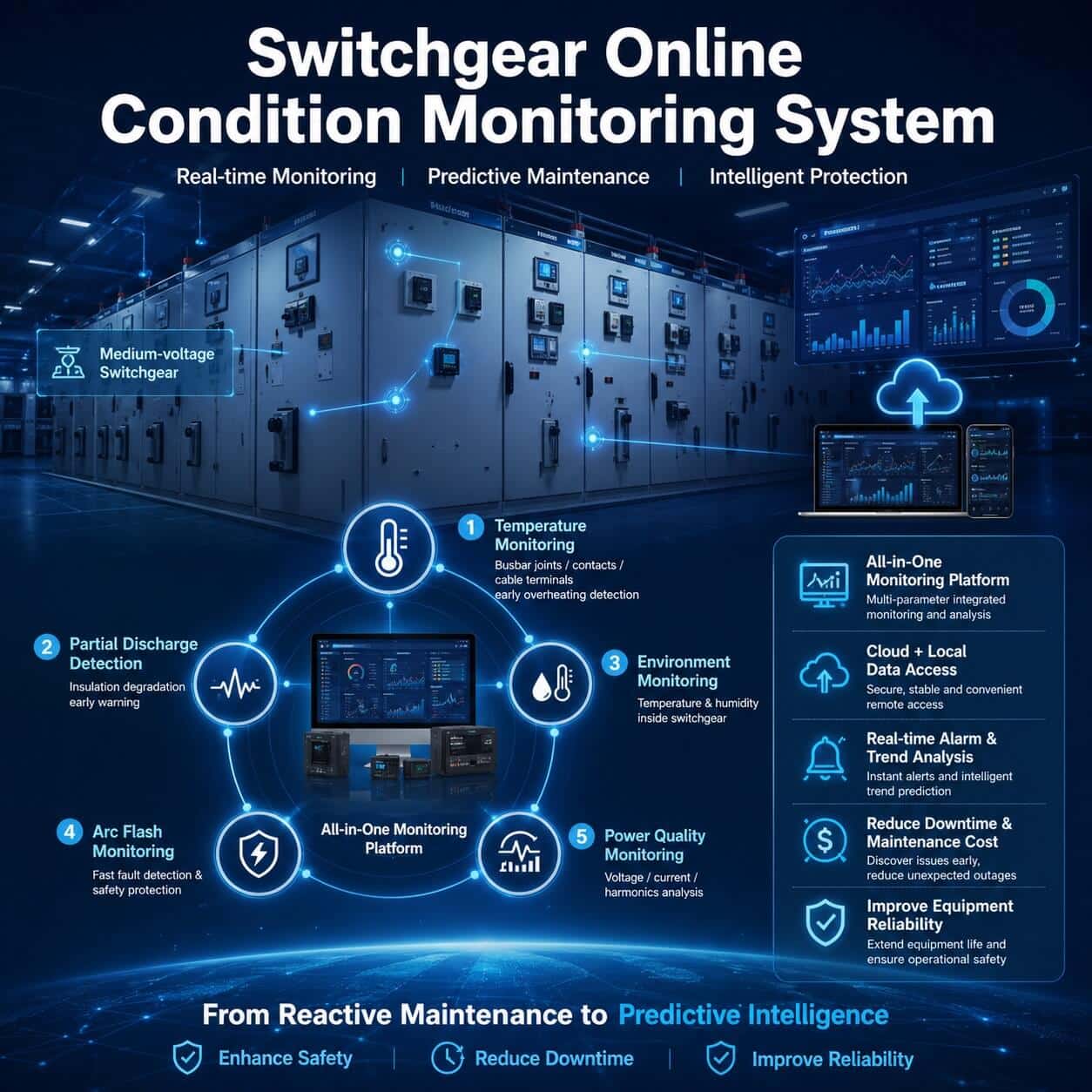
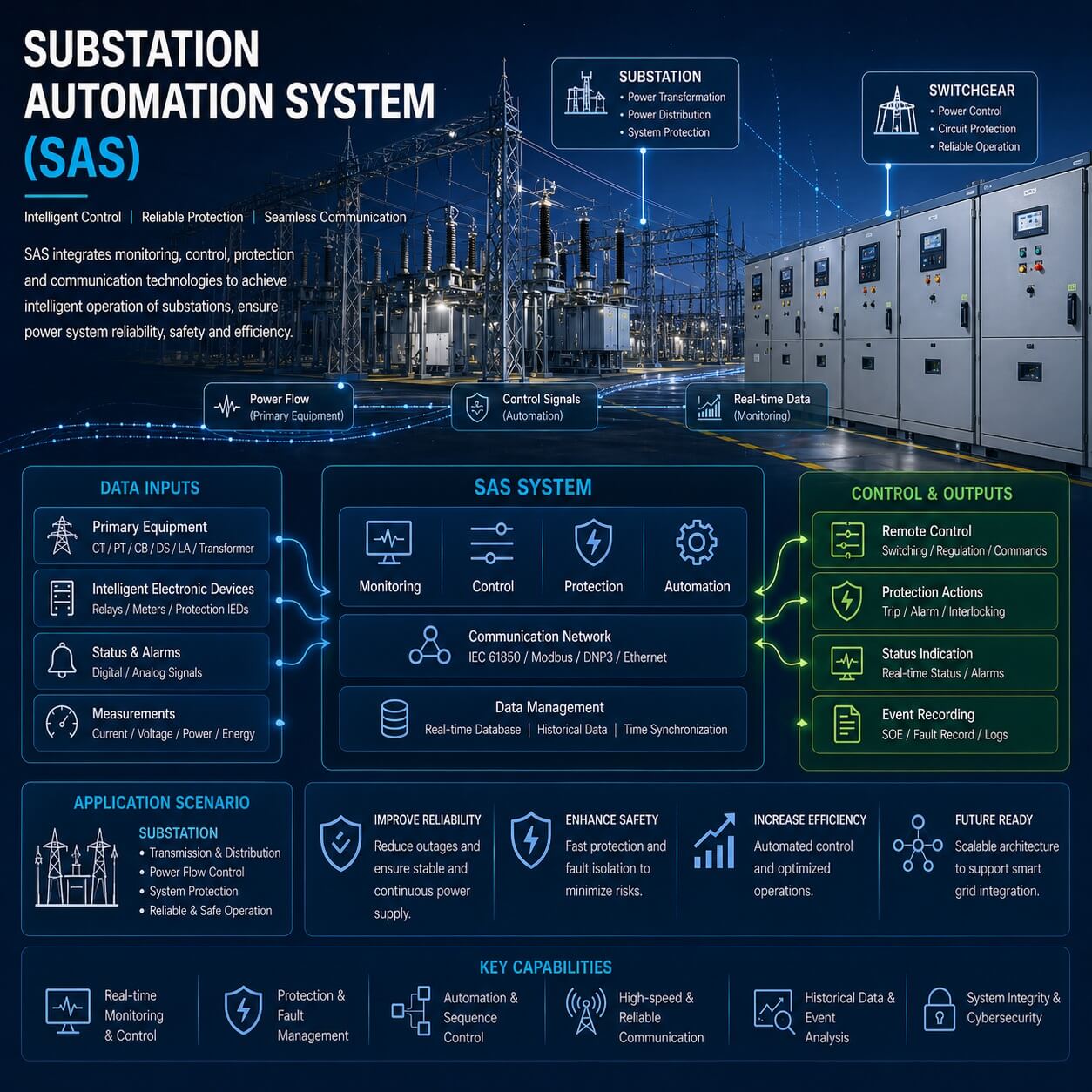
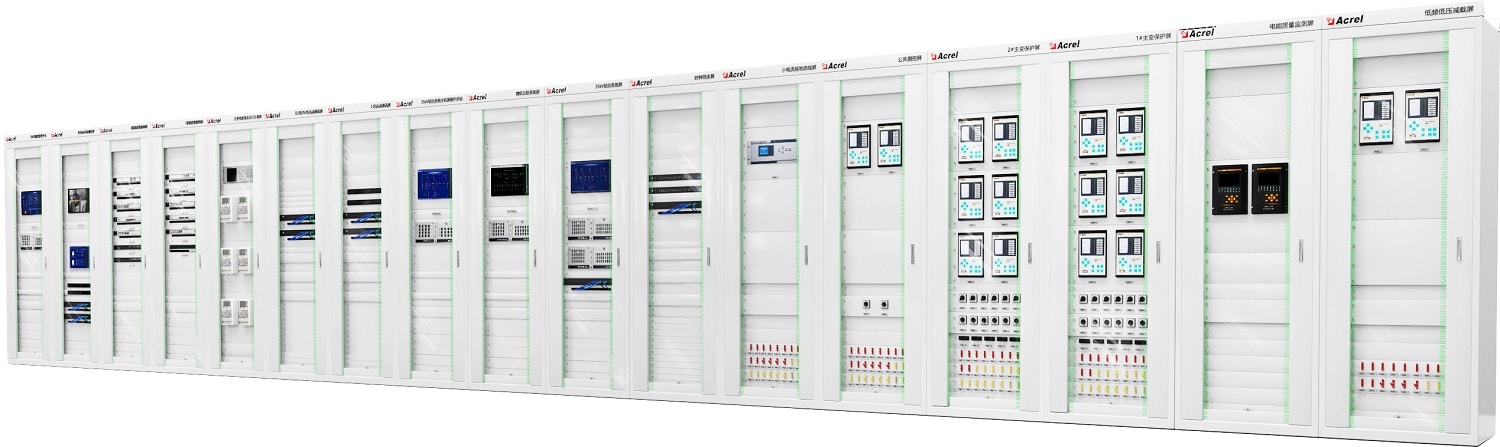
Acrel Switchgear Condition Monitoring System provides continuous monitoring of critical electrical equipment conditions, including connection temperature, partial discharge, and cabinet temperature and humidity.
By combining wireless temperature sensors, partial discharge sensors, environmental sensors, communication gateways, and local HMI, the system helps operators identify abnormal conditions early, reduce reliance on manual inspection, and support condition-based and predictive maintenance.
Typical Applications: MV/LV Switchgear · RMUs · Substations · Oil & Gas Facilities · Data Centers · Utilities · Industrial Plants · Critical Infrastructure
What Is Switchgear Condition Monitoring?
Switchgear condition monitoring is the continuous monitoring of key electrical and environmental parameters that may indicate developing faults inside switchgear and distribution equipment.
Unlike periodic manual inspections, an online monitoring system continuously collects condition data from critical points and provides real-time visibility into abnormal temperature, partial discharge, and humidity conditions.
For switchgear applications, the main monitoring dimensions include:
| Monitoring Parameter | What It Detects | Maintenance Value |
|---|---|---|
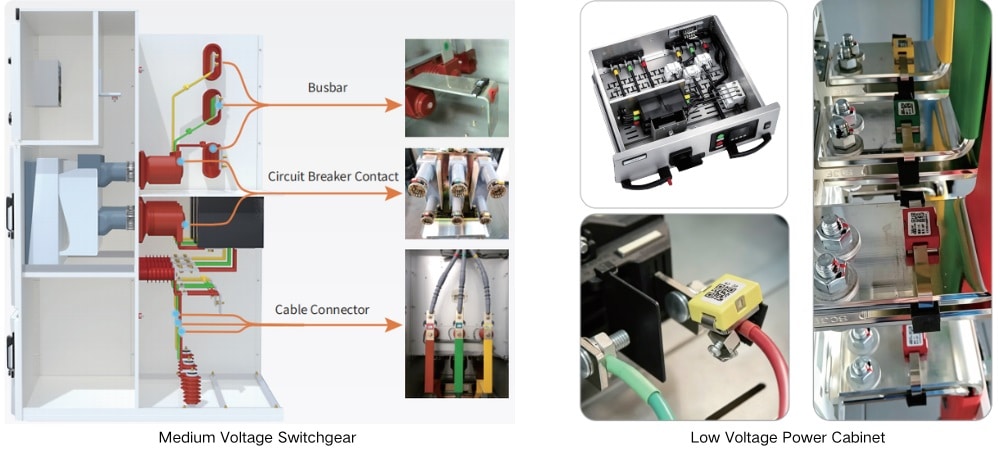
| Temperature | Overheating at busbar joints, breaker contacts and cable terminals | Early warning of poor connections and overheating |
| Partial Discharge | Insulation degradation and abnormal discharge activity | Early indication of insulation deterioration |
| Humidity | Excessive moisture inside switchgear | Helps prevent insulation degradation and flashover risks |
| Temperature Trend | Changes in equipment thermal condition over time | Supports condition-based maintenance |
A switchgear condition monitoring system therefore changes maintenance from periodic inspection to continuous condition awareness.
Why Online Switchgear Monitoring Matters
Move from periodic inspection to continuous visibility for higher reliability and safety.
Your Pain Points
Manual inspections only provide a snapshot of equipment condition at a single point in time.
Overheating at busbar joints, breaker contacts and cableterminations can remain undetected between inspections.
Partial discharge may occur in the early stage of insulation degradation, before visible faults or failures appear.
High temperature and humidity inside switchgear cabinets accelerate insulation aging and increase failure risk.
When a fault occurs, it can be difficult to quickly identifythe exact location and cause of the problem.
Our Acrel Value
24/7 online monitoring delivers continuous visibility into criticalconditions, not limited to periodic inspections
Real-time temperature monitoring detects abnormal heating at an early stage and helps prevent equipment failures.
Partial discharge monitoring provides early warnings of insulation issues before serious failures occur.
Temperature and humidity monitoring helps identify harmfulenvironmental conditions inside cabinets.
Multi-point data collection helps maintenance teams quickly locate abnormal points and reduce troubleshooting time.
Common Switchgear Monitoring Challenges
3.1 Hidden Connection Overheating
Loose or deteriorated electrical connections can generate abnormal heat at busbar joints, breaker contacts, and cable terminals.
Without continuous temperature monitoring, these hot spots may remain unnoticed between inspections.
3.2 Early Insulation Degradation
Partial discharge can be an early indication of insulation deterioration in medium-voltage electrical equipment.
Detecting PD activity at an early stage provides additional time for investigation and maintenance.
3.3 Excessive Humidity Inside Cabinets
High humidity can negatively affect insulation conditions and contribute to electrical faults.
Continuous temperature and humidity monitoring provides visibility into the internal cabinet environment.
3.4 Limited Visibility Between Inspections
Manual inspection cannot continuously observe equipment conditions.
Operators need real-time data and alarms to identify abnormal conditions between scheduled maintenance activities.
3.5 Difficult Fault Localization
When an abnormal condition occurs, maintenance teams need to know where the problem is located.
Monitoring multiple critical points allows engineers to identify the affected equipment or connection more efficiently.
What Does a Switchgear Condition Monitoring System Monitor?
A comprehensive switchgear monitoring solution can combine multiple sensing technologies instead of relying on a single parameter.
Temperature Monitoring
Temperature sensors can be installed at critical connection points such as:
- Busbar joints
- Circuit breaker contacts
- Cable terminals
- Other critical energized connection points
Continuous temperature monitoring helps identify abnormal heating and supports early warning before overheating develops into a more serious fault.
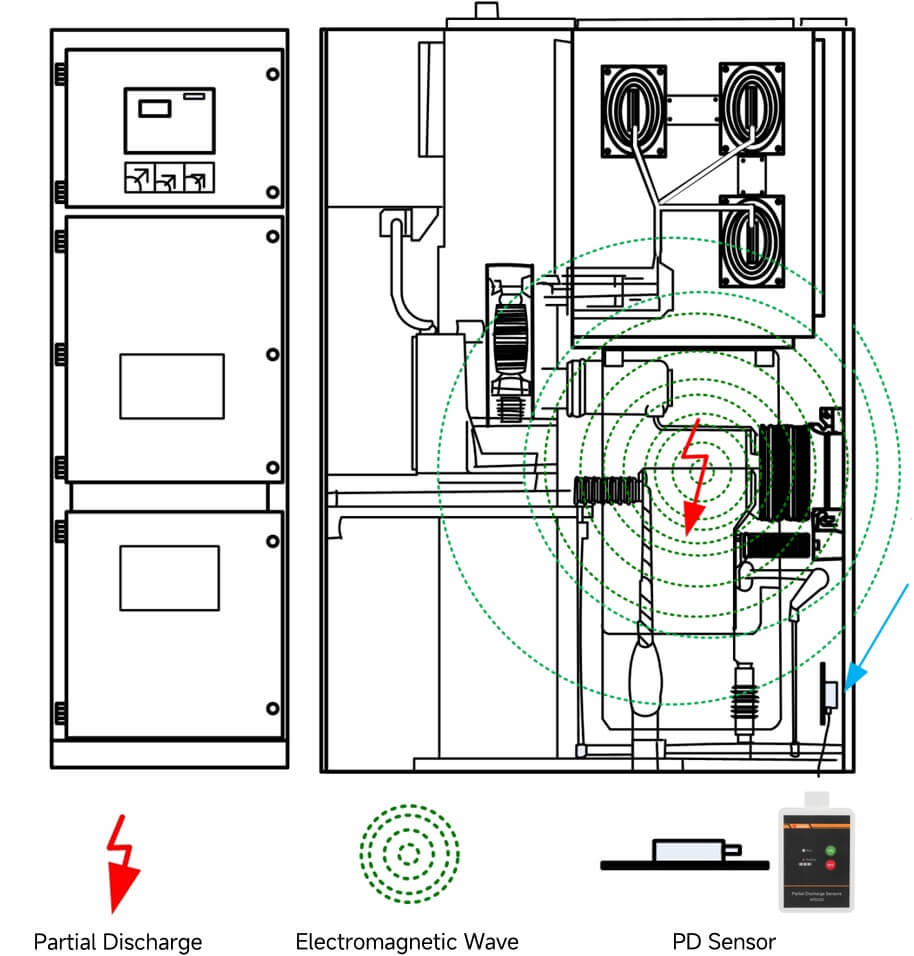
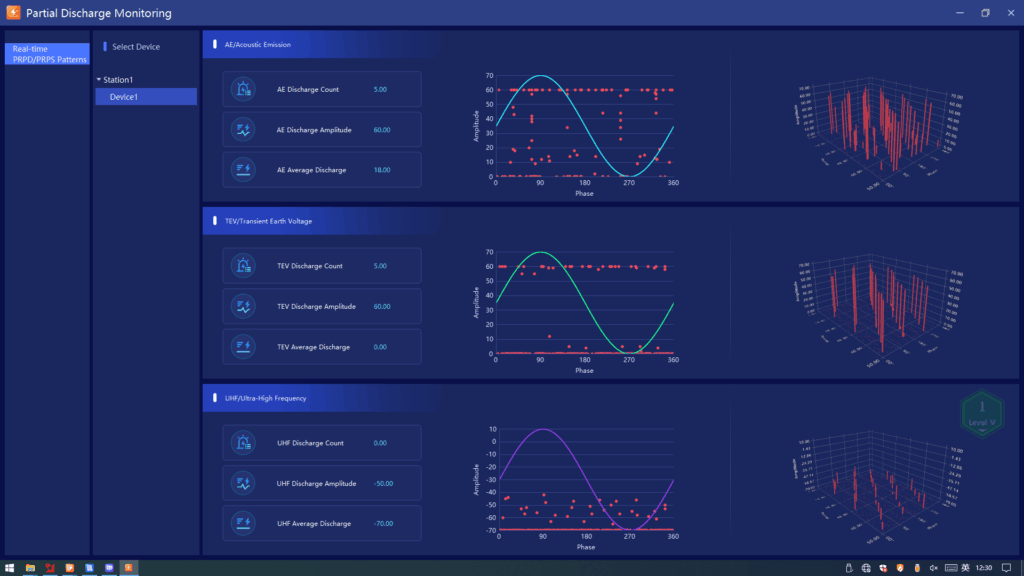
Partial Discharge Monitoring
Partial discharge monitoring focuses on insulation conditions inside electrical equipment.
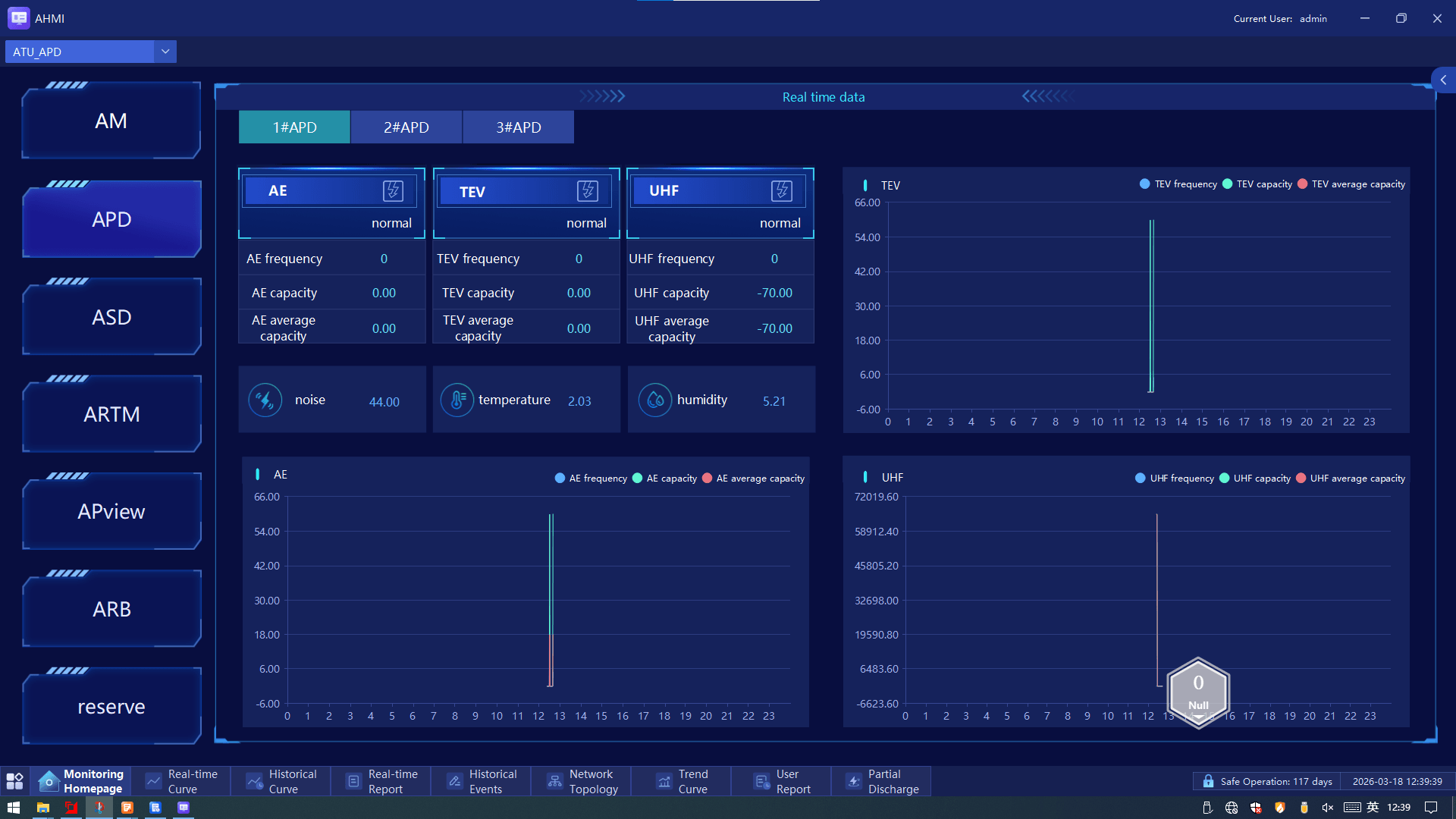
Acrel’s APD series supports AE, TEV and UHF detection methods to capture partial discharge activity and support insulation condition assessment.
Temperature & Humidity Monitoring
Temperature and humidity sensors monitor the internal environment of switchgear cabinets.
This provides additional information for identifying environmental conditions that may contribute to insulation degradation or electrical faults.
How the Switchgear Condition Monitoring System Works
Switchgear Condition Monitoring System
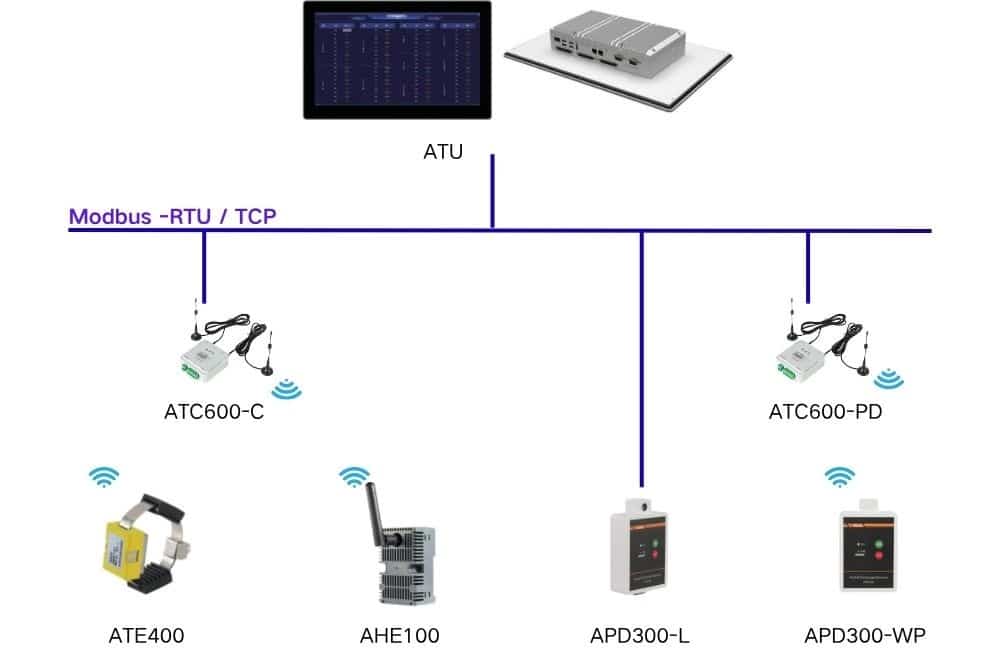
Sensing Layer
The sensing layer collects condition data from the switchgear.
Typical devices include:
ATE series wireless temperature sensors
APD series partial discharge sensors
AHE series temperature and humidity sensors
Transmission Layer
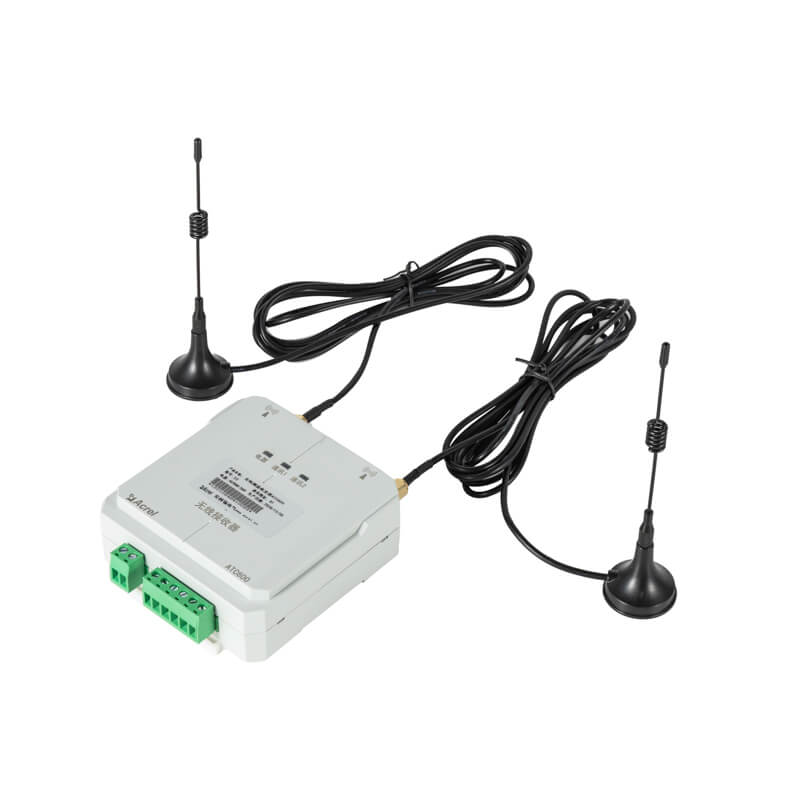
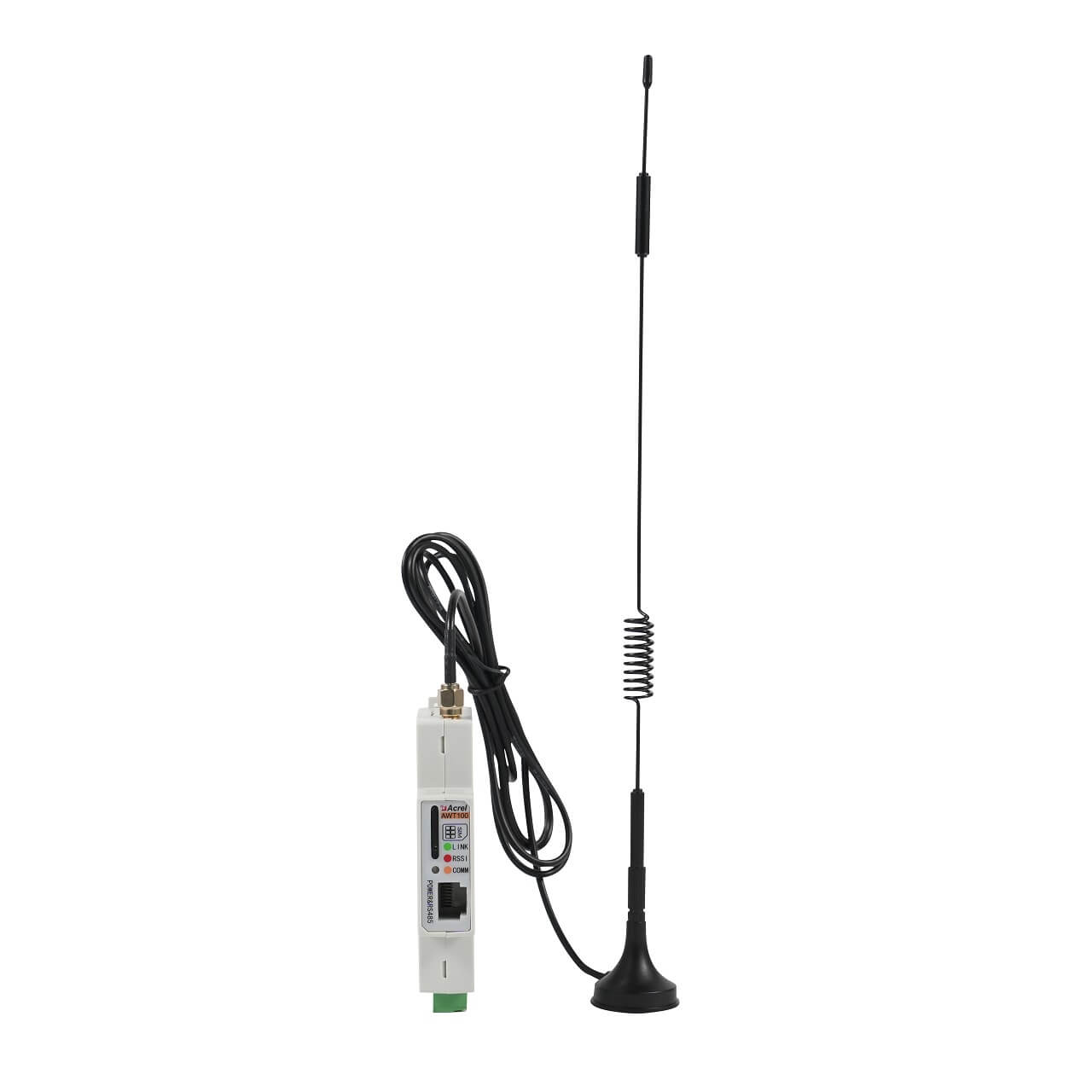
The communication layer collects sensor data and transfers it to the monitoring platform.
The solution supports Modbus RTU communication and can be integrated with automation and supervision systems according to project requirements.
Platform Layer
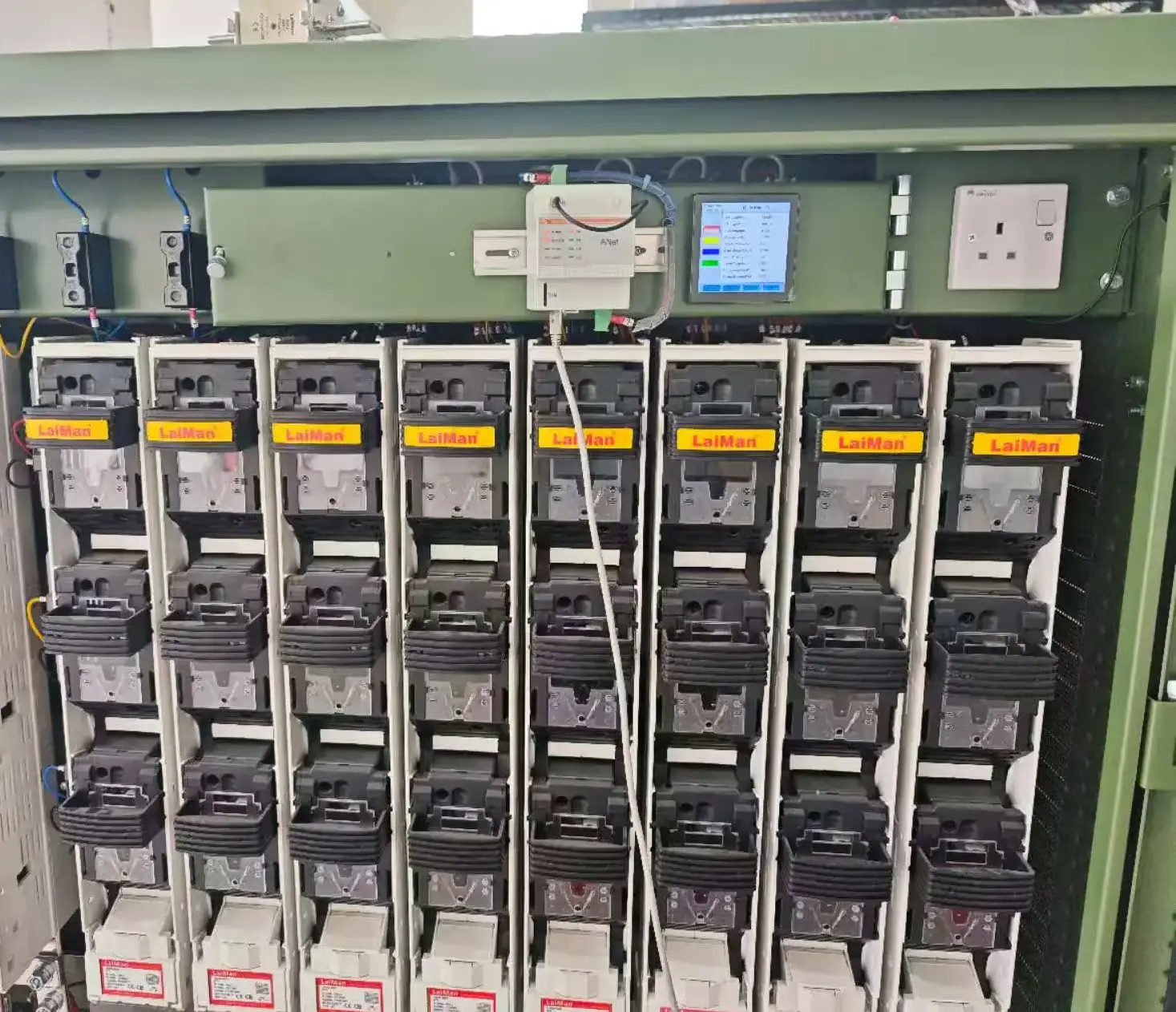
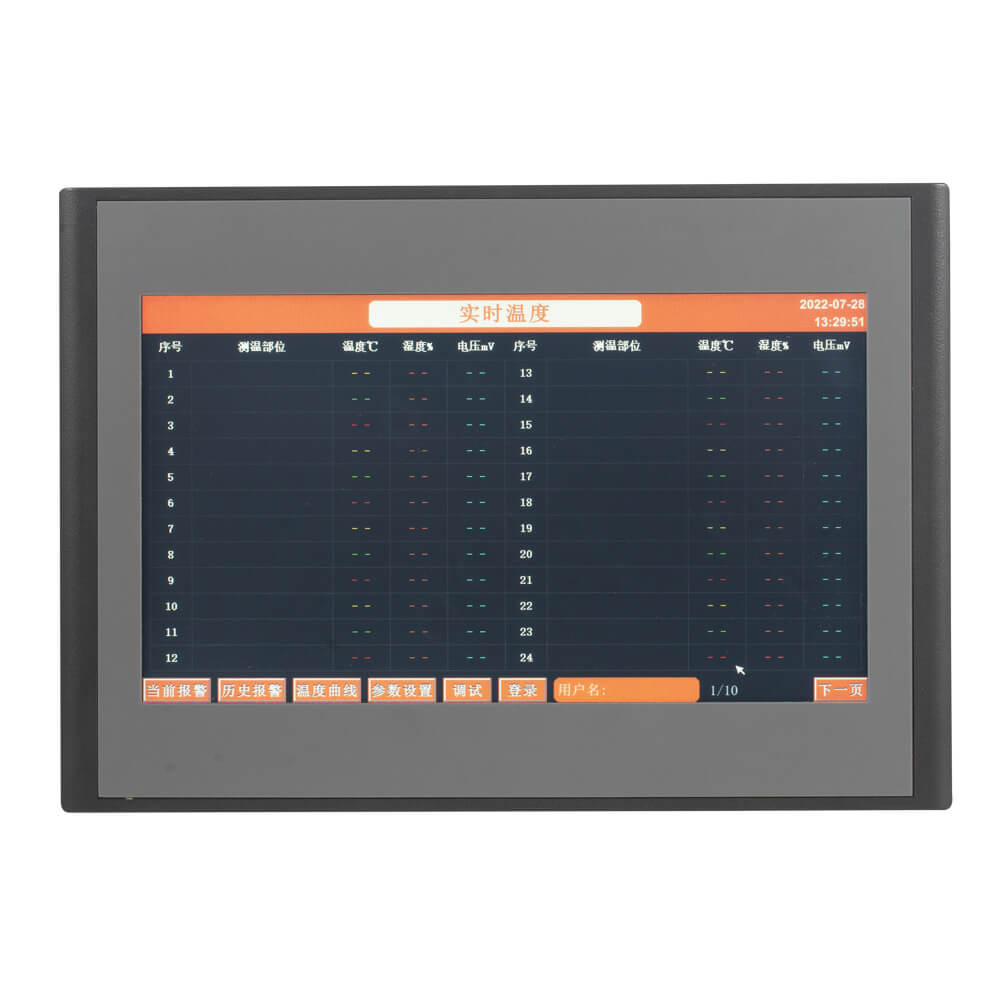
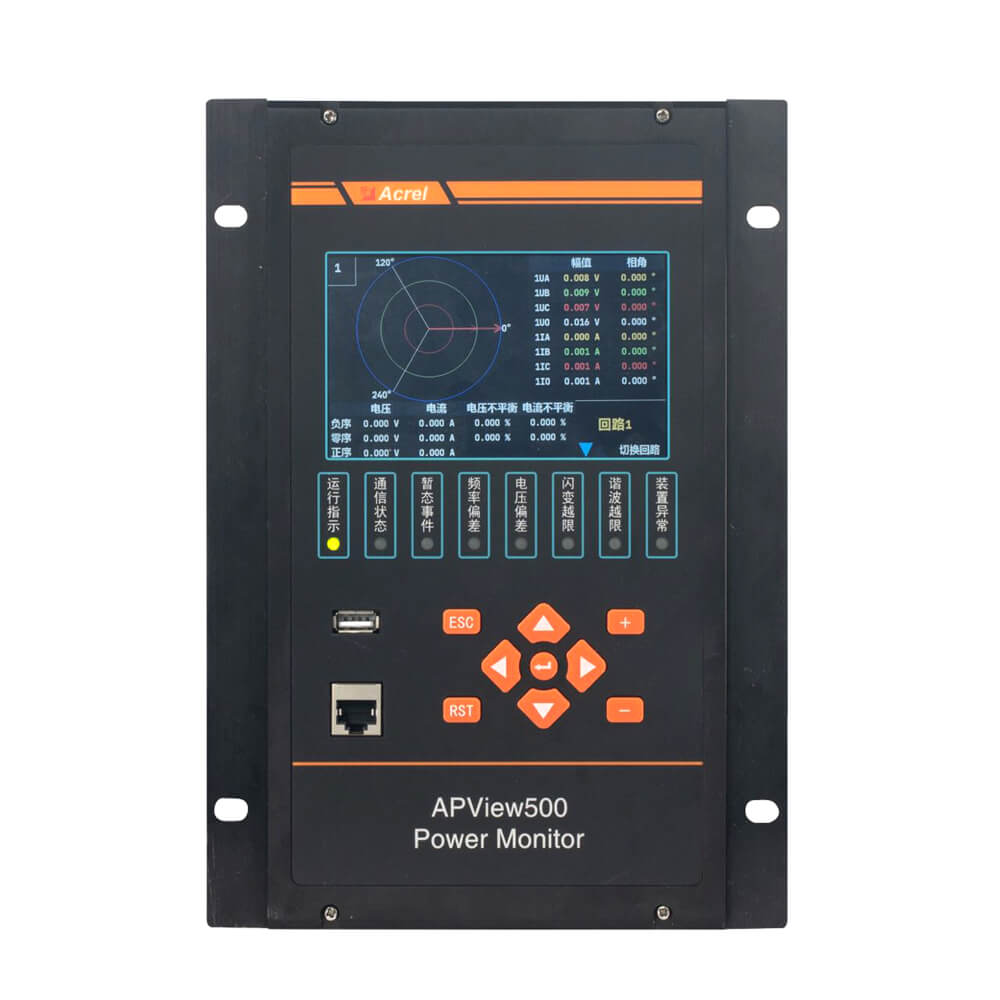
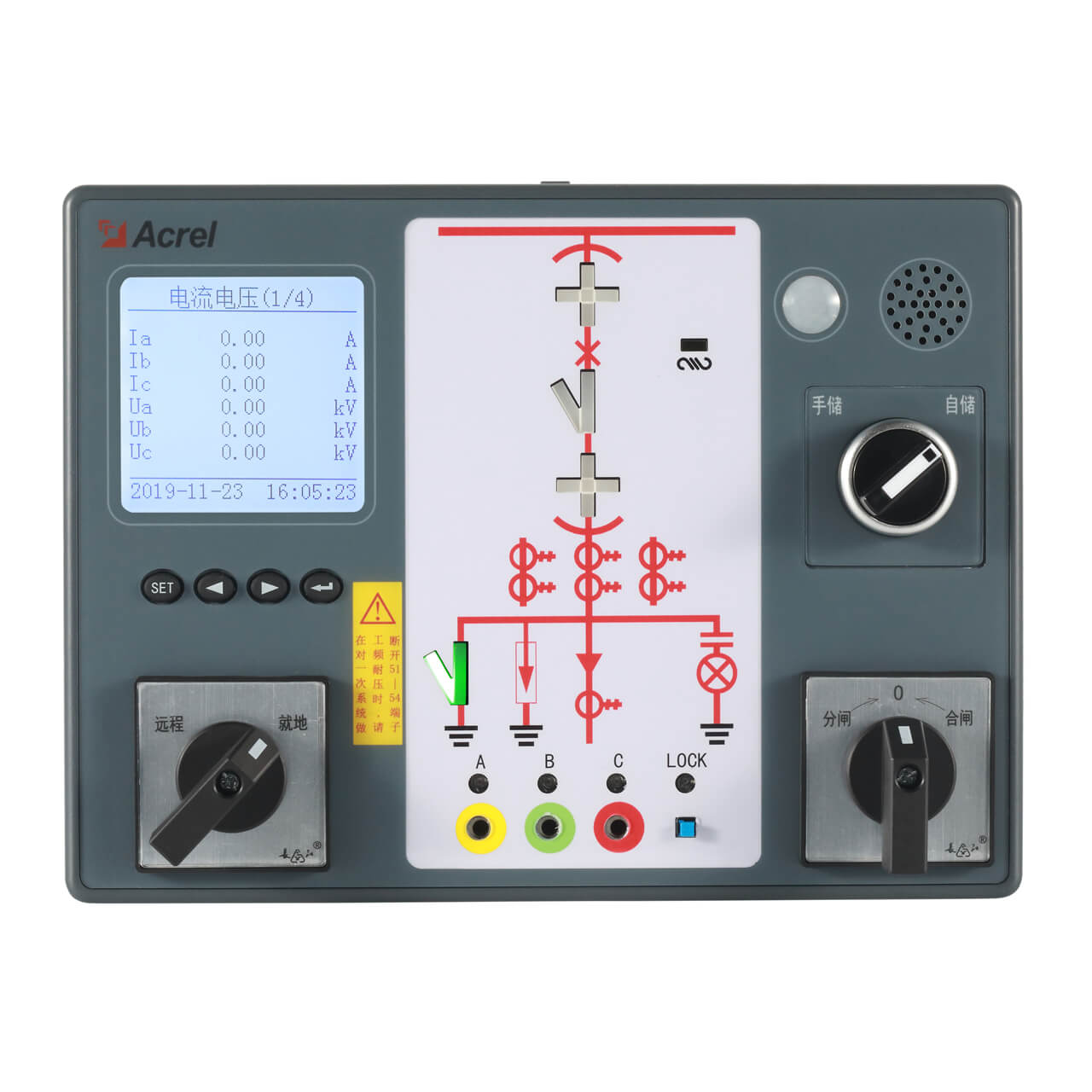
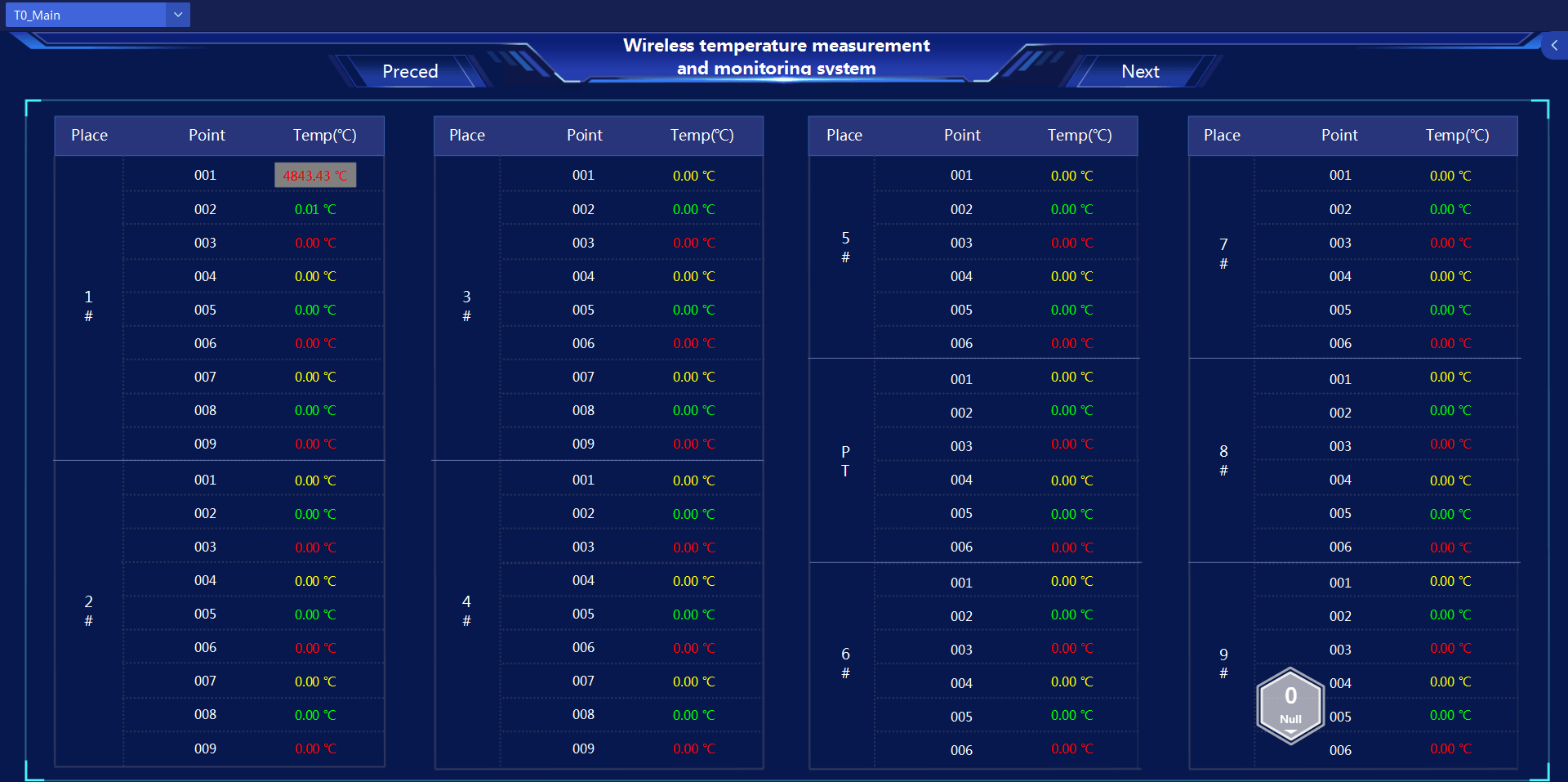
The local HMI provides centralized visualization of monitoring data and alarm information.
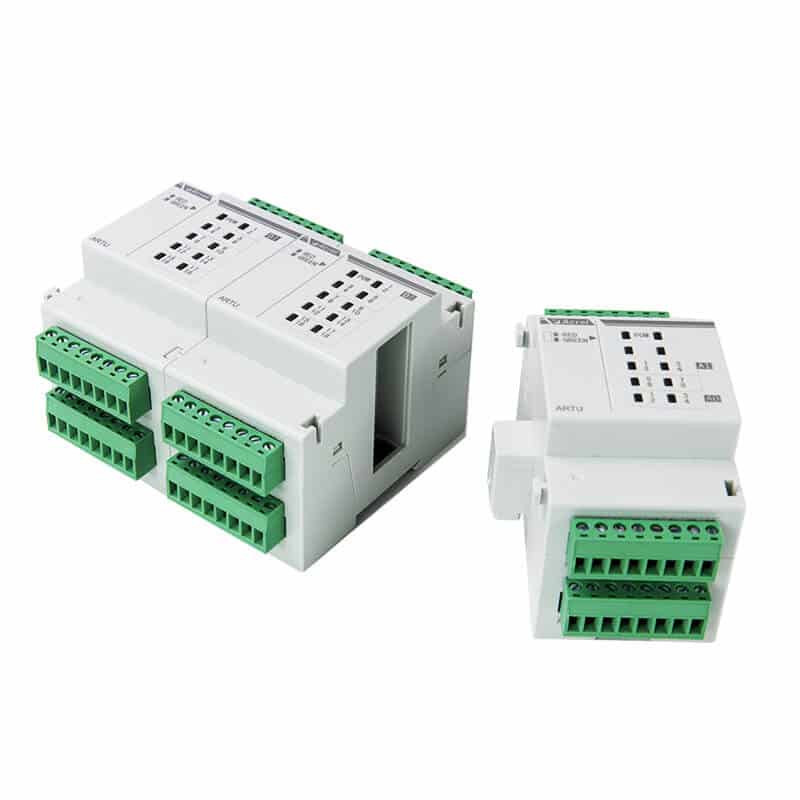
Acrel’s ATP/ARTU touchscreen solution can display temperature data from up to 240 wireless temperature sensors and supports alarm, data logging, and Modbus RTU/TCP communication.
Typical Data Flow
Switchgear → Sensors → Communication Gateway → Local HMI / Monitoring Platform → Alarm & Maintenance Response
This architecture allows the system to be scaled according to the number of switchgear panels and monitored points.
Key Components
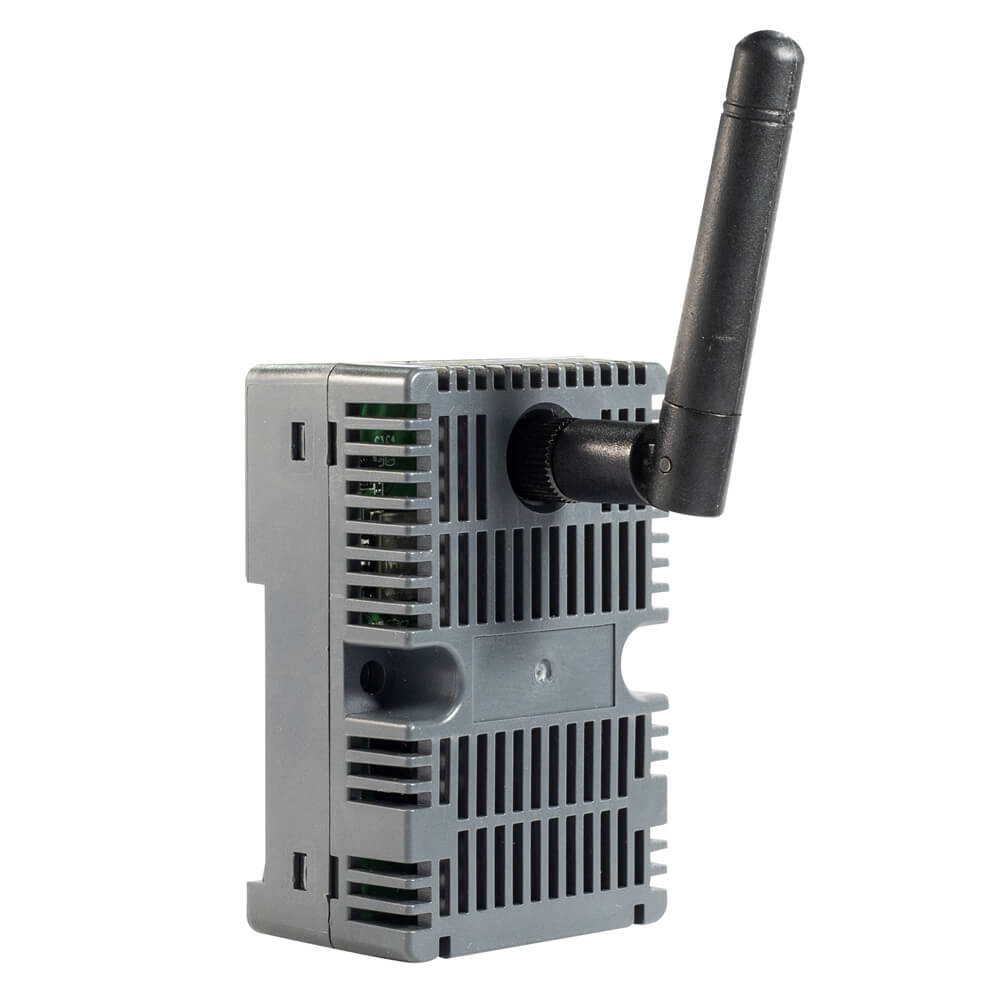
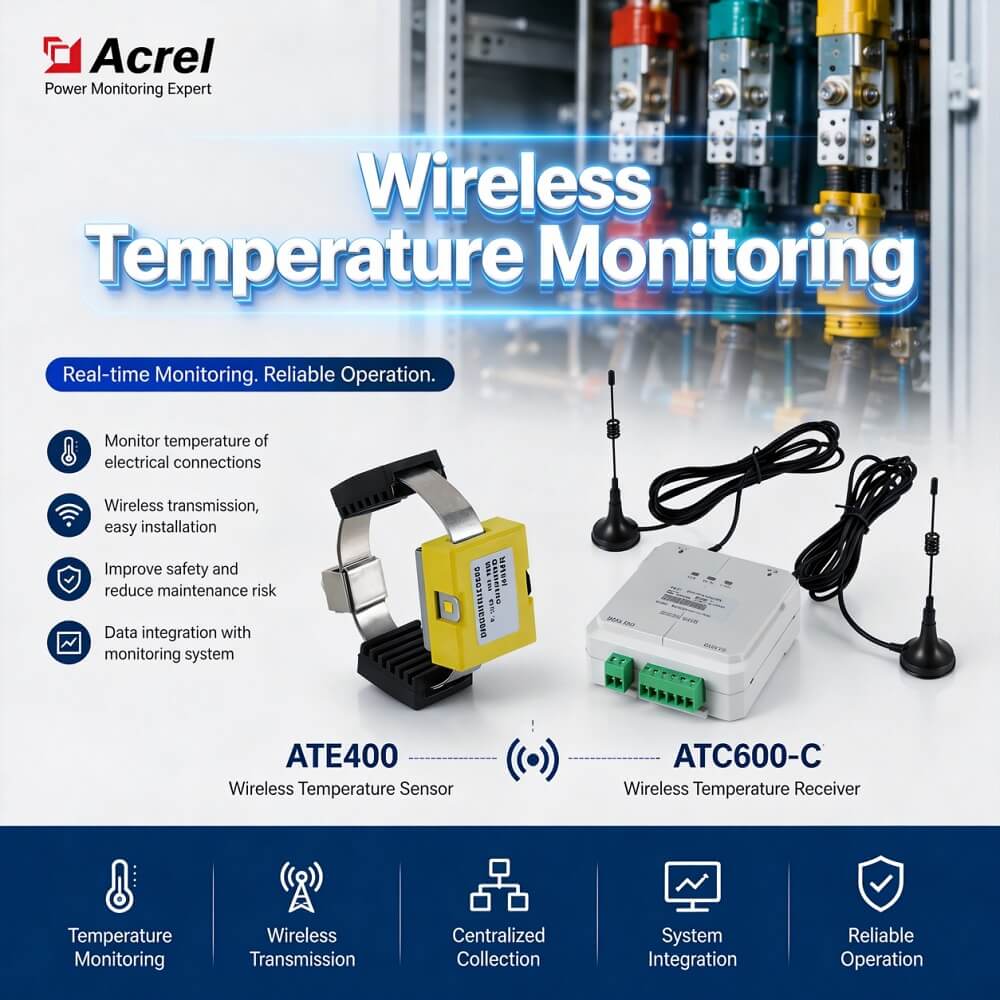
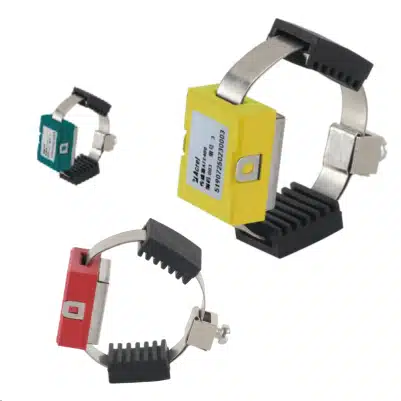
01. ATE400 Wireless Temperature Sensor
Purpose: Online temperature monitoring of critical electrical connection points.
The ATE400 is designed for long-term temperature monitoring of energized electrical parts, including low-, medium-, and high-voltage applications.
Key features:
- Wireless passive temperature monitoring
- CT-powered
- Operating temperature: -50°C to +125°C
- 470/433/868–923 MHz frequency options
- 15-second measurement interval
- Maintenance-free design
Recommended for: Busbar joints, breaker contacts, cable terminals and other critical connection points.
CE RED
470/433/868-923MHz
Frequency 15s
CT-powered
-50~125℃
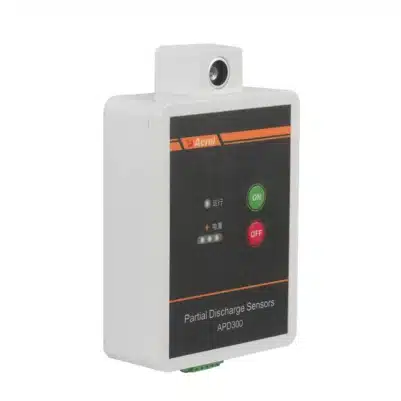
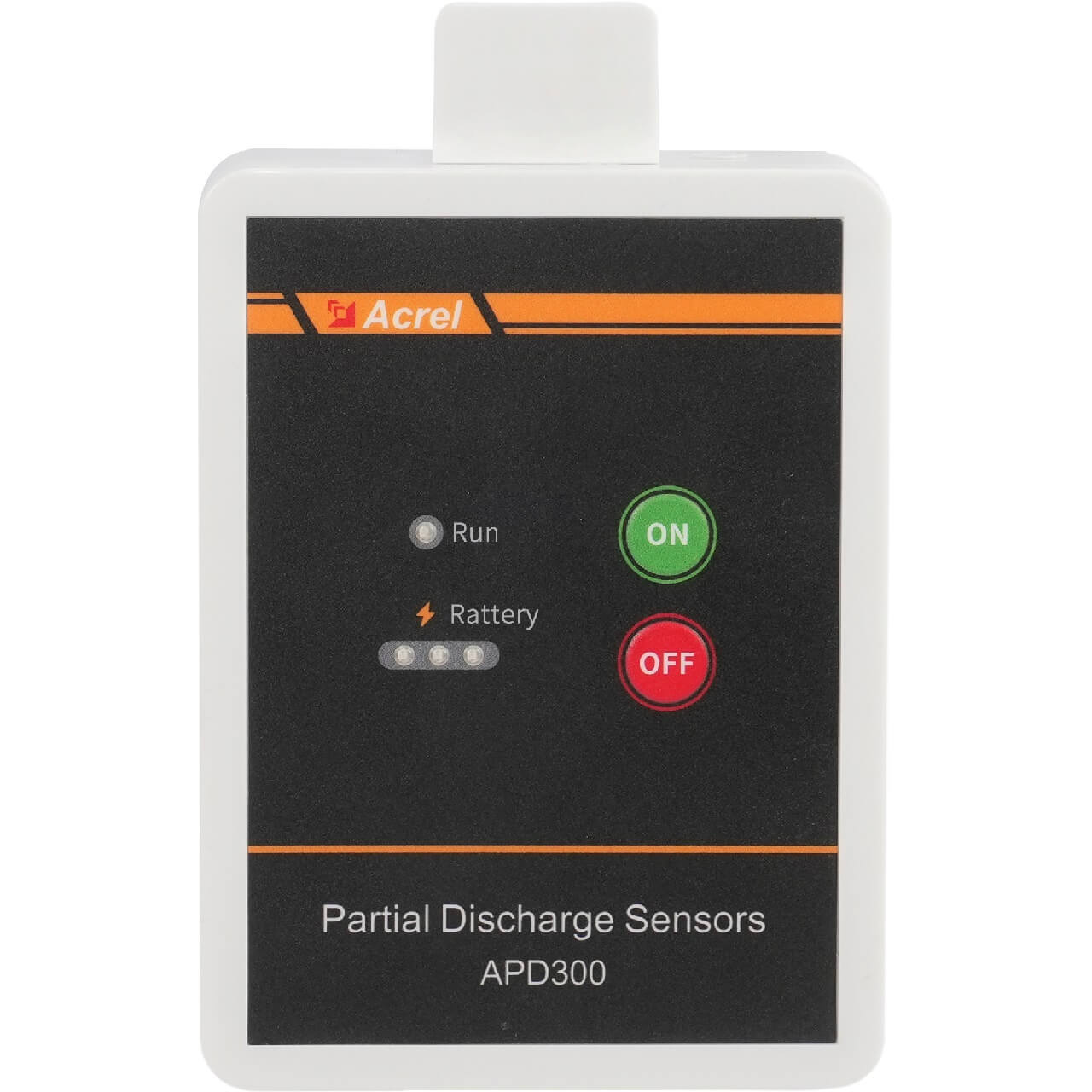
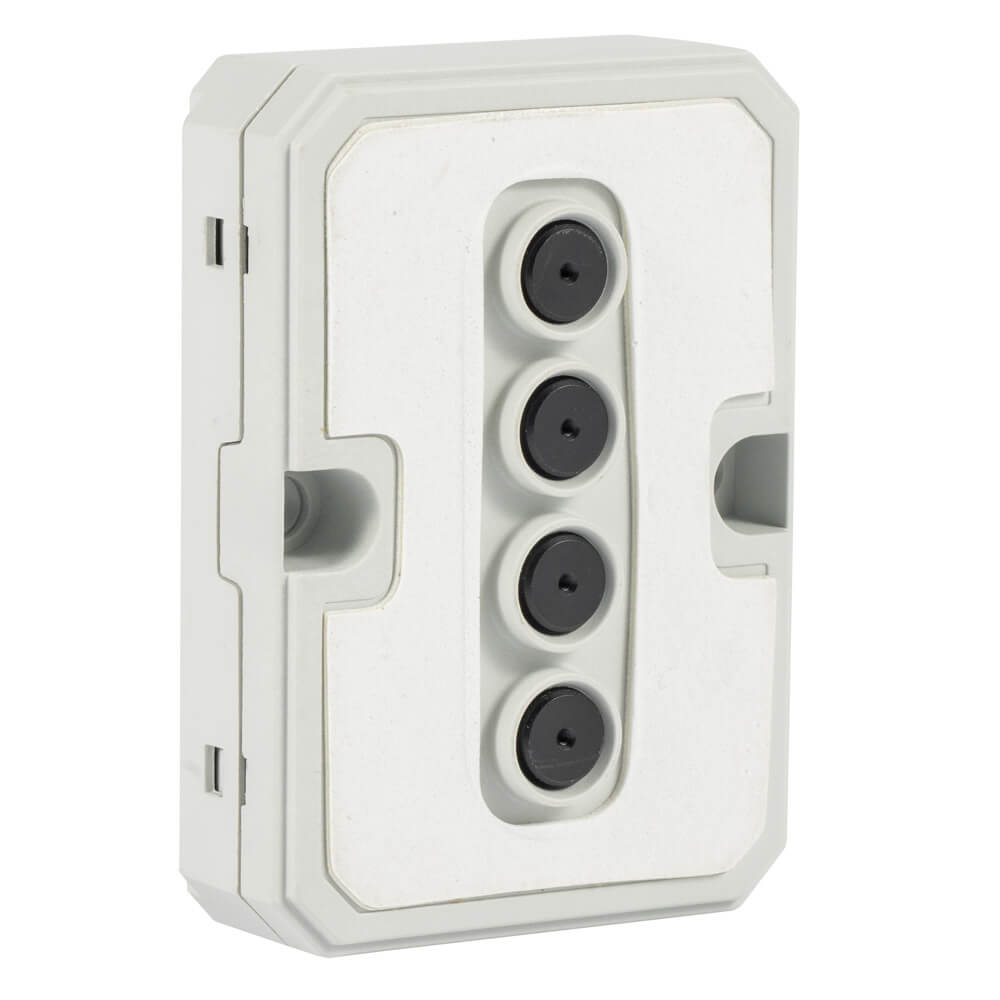
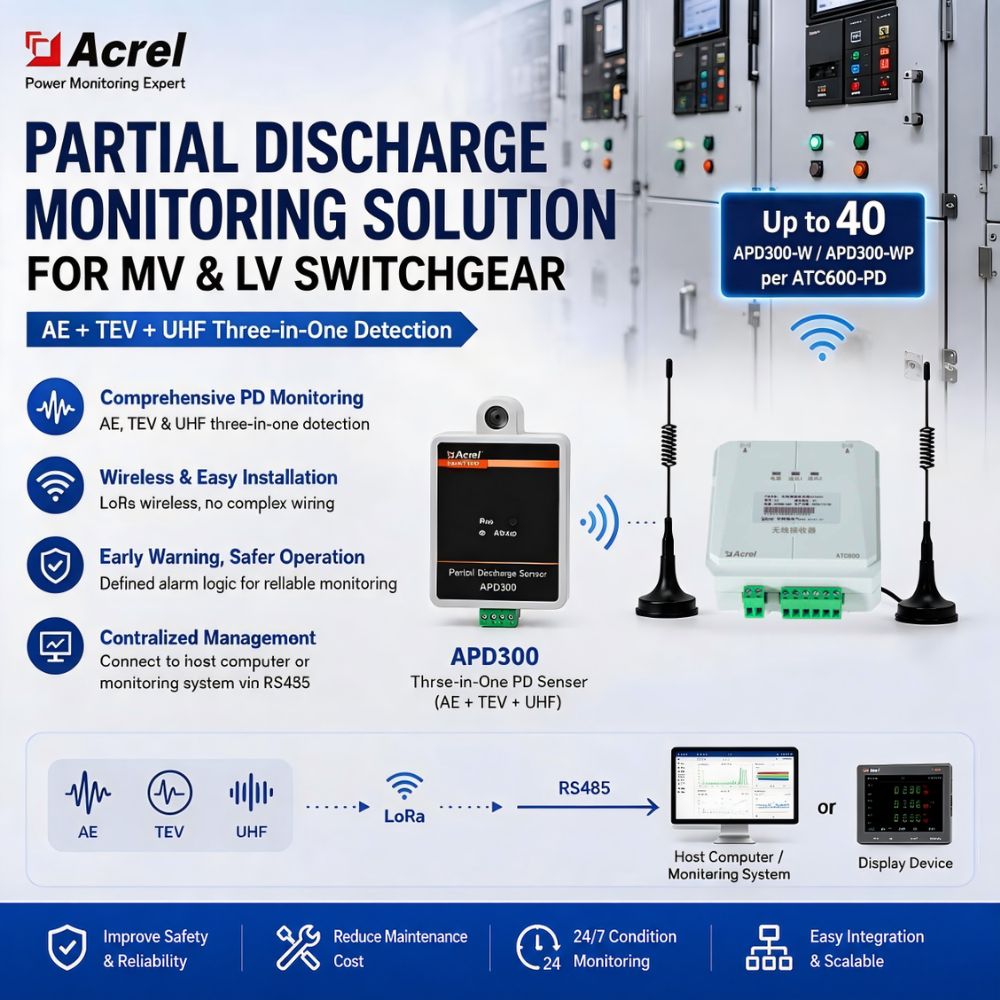
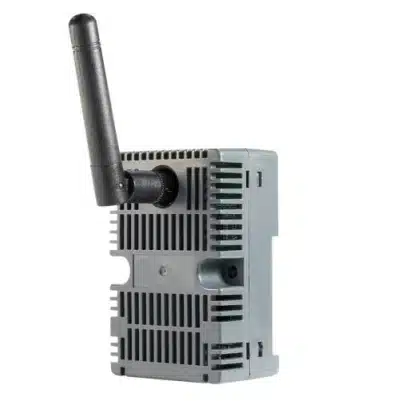
02. APD300 Partial Discharge Sensor
The APD300 supports AE, TEV and UHF detection methods for identifying partial discharge activity.
Key features:
- AE / TEV / UHF detection
- Modbus RTU / LoRa communication options
- DC12–36V / battery power options
- Supports condition assessment of electrical insulation
Recommended for: MV switchgear, busbar insulation, cable terminations and other critical insulation components.
Power Supply:DC12-36V / Battery
AE TEV UHF
Noise Temperature Humidity
Modbus-RTU / Lora
03. AHE100 Temperature & Humidity Sensor
Purpose: Monitoring the internal environmental conditions of switchgear cabinets.
The AHE100 monitors temperature and humidity in real time and provides warning information when abnormal conditions occur.
Recommended for: MV/LV switchgear cabinets and electrical rooms where environmental conditions require continuous monitoring.
Temperature
Humidity
Power Supply: DC12-36V / Battery
04. ATP / ATU Touchscreen HMI
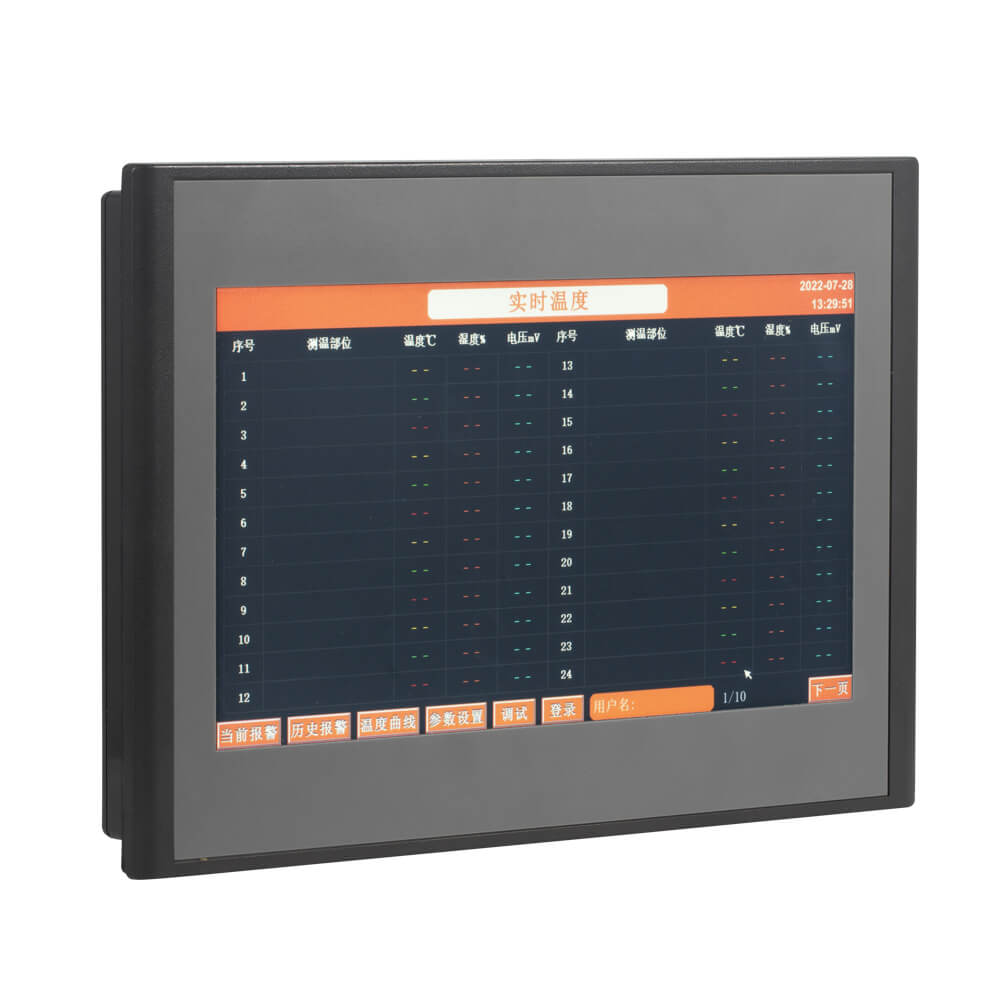
Purpose: Centralized local monitoring and alarm management.
The HMI can display real-time temperature information from up to 240 wireless sensors.
Key features:
- Up to 240 wireless sensors
- Real-time monitoring
- Over-temperature alarms
- Data logging
- Modbus RTU
- Modbus TCP
The HMI can also forward monitoring data to a higher-level supervision system.
up to 240 Sensors
Alarm
Data Logging
Modbus-RTU, Modbus-TCP
Benefits of Online Switchgear Condition Monitoring
Continuous Monitoring
Monitor critical switchgear conditions continuously rather than relying only on periodic manual inspection.
Early Warning
Identify abnormal temperature, partial discharge, or humidity conditions before they develop into major failures.
Predictive Maintenance
Use real-time condition data and historical trends to support condition-based maintenance decisions.
Faster Fault Localization
Multi-point monitoring helps maintenance teams identify abnormal equipment or connection points more efficiently.
Reduced Manual Inspection
Remote monitoring reduces dependence on routine point-by-point inspection and improves maintenance efficiency.
Scalable Architecture
The monitoring system can be configured for individual switchgear panels or expanded across substations and larger electrical distribution systems.
Easy System Integration
Modbus RTU/TCP communication enables integration with suitable supervision, automation, and energy management systems according to project requirements.
Applications
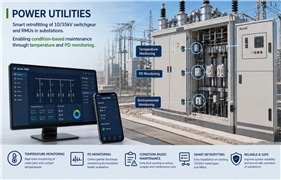
For 10kV/35kV switchgear, RMUs, and other distribution equipment, online temperature and partial discharge monitoring supports condition-based maintenance and improves operational visibility.
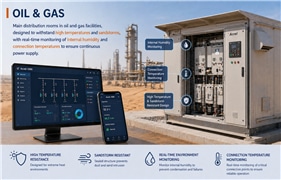
Oil and gas facilities require reliable electrical distribution under demanding environmental conditions. Monitoring internal cabinet temperature, humidity, and critical connection temperatures helps operators identify abnormal conditions earlier.
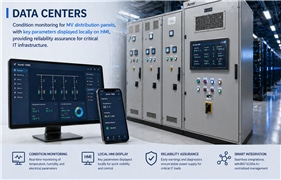
Data centers depend on highly reliable power distribution. Condition monitoring for MV distribution panels provides continuous visibility into critical electrical equipment and supports proactive maintenance.
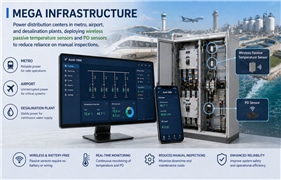
Metro systems, airports, desalination plants, and other major infrastructure facilities can use wireless temperature and partial discharge monitoring to reduce reliance on manual inspection.

Semiconductor, automotive, and other continuous-production facilities can monitor critical switchgear connection temperatures and insulation conditions to support reliable production.
Project Case Study
Online Condition Monitoring for Critical Switchgear
Project Location: [Saudi Arabia]
Industry: [Oil & Gas]
Equipment: [7 MV Substation = 42 Switchgear]
Monitoring Points: [1104 Temperature + 184 PD + 7 HMI]
Monitoring Parameters: Temperature / Partial Discharge
Acrel Solution: ATE400 + APD300 + ATU
Customer Challenge
The customer required continuous visibility into critical switchgear conditions and wanted to reduce dependence on periodic manual inspection.
Acrel Solution
Acrel deployed multi-dimensional condition monitoring covering critical connection temperature, partial discharge, and cabinet environmental conditions.
Result
The system provides centralized monitoring and alarm information, helping the maintenance team identify abnormal conditions earlier and make maintenance decisions based on actual equipment condition.
Frequently Asked Questions
Switchgear condition monitoring is the continuous monitoring of critical electrical and environmental parameters such as temperature, partial discharge, and humidity to identify abnormal conditions and support preventive or predictive maintenance.
Common parameters include connection temperature, partial discharge, cabinet temperature, and humidity. The appropriate monitoring parameters depend on switchgear type, voltage level, operating environment, and project requirements.
Temperature sensors can continuously monitor critical connection points such as busbar joints, breaker contacts, and cable terminals. Abnormal temperature values or trends can trigger alarms for further inspection.
Partial discharge can be monitored using appropriate PD detection technologies. Acrel’s APD series supports AE, TEV, and UHF detection methods for condition assessment.
The solution can be designed for retrofit applications. Wireless temperature monitoring can reduce wiring requirements, while the final installation method depends on switchgear construction, voltage level, safety requirements, and sensor placement.
Acrel’s ATP/ATU touchscreen solution can display data from up to 240 wireless temperature sensors, depending on the system configuration.
The solution supports Modbus communication. The ATP/ATU platform supports Modbus RTU and Modbus TCP, enabling integration with suitable higher-level supervision systems according to project requirements.
emperature monitoring primarily identifies abnormal heating at electrical connections and components, while partial discharge monitoring focuses on insulation condition and early discharge activity. Combining both provides broader switchgear condition visibility.
Acrel’s wireless passive temperature monitoring solution is designed for temperature measurement on energized electrical parts. Installation must follow the applicable electrical safety requirements and the product’s installation instructions.
The selection should consider switchgear type, voltage level, monitored points, required parameters, installation constraints, communication requirements, environmental conditions, and integration with existing automation or supervision systems.
Why Choose Acrel for Switchgear Condition Monitoring?
A switchgear monitoring project is not simply a matter of selecting individual sensors. The monitoring points, sensing technologies, communication architecture, and integration method must work together as one system.
Acrel provides a multi-dimensional approach covering:
Temperature + Partial Discharge + Humidity + Local HMI + Communication
This allows customers to build a monitoring architecture according to actual switchgear conditions instead of relying on a single monitoring parameter.
Acrel can support customers with:
- Monitoring point selection
- Product selection
- System architecture design
- Communication configuration
- Wiring and installation guidance
- Integration support
- Project-specific technical consultation
For projects with different switchgear types, voltage levels, monitoring points, or integration requirements, the system can be configured according to the actual application.
Conclusion
Online switchgear condition monitoring provides continuous visibility into critical electrical equipment and helps operators move from periodic inspection toward condition-based maintenance.
By combining temperature monitoring, partial discharge detection, humidity monitoring, centralized visualization, alarms, and open communication, the system can help identify developing electrical risks earlier and support more efficient maintenance.
For substations, oil & gas facilities, data centers, utilities, manufacturing plants, and other critical infrastructure, the right monitoring architecture should be selected according to the switchgear type, monitored points, environmental conditions, and system integration requirements.
Make Safety Visible, Operations Predictive, and Management Smart.
Contact us for a Customized
monitoring solution and system demonstration.
Need a Switchgear Condition Monitoring Solution?
Tell us your switchgear type, voltage level, number of panels, monitoring points, and required parameters.
Our engineers can recommend a suitable monitoring architecture and product configuration for your project.