




Overview
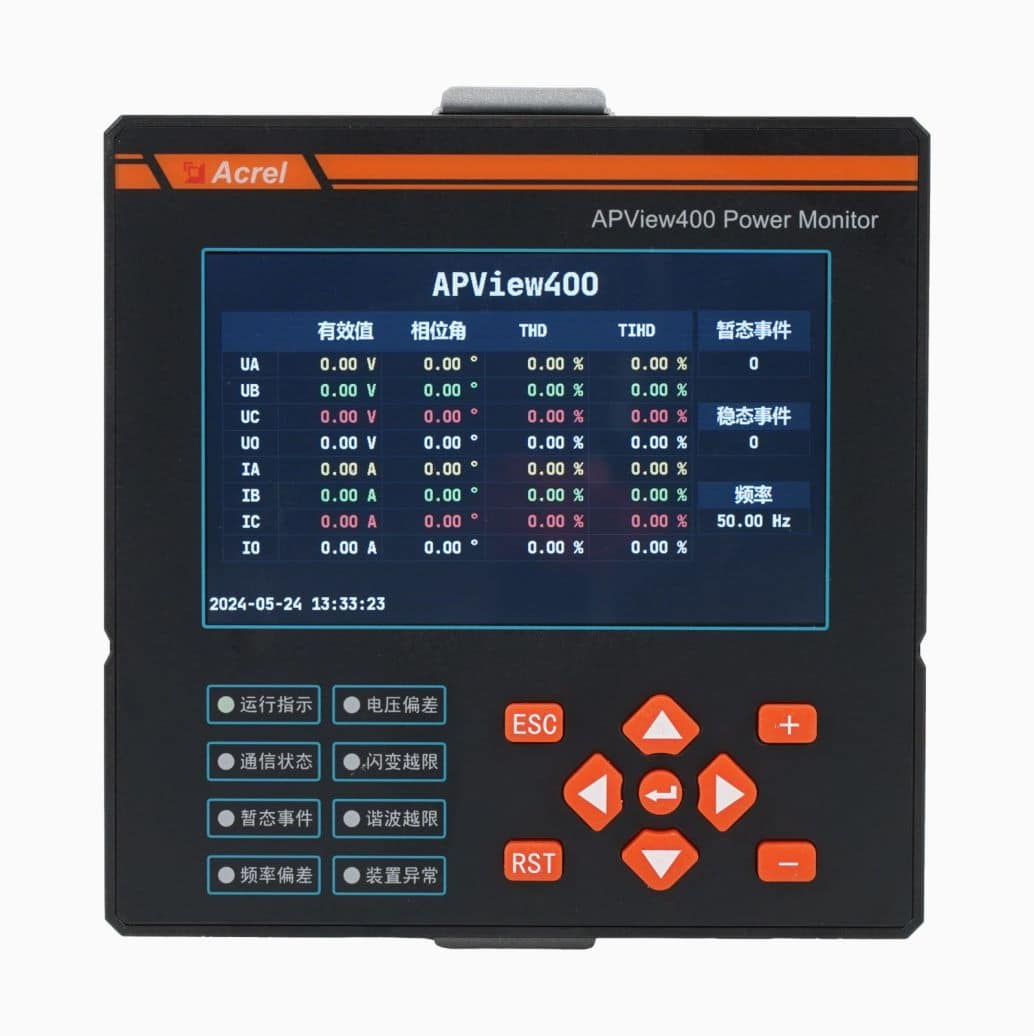
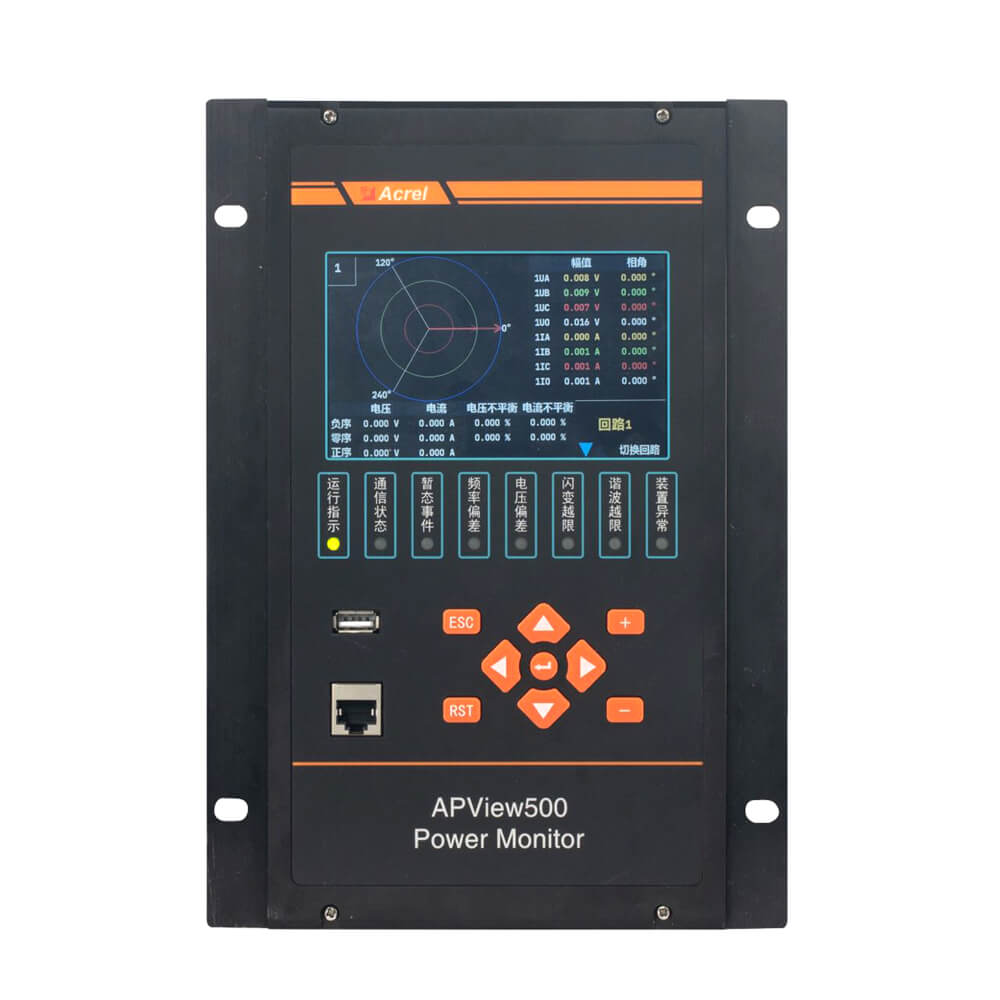
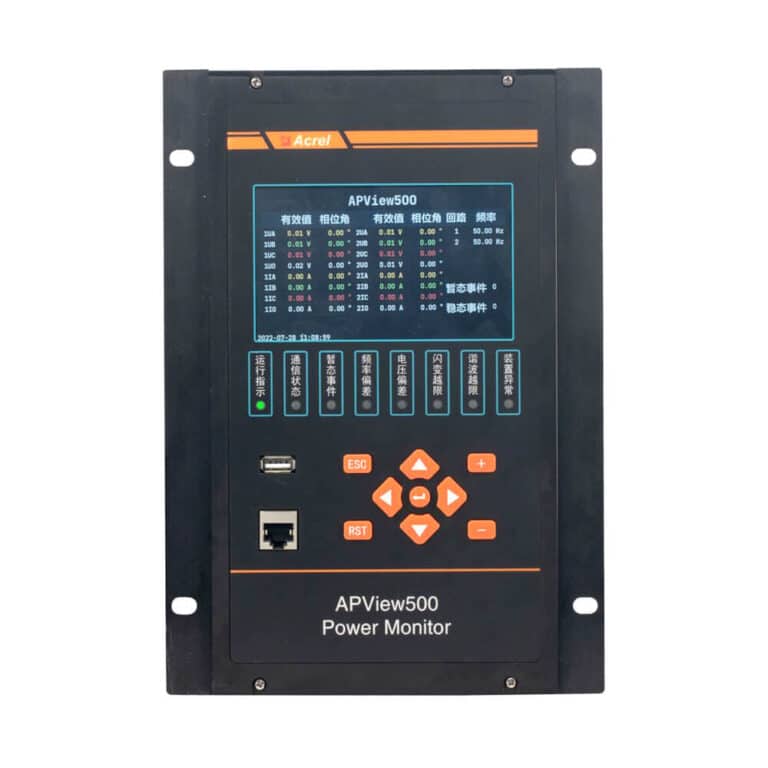
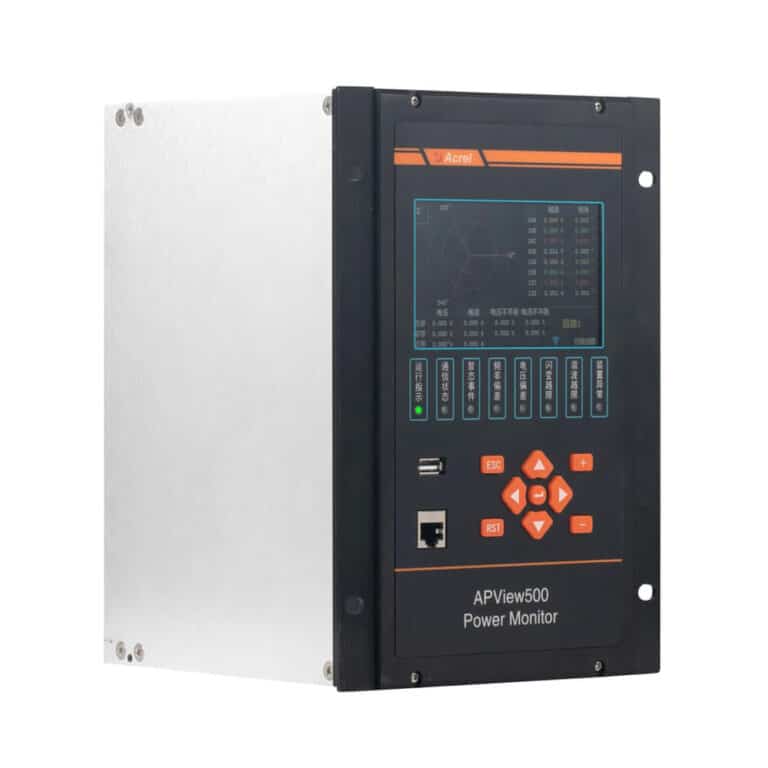
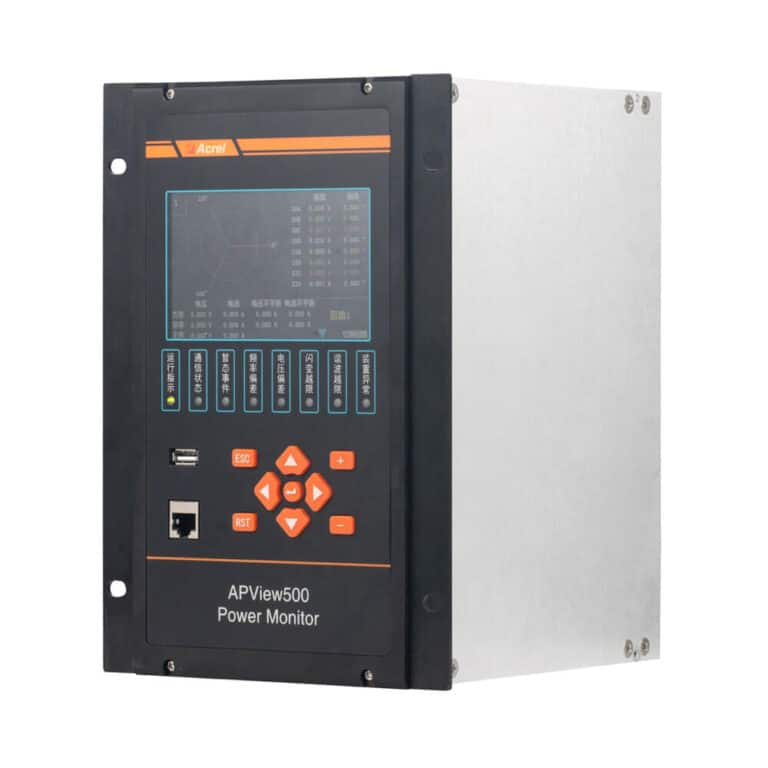
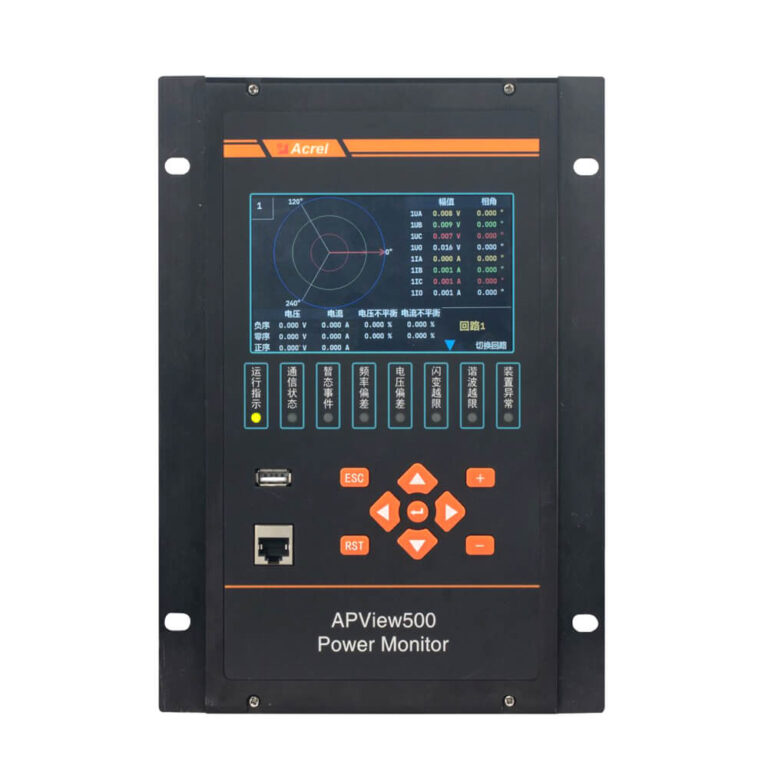
The APView500 is a high-end power quality monitor strictly designed according to IEC 61000-4-30 Class A standards. Its core highlight is the dual-circuit independent monitoring architecture, allowing a single device to simultaneously access and monitor two independent incoming line signals (e.g., Busbar Section I and II), perfectly suiting scenarios like sectionalized single busbar and dual-supply systems. Integrating functions such as harmonic analysis, transient event capture, and fault recording, it provides high-accuracy, high-reliability data for power quality assessment and fault tracing in power supply systems up to 110kV. It is widely used in industries, data centers, and critical infrastructure with stringent power continuity requirements.
Highlight
Class A Accuracy & High-Performance Hardware
- 1024 pts/cycle sampling
- 32GB SSD storage
- 5″ color LCD display
Dual-Circuit Independent Monitoring
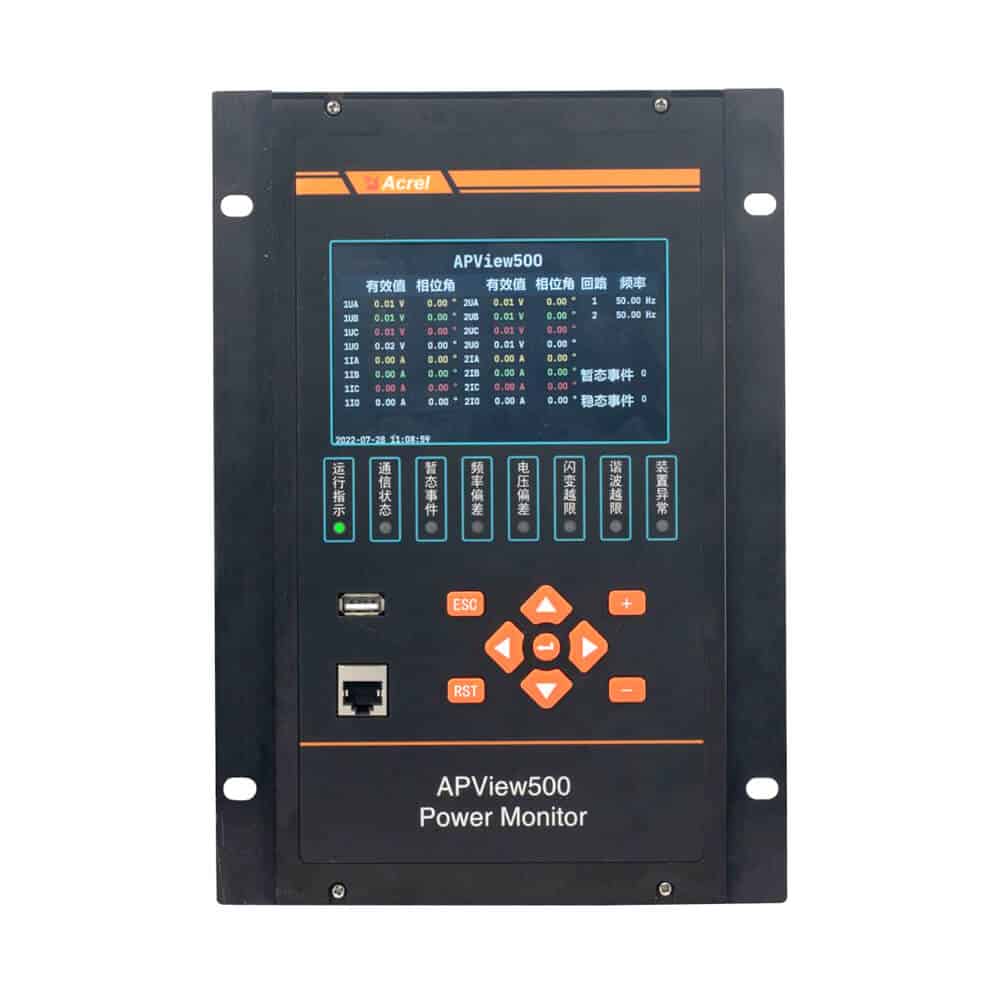
- Monitors 2 independent lines
- Reduces equipment costs
- Saves panel space
Abundant Interfaces & Protocols
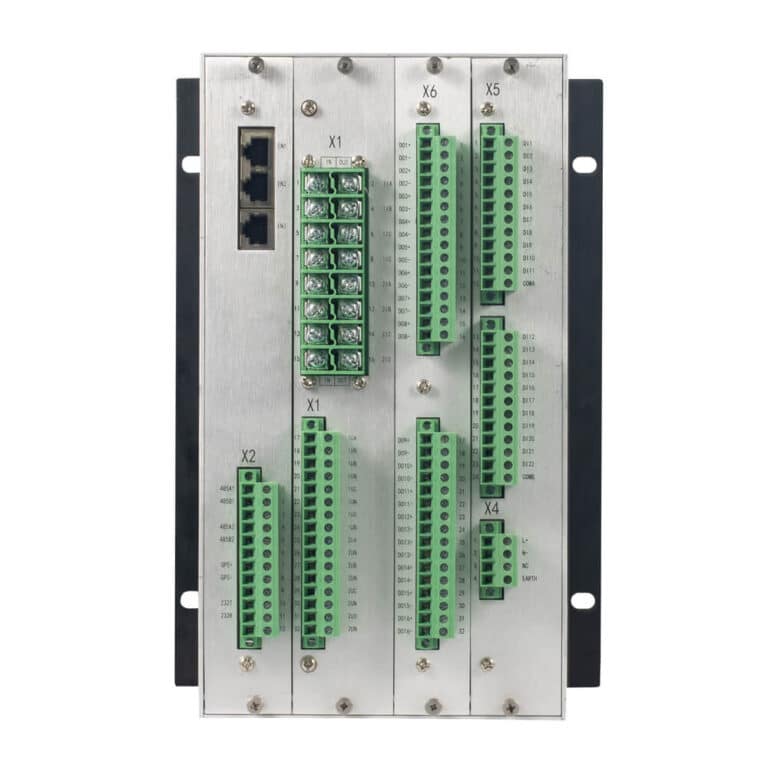
- 8V + 8I inputs
- 16DO + 22DI
- Supports IEC61850
Comprehensive Transient Event Analysis
- Dip/Swell source location
- ITIC & SEMI F47 curves
- Swell/Dip/Interruption + Transient
Function
| Measurement | Metering | Others |
| Voltage/Current RMS | Forward/Reverse Active/Reactive Energy | Dual-Circuit: 2 Independent 3-Phase Circuits |
| Frequency/Deviation | 4-Quadrant Reactive Energy | 200 Event Logs (Transient/Steady/Log) |
| Active/Reactive/Apparent Power (P, Q, S) | Multi-tariff Energy (4 tariffs) | Fault Recording (Event/Manual/Timed) |
| Power Factor (PF) | Demand Recording (Current/Power) | Web Server Remote Access |
| 2nd-63rd Harmonics/Interharmonics | Timestamped Monthly Extreme Values | Programmable Relay Outputs (DO) |
| Voltage/Current Unbalance | 31-day Daily Frozen Energy | GPS/IRIG-B Hard Synchronization |
| Voltage Flicker/Fluctuation | 12-month Historical Data Storage | USB/Ethernet Port for Maintenance |
| Voltage Swell/Dip/Interruption | 2x RS485 + 4x Ethernet Communication | |
| Transient Voltage/Current | IEC61850, Modbus-RTU/TCP, FTP | |
| Dip/Swell Source Location | ITIC & SEMI F47 Curve Analysis |
Specification
| Parameter | Specification |
| AC Voltage | Rated: 57.74V/100V or 220V/380V Overload: 1.2× continuous, 4× for 1s |
| AC Current | Rated: 1A or 5A Overload: 1.2× continuous, 20× for 1s |
| Accuracy | Voltage/Current: Class 0.1 P, Q, S: ±0.2% Active Energy: Class 0.5 Frequency Deviation: ±0.001Hz |
| Harmonic Accuracy | Voltage/Current Harmonics: Meets IEC 61000-4-30 Class A Accuracy: ±5% (UhN ≥ 1% Un) / ±0.05% (UhN < 1% Un) |
| Transient Accuracy | Amplitude Error: < ±0.2% Time Error: < ±20ms |
| Auxiliary Power | AC/DC 110V or 220V or DC 48V Consumption: ≤15W |
| Operating Environment | Temperature: -10℃~+55℃ Humidity: 5%~95% non-condensing Altitude: ≤2500m |
| Digital Input | 22 channels, passive dry contacts (ext. power required) |
| Digital Output | 16 channels, programmable relay outputs DO16 is device abnormal output |
| Communication | 2x RS485 (Modbus-RTU) 4x Ethernet (Modbus-TCP, IEC61850, FTP, Web) |
| Sync. Interface | 1x, IRIG-B (GPS hard synchronization) |
| Maintenance | 1x USB, 1x RS232, 1x Ethernet maintenance port |
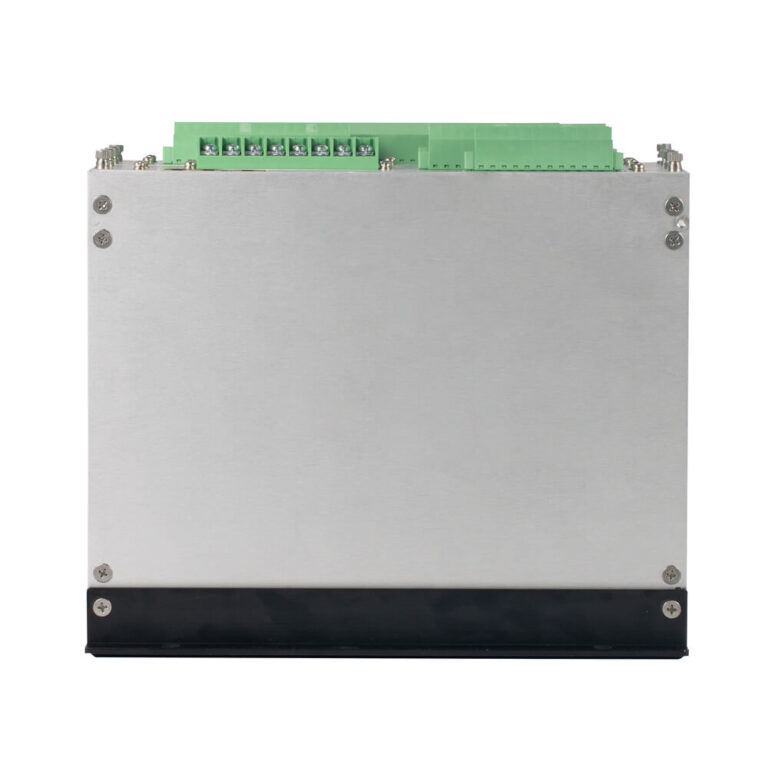
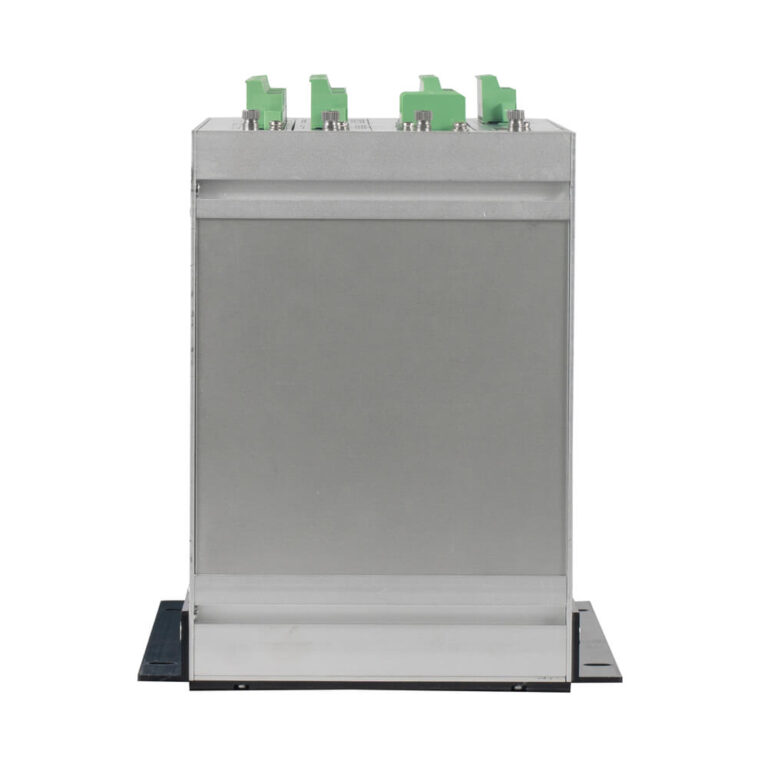
| Dimensions | Main unit: 190mm × 156mm × 171mm (W×H×D) |
| Mounting | Embedded (Cut-out: 181mm × 144mm) |
Show More
FAQ
According to the manual, the dual-circuit design applies to two main scenarios: single busbar sectionalized/non-sectionalized dual incoming line systems (two lines feeding the same busbar), and two single busbar single incoming line systems (two lines feeding two independent busbars). In either scenario, one APView500 can complete synchronous monitoring of both incoming lines.
This feature analyzes the changes in electrical parameters during the dip/swell event, using the equivalent impedance method to determine whether the disturbance source is on the line side (utility side) or the busbar side (user side). When disputes arise between the utility and the user, this objective data can serve as a basis for responsibility clarification, avoiding disputes.
The device supports Modbus-RTU (RS485 interface), Modbus-TCP, IEC61850 MMS, and FTP (Ethernet interfaces). For conventional monitoring systems, Modbus-RTU/TCP can be used; for digital substations, the IEC61850 protocol enables seamless integration; the FTP protocol facilitates batch export of waveform recording data.
The device is equipped with 32GB solid-state storage. For steady-state data, 1-minute statistics can be stored for up to 90 days (FIFO principle). For waveform recording data, storage duration depends on event frequency; under default settings, it can store thousands of waveform files, meeting long-term operational needs.
The APView500 supports IRIG-B hard synchronization (via GPS port) and SNTP network synchronization. IRIG-B synchronization achieves absolute accuracy of ±1ms, with clock accuracy of ±1s/24h, meeting the requirements for high-precision transient event analysis.
In the “Parameters – Function Parameters” menu, alarm thresholds and control words can be set for steady-state indices (voltage deviation, frequency deviation, harmonics, etc.) and transient indices (swell/dip, etc.). In the “DO Configuration” menu, each alarm function can be associated with any one or more of DO1-DO16, and can be set to bistable, monostable, or impulsive output modes, flexibly meeting different control requirements.
Summary
With its Class A accuracy, dual-circuit independent monitoring architecture, and transient source location capabilities, the APView500 provides high-end users with a “panoramic view” of grid health. It not only meets stringent standards for power quality monitoring in systems up to 110kV, but also helps users clarify incident responsibility and enhance power reliability through precise data. Choosing APView500 means selecting a professional, forward-thinking power quality solution.