


Overview
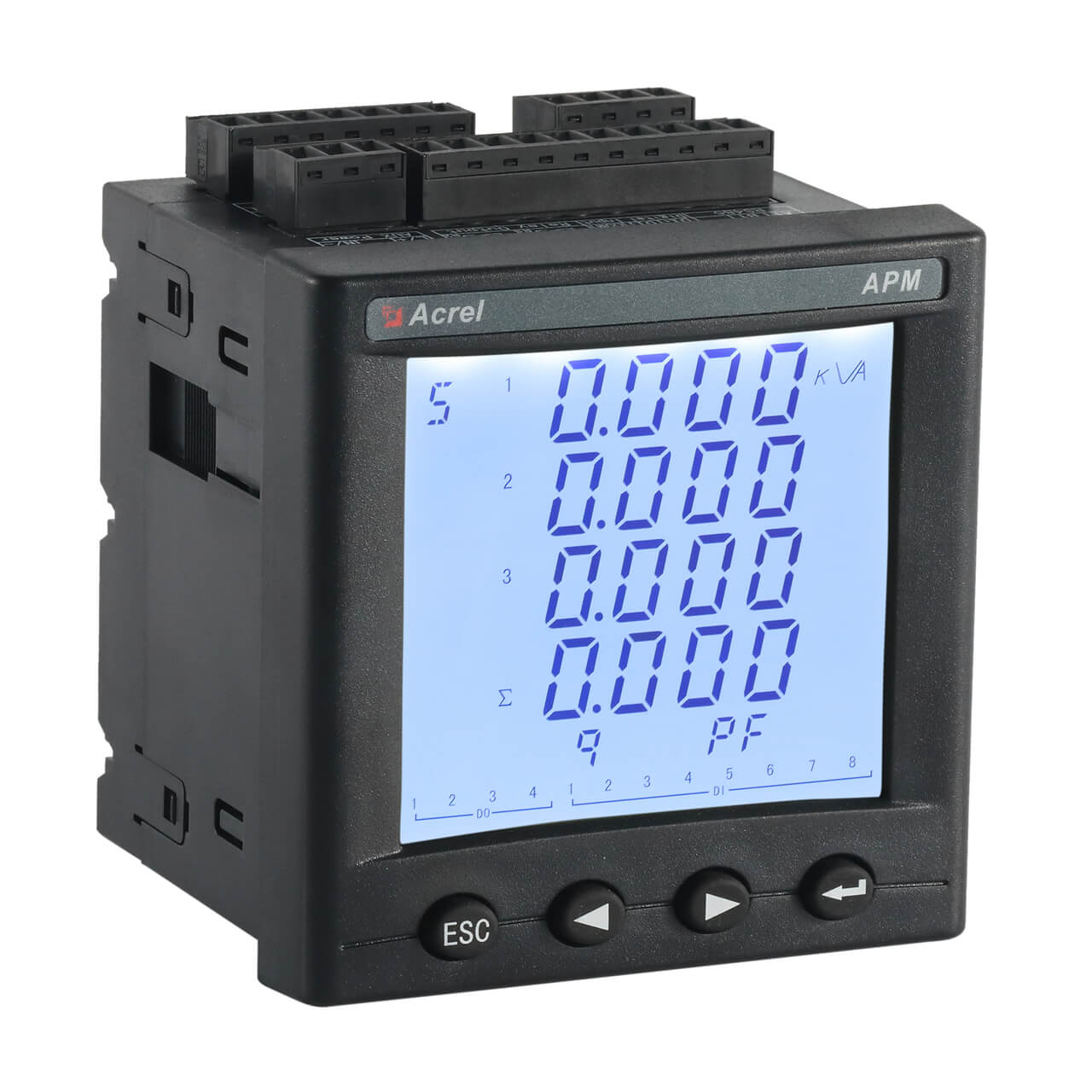
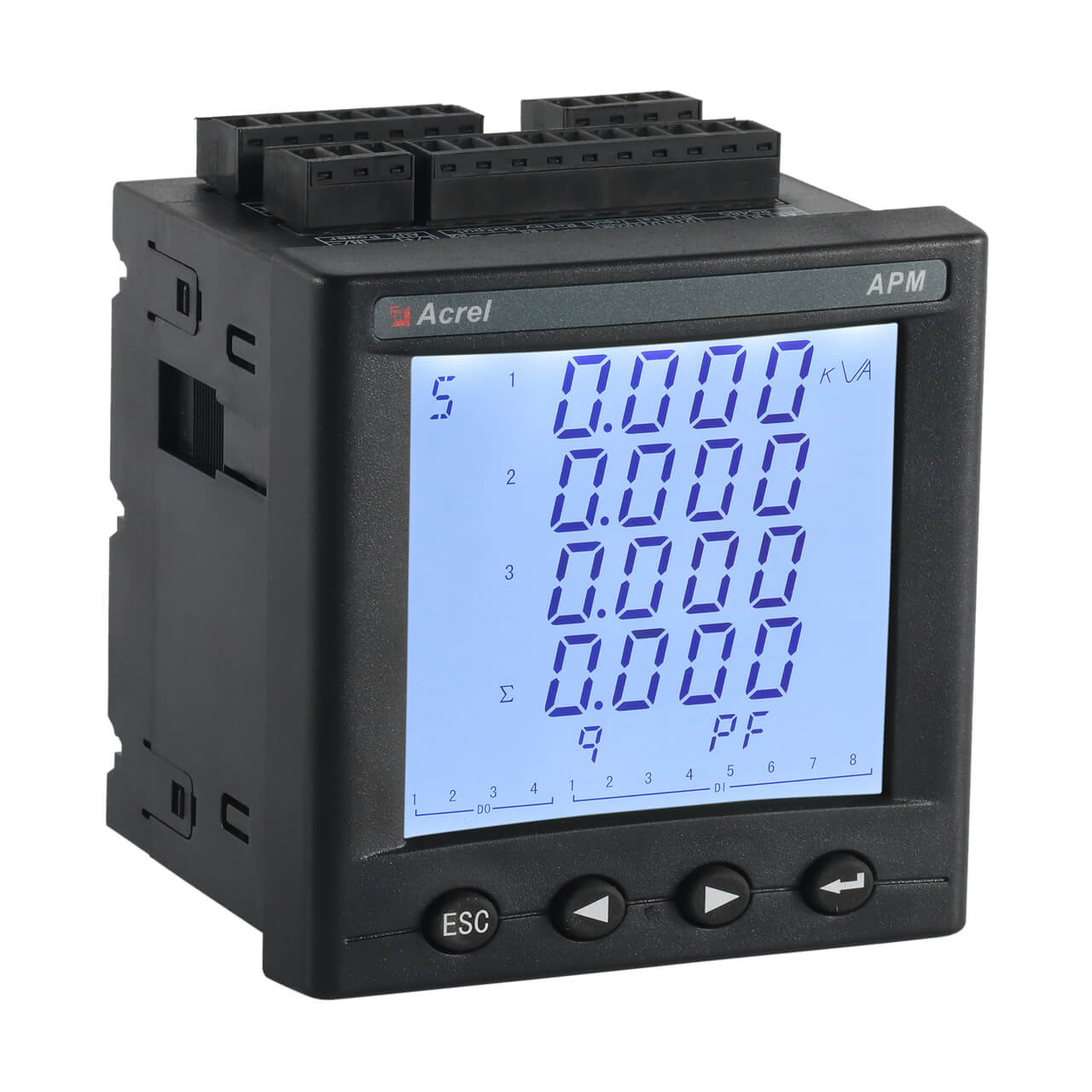
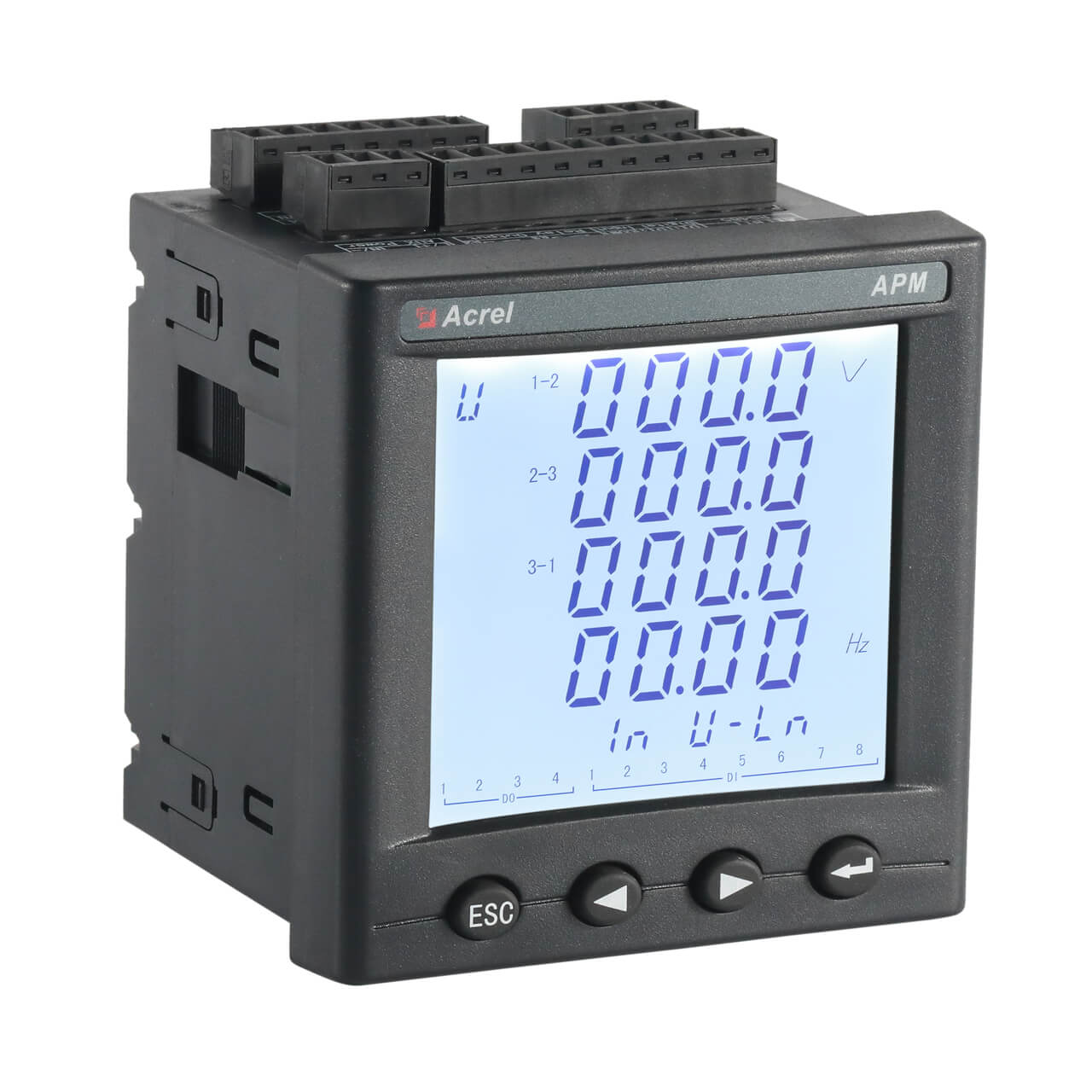
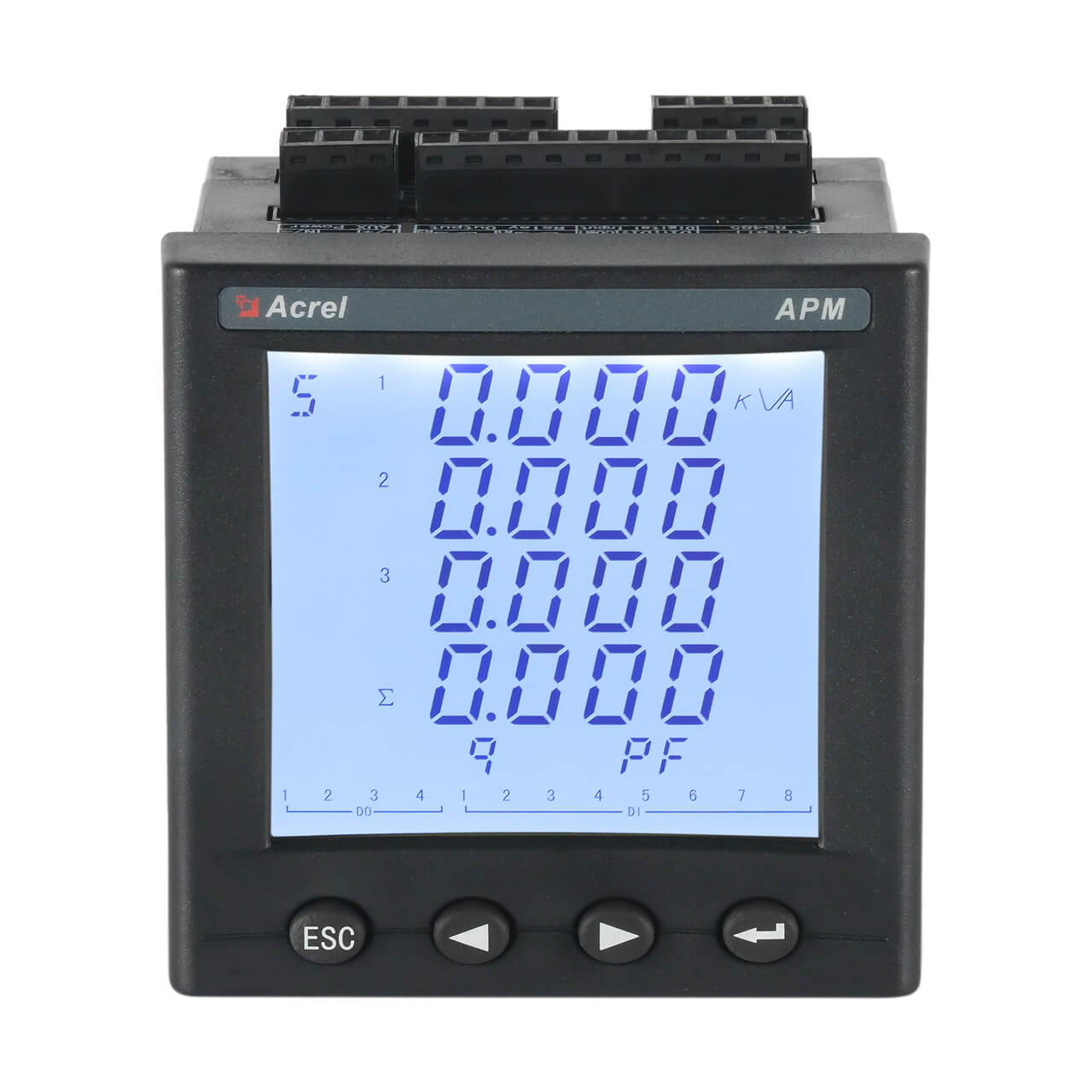
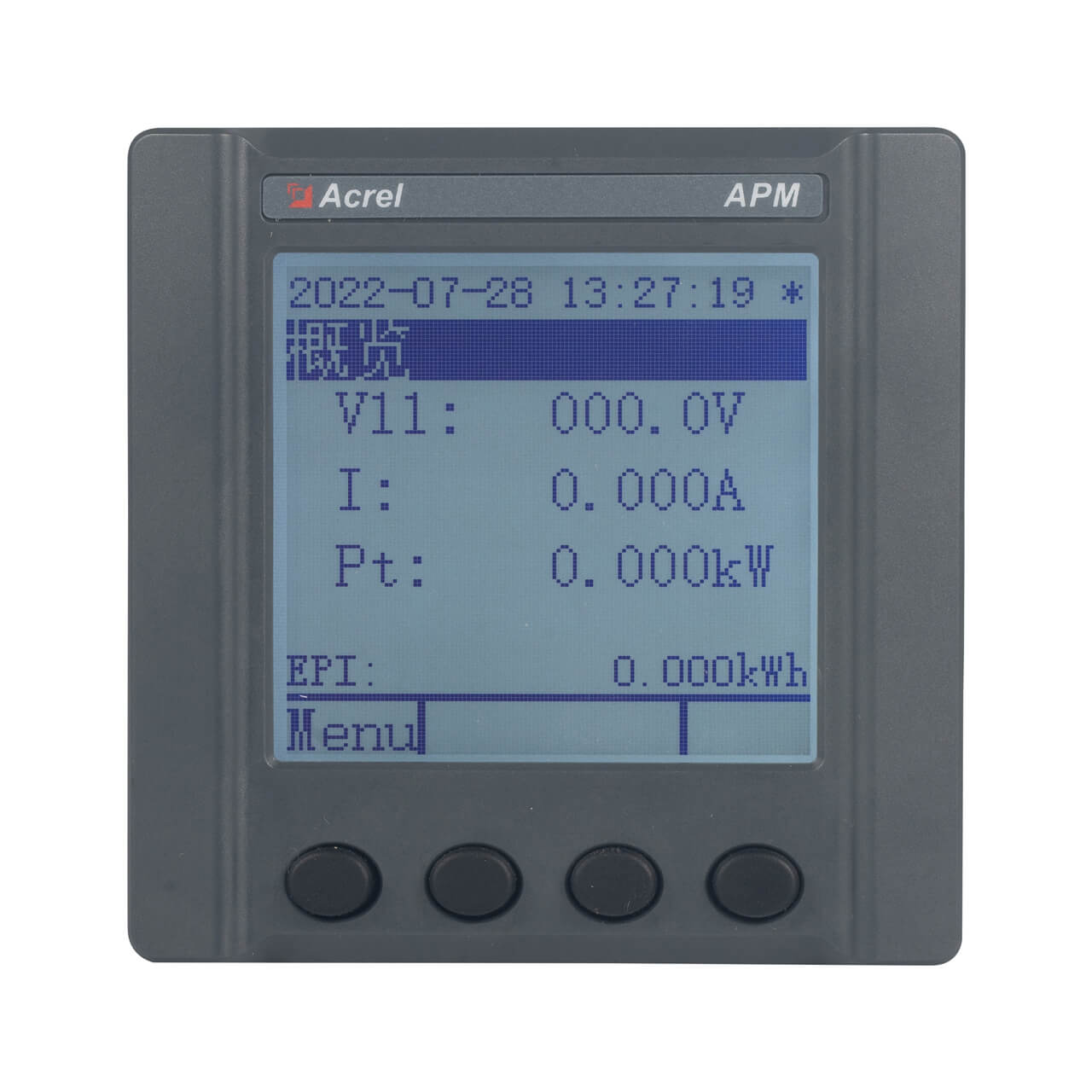
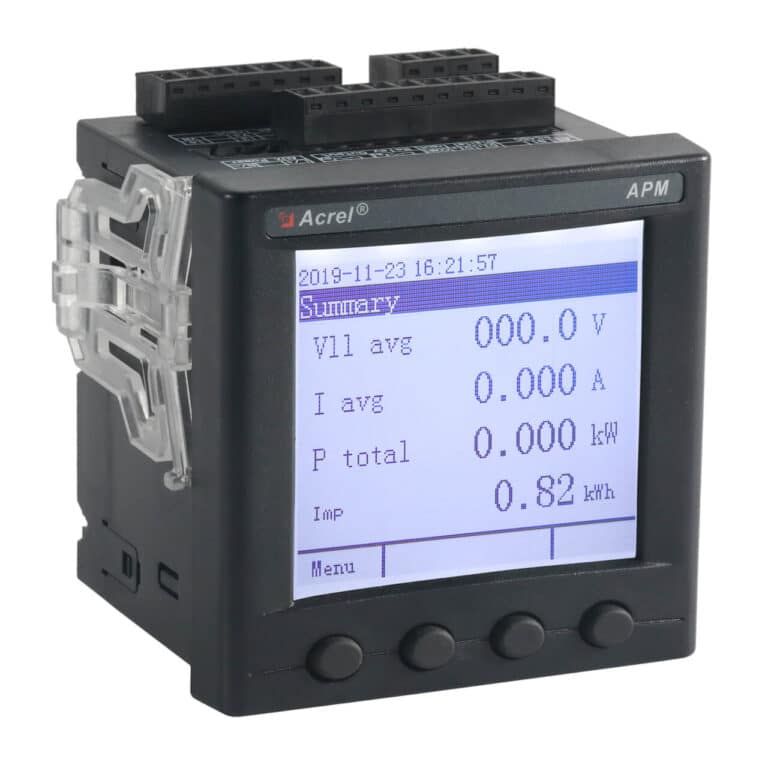
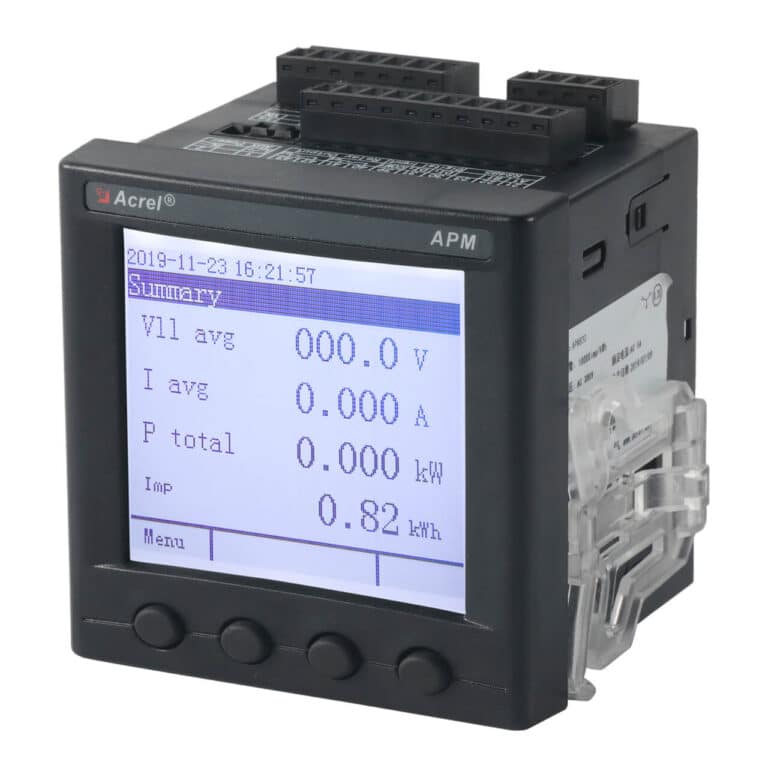
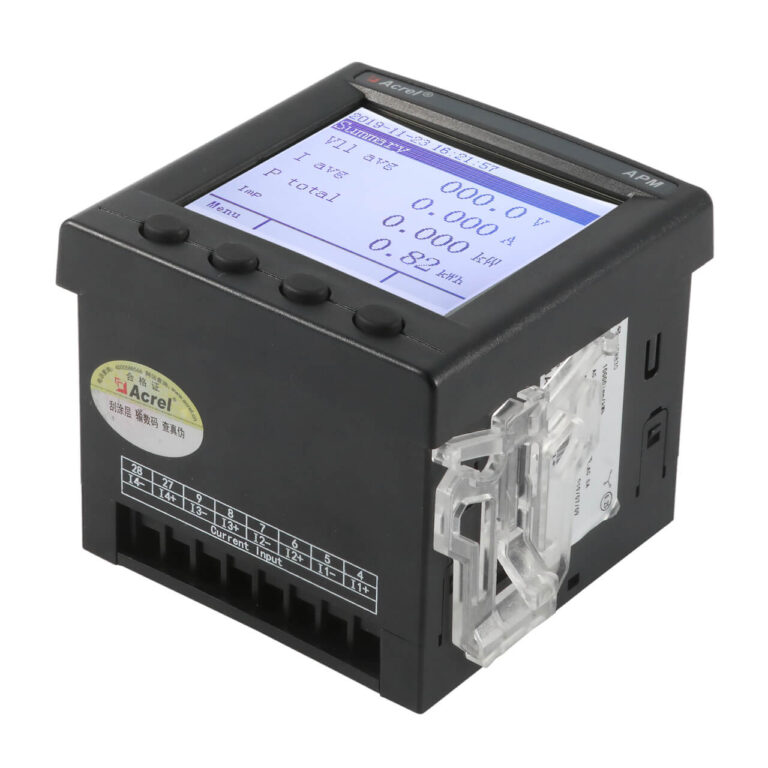
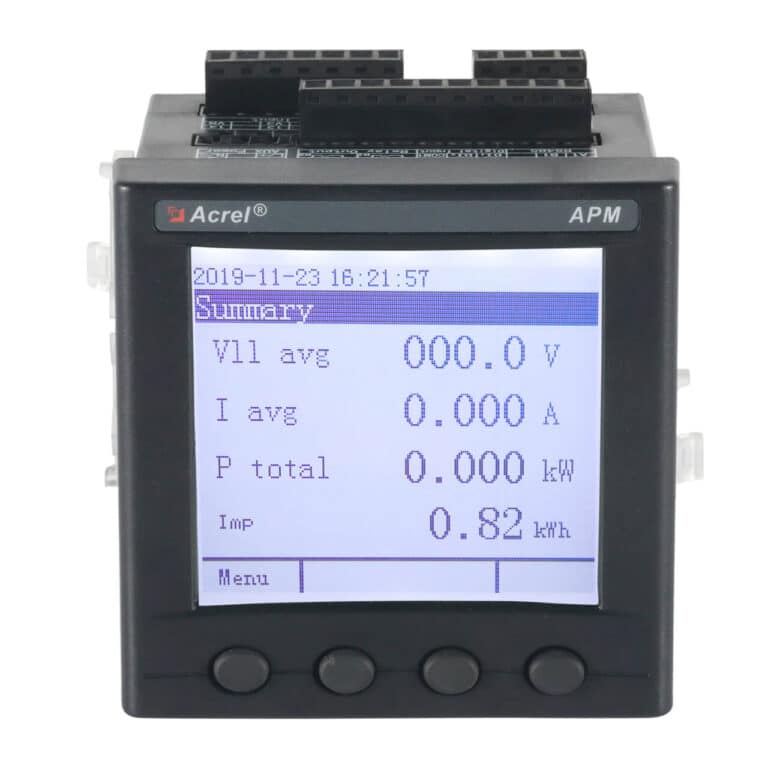
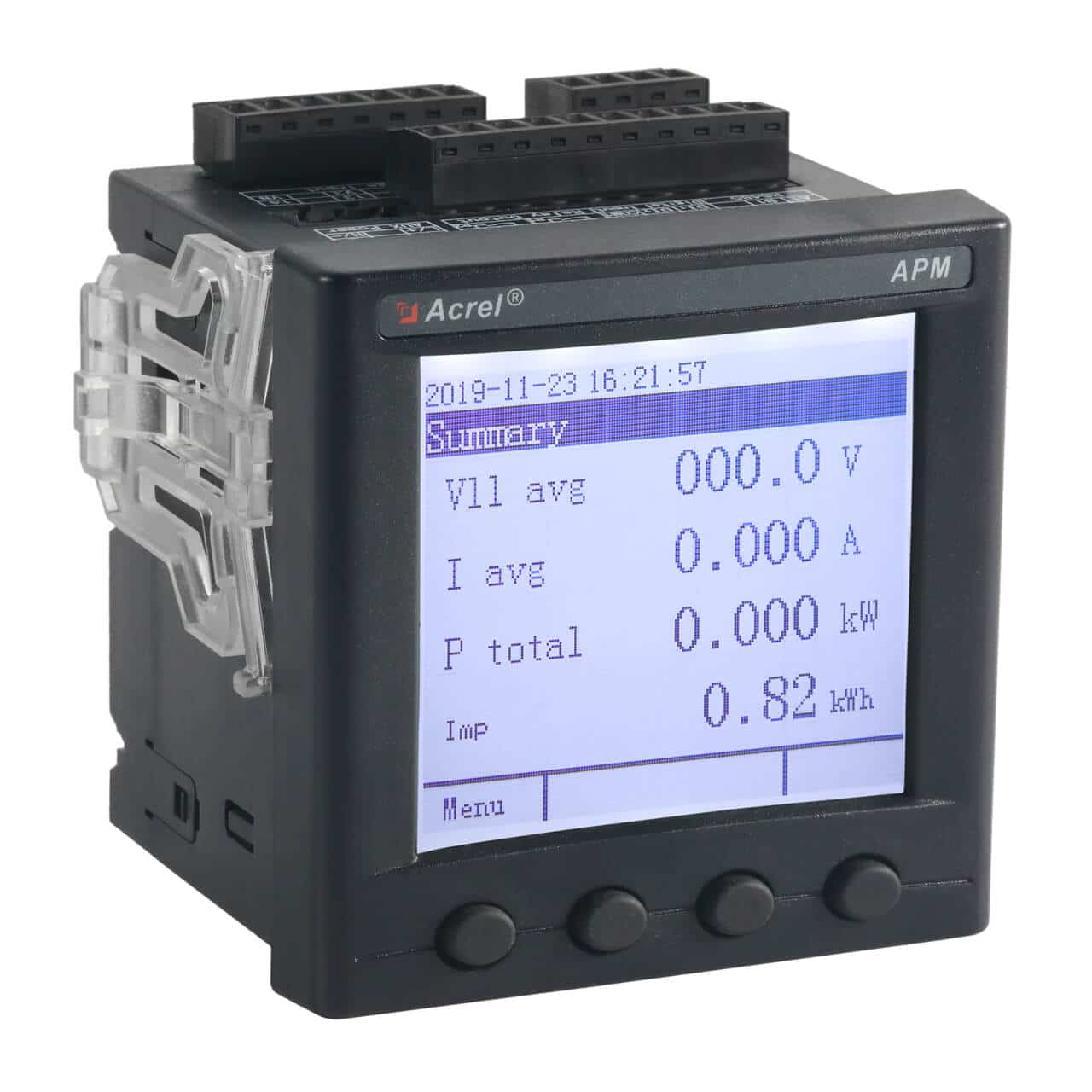
The APM830 is a high-end power quality monitor designed for critical applications requiring comprehensive grid power quality assessment and fault diagnosis. Conforming to IEC international standards, it integrates full electrical measurement, power quality analysis, transient event recording (waveform capture), demand logging, and multi-tariff energy metering. Its powerful functionality positions it not just as a meter, but as the “black box” and “general practitioner” of your power distribution system. It provides deep insights into every fluctuation and anomaly of the grid, offering the most direct data support for ensuring power supply continuity, analyzing incident causes, and evaluating power quality.
Highlight
High Accuracy
- IEC 0.2S class active energy
- 0.2 class voltage/current
- IEC 61557-12 compliant
Advanced PQ Analysis
- 2nd-63rd harmonic analysis
- Transient waveform capture
- Sag/swell/interruption recording
Modular Design
- Up to 3 expansion modules
- I/O, AI/AO, comms options
- Profibus, Ethernet, TF card
Multi-Protocol & Logging
- Modbus, Profibus, TCP/IP
- 800 event & waveform logs
- TF card data storage
Function
| Measurement | Metering & Logging | Others |
| Voltage (Phase/Line) | 4-Quadrant Energy (Import/Export, Active/Reactive/Apparent) | 2x DI + 2x DO (Built-in) |
| Current (Per Phase/Neutral) | Multi-Tariff Energy (4 tariffs, 14 periods) | Supports up to 3 Expansion Modules: |
| Power (Per Phase/Total, Active/Reactive/Apparent) | 12-month Historical Tariff Data | – MD82: 8DI+2DO |
| Power Factor (Per Phase/Total) | Demand & Max Demand (Current/Power) with Timestamps | – MA84: 8AI+4AO |
| Frequency | Extreme Value Logging (Voltage/Current/Power) with Timestamps | – MLOG: TF Card for Data Logging |
| 2nd-63rd Harmonics (V/I, content & THD) | Event Recorder (128 DIDO, 66 Alarm Types) | – MCM: Extra RS485 (Master/Slave) |
| Voltage Unbalance (Phase/Line) | Transient Recorder (Up to 800 Waveforms) | – MCE: Ethernet (Modbus-TCP/HTTP) |
| Vector Diagram & Voltage/Current Waveforms | TF Card Data Logging (Alarms, Parameters, Energy, Waveforms) | – MCP: Profibus-DP |
| Telephone Influence Factor (TIF) | ||
| Current K-Factor & Crest Factor |
Specification
| Parameter | Specification |
| Input Voltage | Rated: AC 57.7/100V, 63.5/110V, 230/400V, 400/690V |
| Overload: 1.2x rated (continuous); 2x rated for 1s | |
| Consumption: <0.5VA per phase | |
| Input Current | Rated: AC 1(1.2)A, 5(6)A |
| Overload: 1.2x rated (continuous); 10x rated for 1s | |
| Consumption: <0.5VA per phase | |
| Measurement | Voltage/Current: Class 0.2 |
| Accuracy | Active Energy: Class 0.2S |
| Reactive Energy: Class 0.5S | |
| Harmonics (2-45): ±1%; (46-63): ±2% (per IEC 61557-12) | |
| Power Quality | Harmonics: Up to 63rd |
| Transient Recording: 20 cycles/event (10 pre, 10 post), up to 800 events | |
| Auxiliary Power | AC/DC 85~265V or AC/DC 115~415V (P2 option) |
| Consumption: ≤15VA (main unit) | |
| Operating | Temperature: -25℃~+70℃ |
| Environment | Humidity: ≤95% non-condensing |
| Altitude: ≤2000m | |
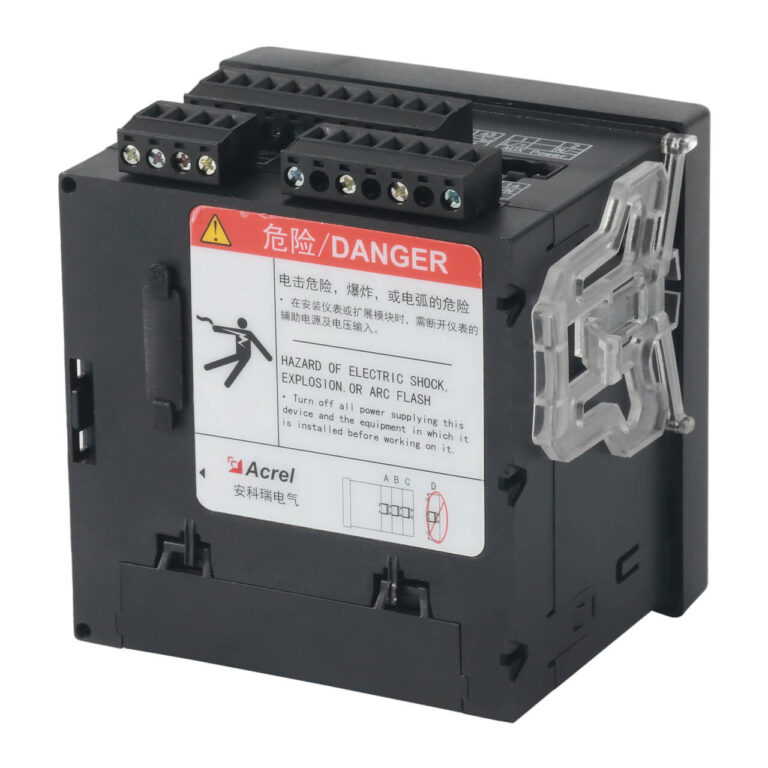
| Communication | Standard: 1x RS485 (Modbus-RTU, DL/T645-2007) |
| Interfaces | Optional via Expansion Modules: Extra RS485, Ethernet, Profibus-DP |
| Digital I/O | Built-in: 2x DI (dry contact) + 2x DO (Relay, AC 250V/3A, DC 30V/3A) |
| Expansion | Supports up to 3 modules (MD82, MA84, MLOG, MCM, MCE, MCP) |
| Dimensions | Main unit: 96mm × 96mm × 92mm (panel cutout: 92mm × 92mm) |
| Mounting | Panel mount (with brackets) |
Show More
FAQ
The core advantage lies in its advanced power quality analysis, especially the transient event recording function. When a voltage sag, swell, or interruption occurs, it acts like an airplane’s “black box,” recording the detailed waveforms for 10 cycles before and after the event. This provides decisive evidence for engineers to analyze the root cause and distinguish between grid-side issues and equipment-side problems. Standard meters can only tell you that an anomaly occurred; the APM830 can tell you why it occurred.
It depends entirely on your application needs:
Need to monitor more switch states or control more circuits? -> Choose MD82 (adds 8DI+2DO).
Need to interface with 4-20mA sensors (e.g., temperature, pressure) or output analog controls? -> Choose MA84 (adds 8AI+4AO).
Need local mass data storage for long-term trend analysis? -> Choose MLOG (TF card recording).
Need to connect to a different communication network? -> Choose MCM (extra RS485), MCE (Ethernet), or MCP (Profibus-DP).
You can combine up to 3 modules, but note that MCP/MCE/MLOG cannot be duplicated, and there are specific installation order requirements.
You can configure the triggering conditions in the meter’s menu under “Parameter Setting” -> “Wave Recording Setting”. For example, you can set the action thresholds for “Voltage Swell”, “Voltage Sag”, “Voltage Interruption”, and “Inrush Current” (as a percentage of the nominal voltage or current). When the actual value exceeds the set threshold, the meter will automatically trigger waveform recording.
The main unit comes standard with one RS485 interface supporting Modbus-RTU and DL/T645-2007 protocols. Via expansion modules, you can add a second RS485 (MCM module), Ethernet (MCE module, supporting Modbus-TCP/HTTP), or Profibus-DP (MCP module). These communication interfaces can work simultaneously. For example, you can upload data to a central monitoring system via Ethernet while simultaneously connecting to a local HMI via RS485 for on-site display.
Please follow these steps to troubleshoot:
Check Hardware Connections: Verify that the RS485 A and B terminals are wired correctly (A to A, B to B) and are secure.
Verify Communication Parameters: Check that the address, baud rate, and parity settings in the meter’s “Communication Settings” menu exactly match those of the host device (e.g., PLC, DTU, PC).
Check Termination Resistor: For long-distance communication or when many devices are on the bus, a 120Ω termination resistor must be connected at the end of the bus to prevent signal reflection.
Eliminate Address Conflicts: Ensure that each device on the same bus has a unique communication address.
Summary
Centered on high-precision measurement and transient waveform recording, the APM830 elevates power monitoring from simple data reading to root cause analysis of grid disturbances. Its modular design allows on-demand configuration of I/O, communication, or storage, flexibly adapting to scenarios from critical facilities to complex industries. Choosing the APM830 means equipping your power system with a “black box,” providing the most solid data foundation for reliable operation and energy management.