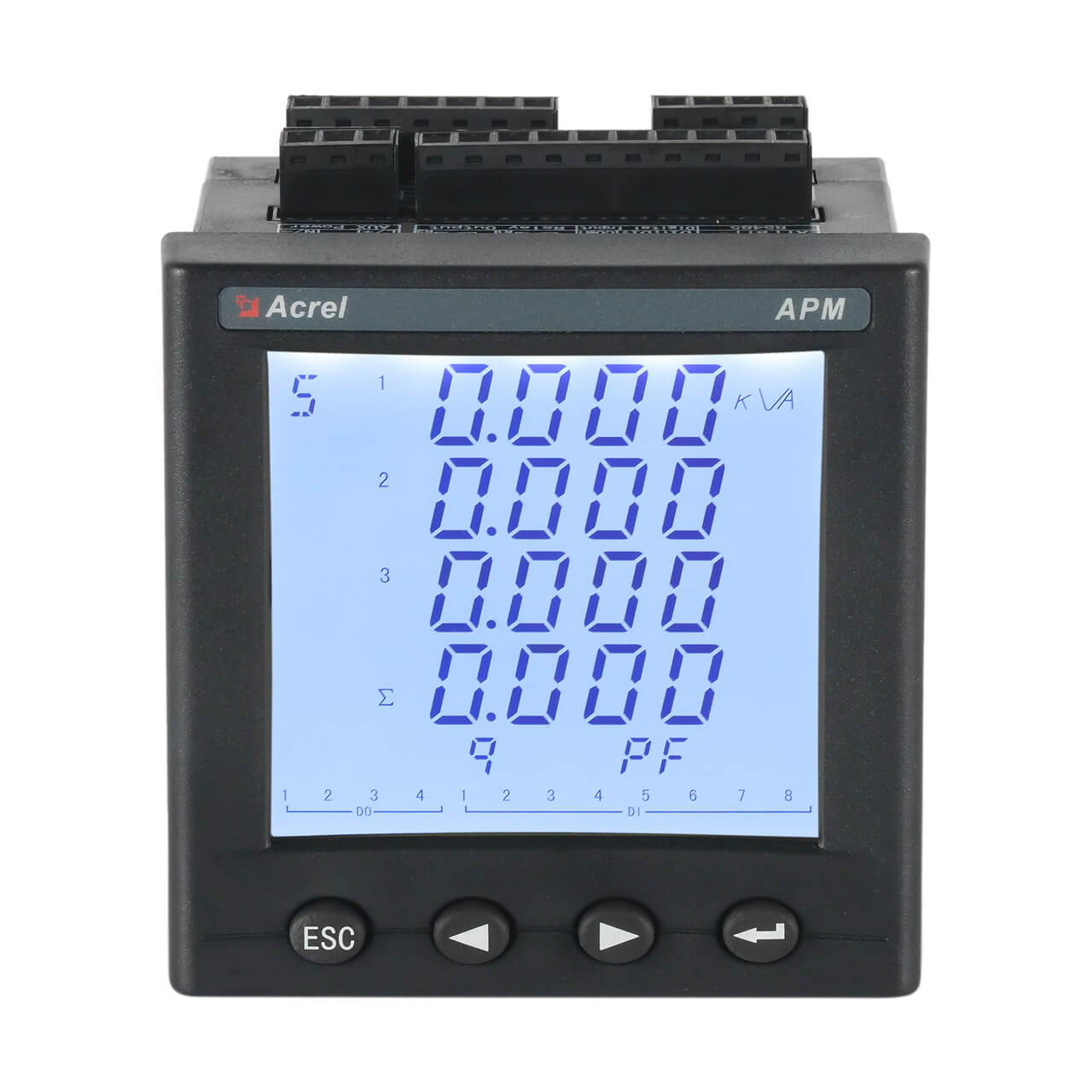
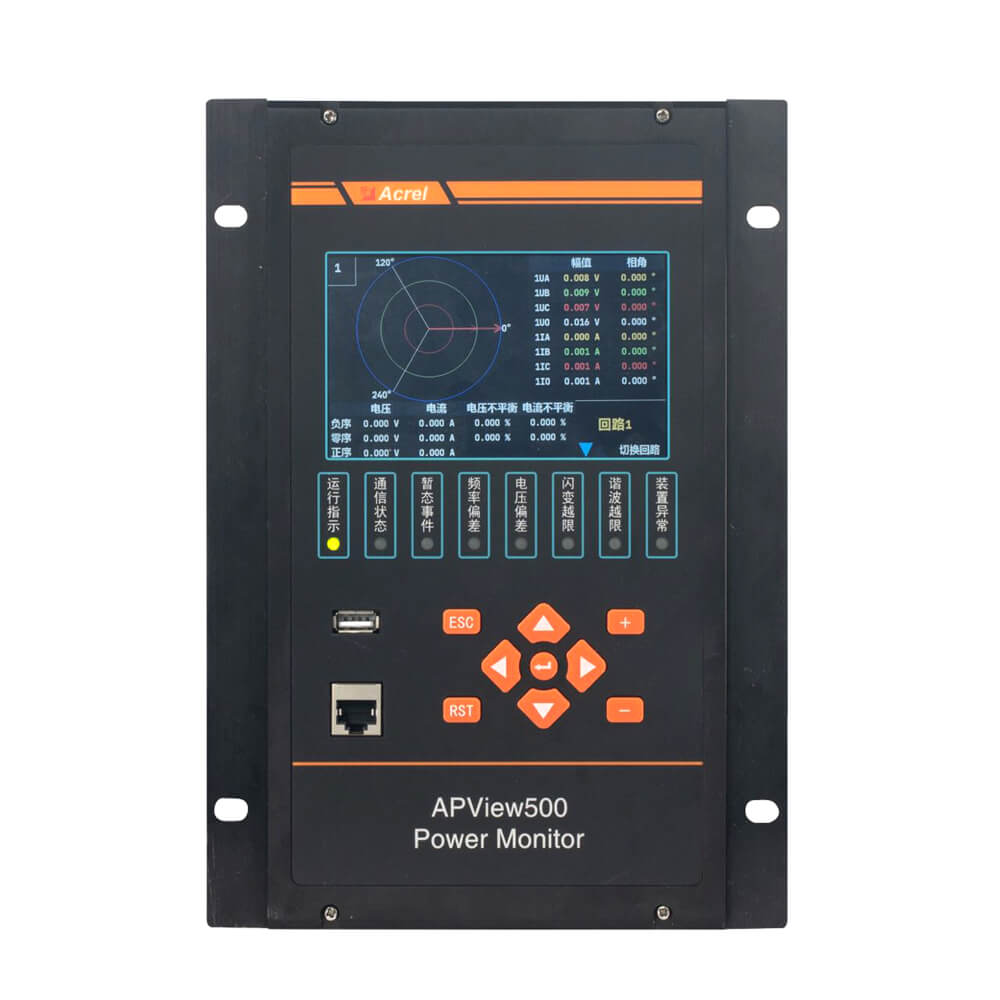
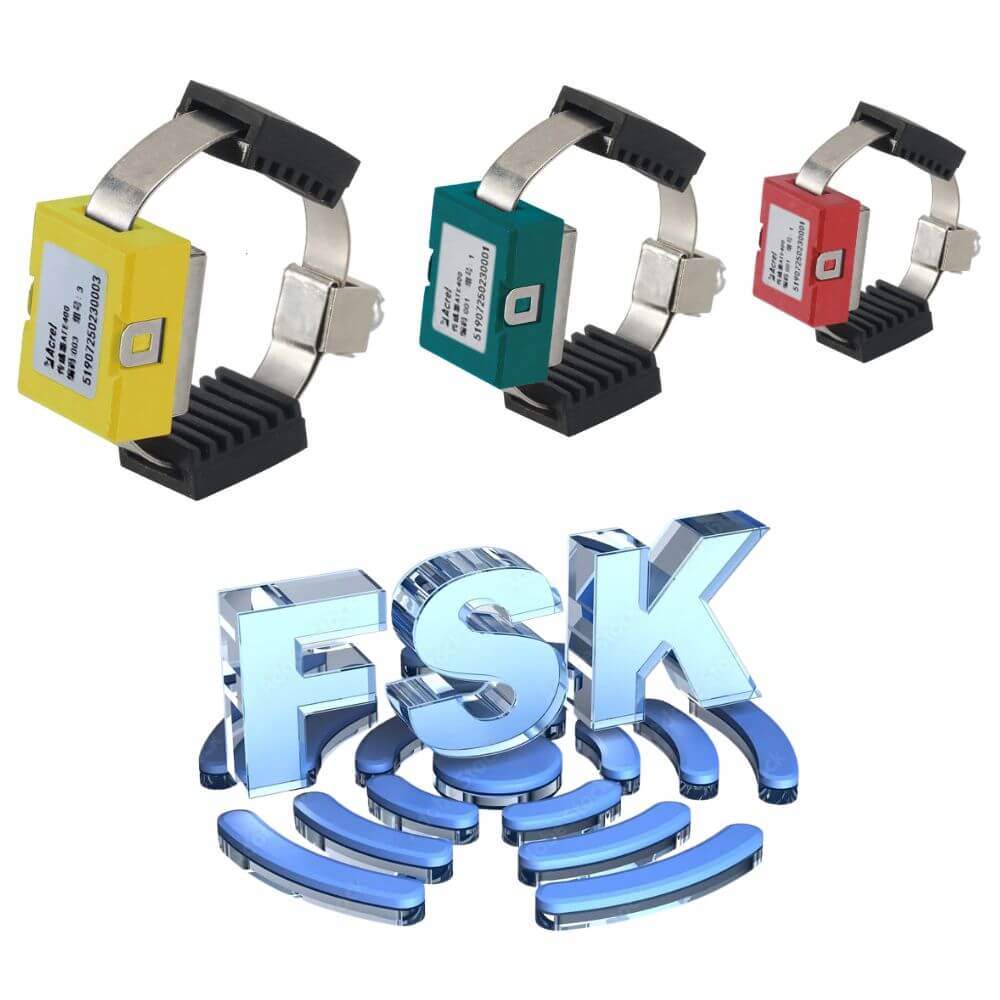
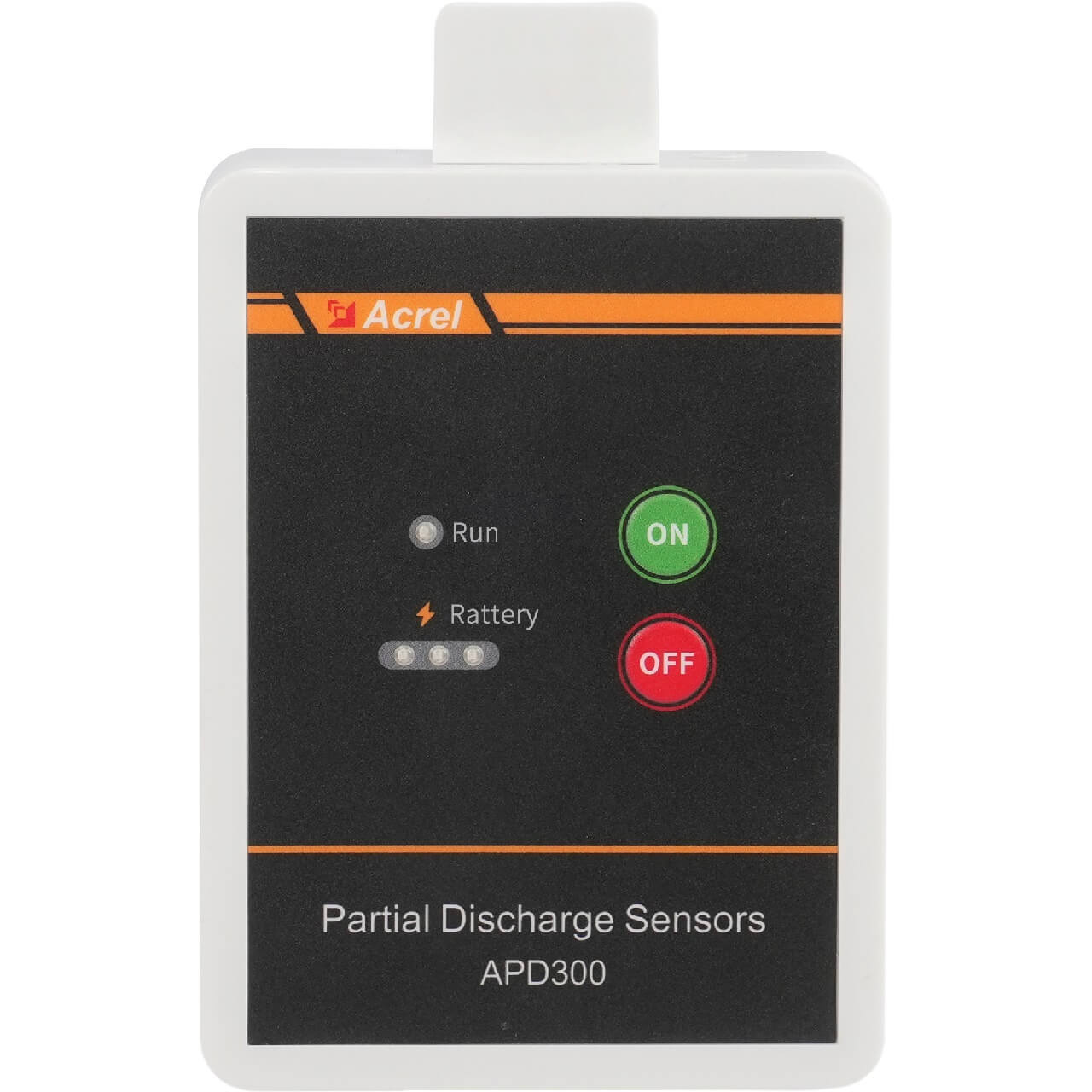
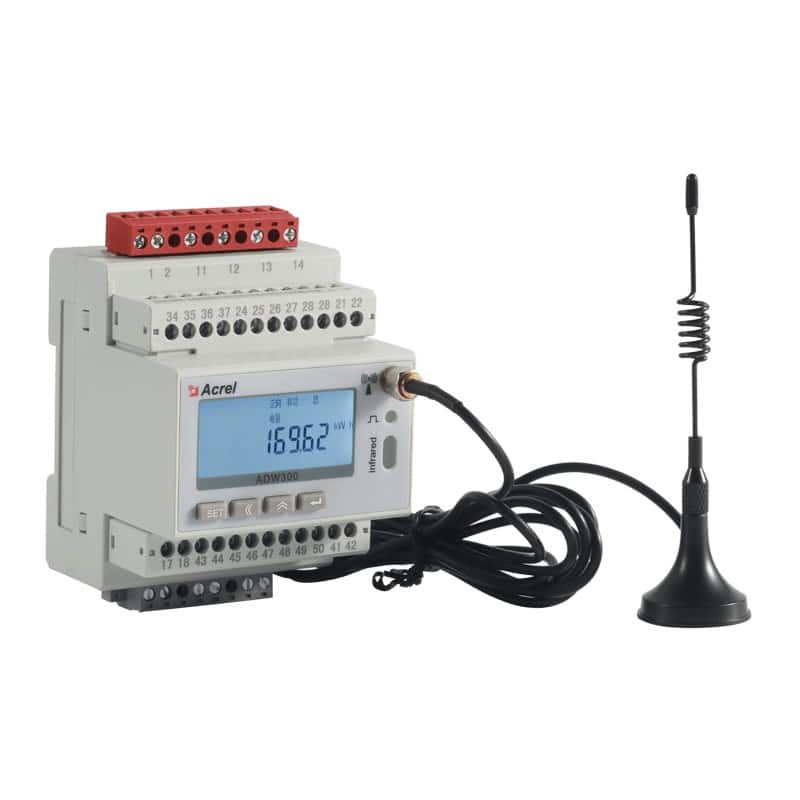
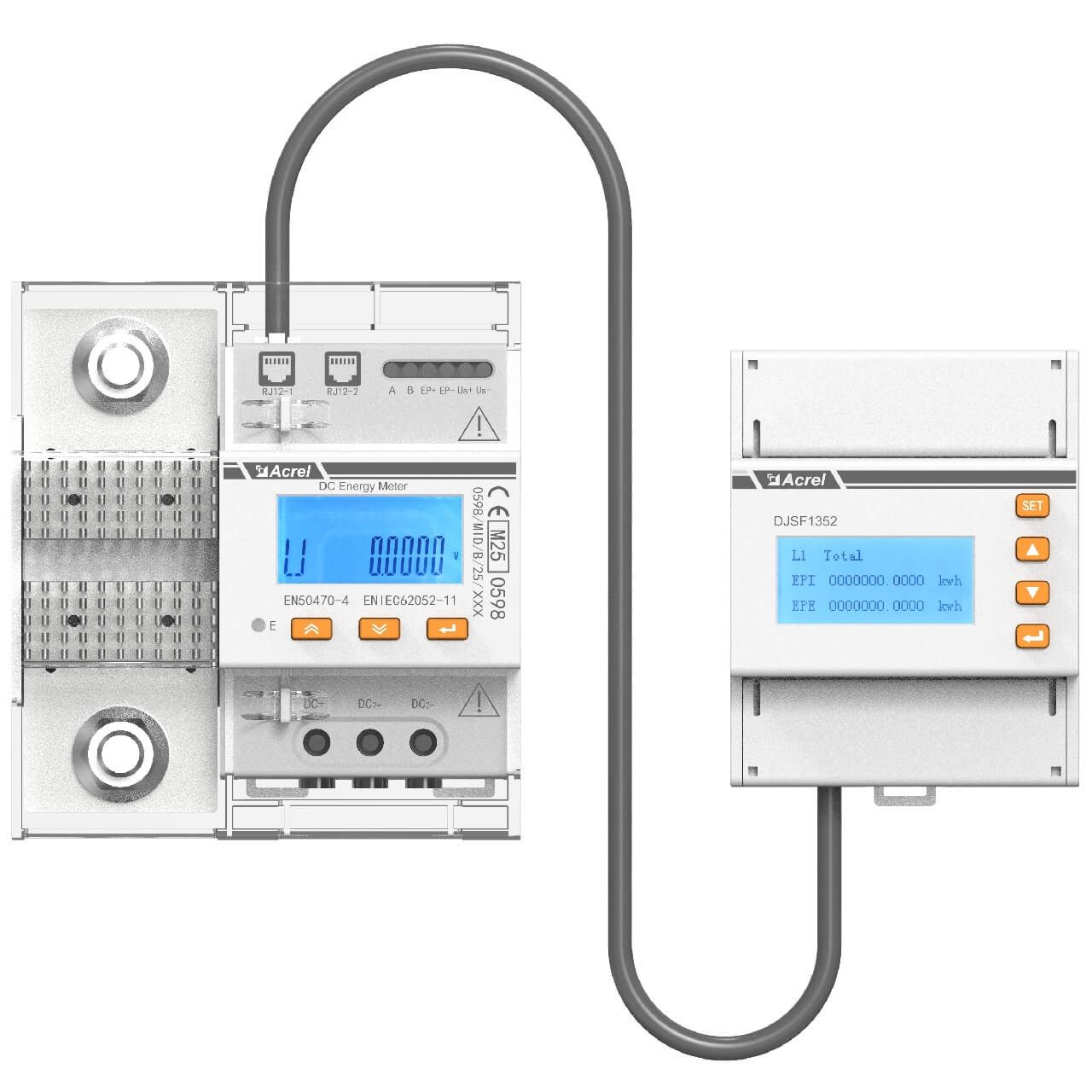
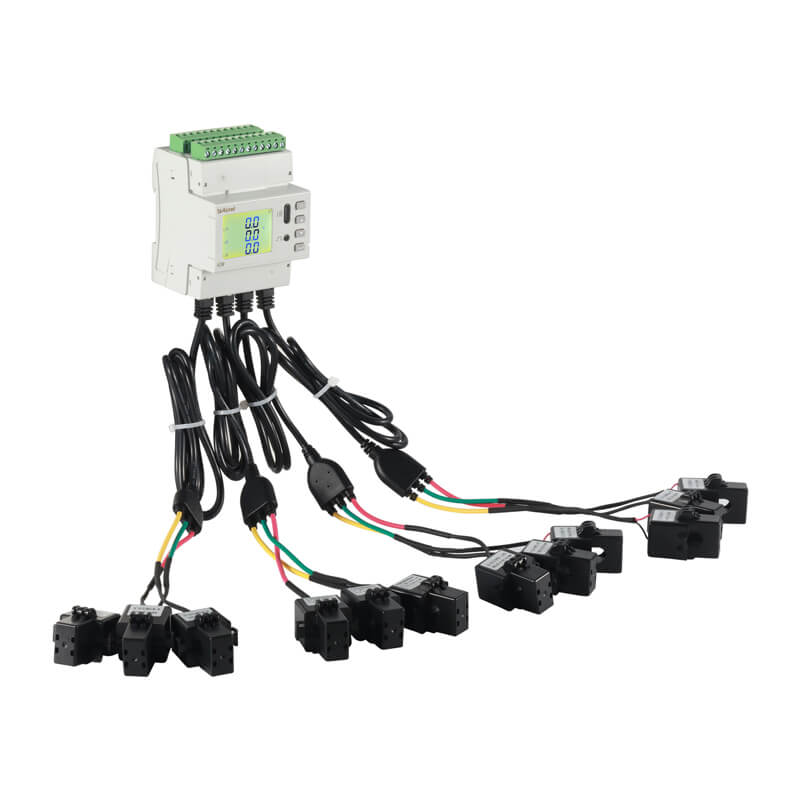
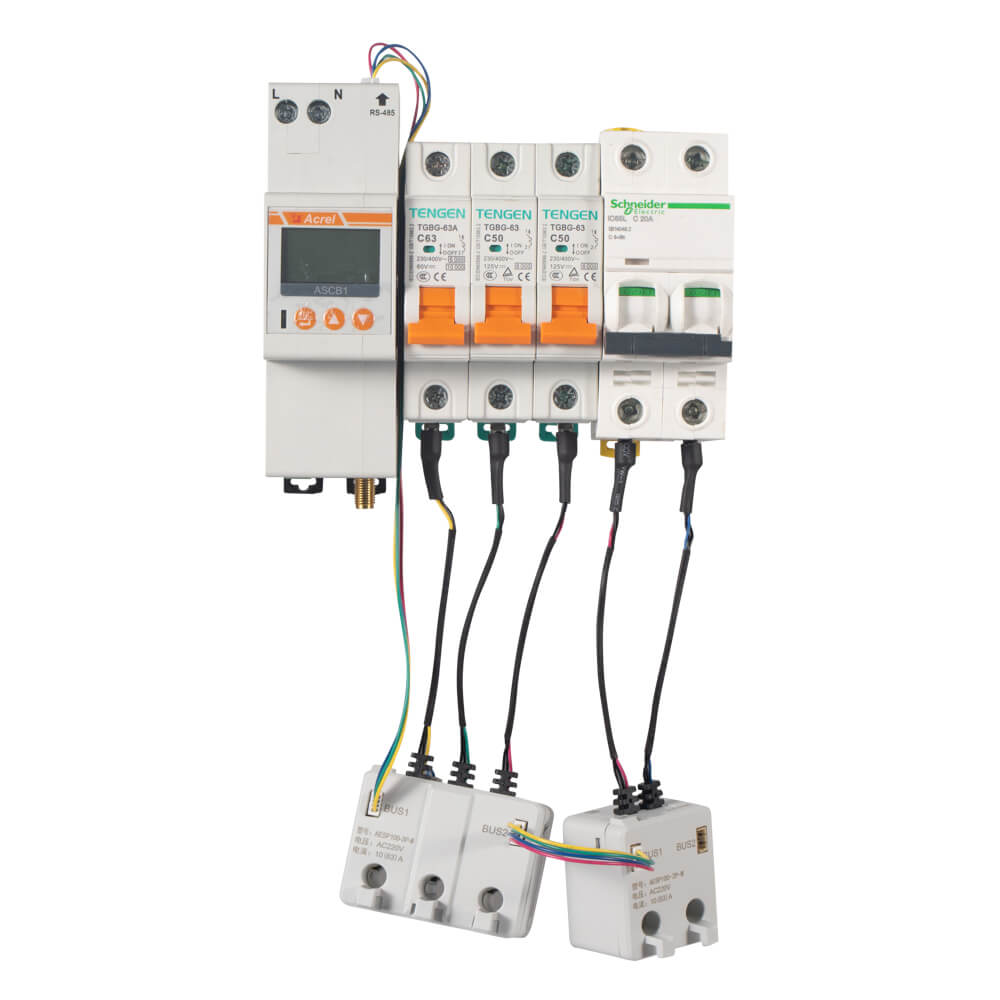


AI workloads are significantly increasing rack power density, making traditional power monitoring at the main feeder or panel level no longer sufficient. Modern AI data centers require end-to-end visibility across the entire power distribution chain—from A/B incoming feeders and RPPs to head cabinets, precision distribution panels, rack PDUs, and GPU clusters.
Acrel’s AI Data Center Precision Power Monitoring solution combines AC/DC multi-circuit monitoring, local HMI visualization, intelligent alarms, and open communication protocols into a unified platform. It provides accurate data for capacity planning, PUE analysis, AI Data Center Energy Monitoring, Data Center Energy Management, and seamless integration with DCIM and BMS platforms. With real-time branch circuit monitoring and load analysis, operators can quickly identify abnormal power consumption, optimize power distribution, and support the reliable expansion of AI computing infrastructure.
Overview
What Is Precision Power Monitoring for AI Data Centers?
There is an increase in power density in data centers due to AI workloads. Traditional power monitoring in data centers relying only on the main power meters is not adequate for high-density GPU clusters, rack-level power, and AC/DC power distribution.
A Precision Power Panel Monitoring Solution for AI Data Centers provides real-time visibility from A/B incoming feeders to RPPs, head cabinets, precision panels, rack PDUs, GPU clusters, and tenant loads.
By combining multi-circuit power monitoring, branch circuit monitoring (BCM), AC/DC energy measurement, local HMI visualization, configurable alarms, and open communication protocols, Acrel helps data center operators achieve:
- Accurate capacity planning
- Reliable PUE analysis
- Rack-level energy visibility
- Early overload detection
- DCIM/BMS integration
- Efficient AI infrastructure management
What Problems Does It Solve?
- Limited visibility into high-density branch loads
- Unreliable PUE data
- Inaccurate rack or tenant energy allocation
- Hidden overload and phase-imbalance risks
- Manual inspection workload
- Disconnected meter and DCIM data
Core Business Value
Accurate energy data: Supports PUE analysis, cost allocation, and capacity planning.
Granular visibility: Extends monitoring from incomers to branches, racks, GPU clusters, and tenants.
Real-time detection: Identifies overloads, leakage, abnormal current, and breaker events.
Scalable monitoring: A multi-channel power meter for ai data centers reduces meter quantity, panel space, communication nodes, and wiring.
Suitable Applications
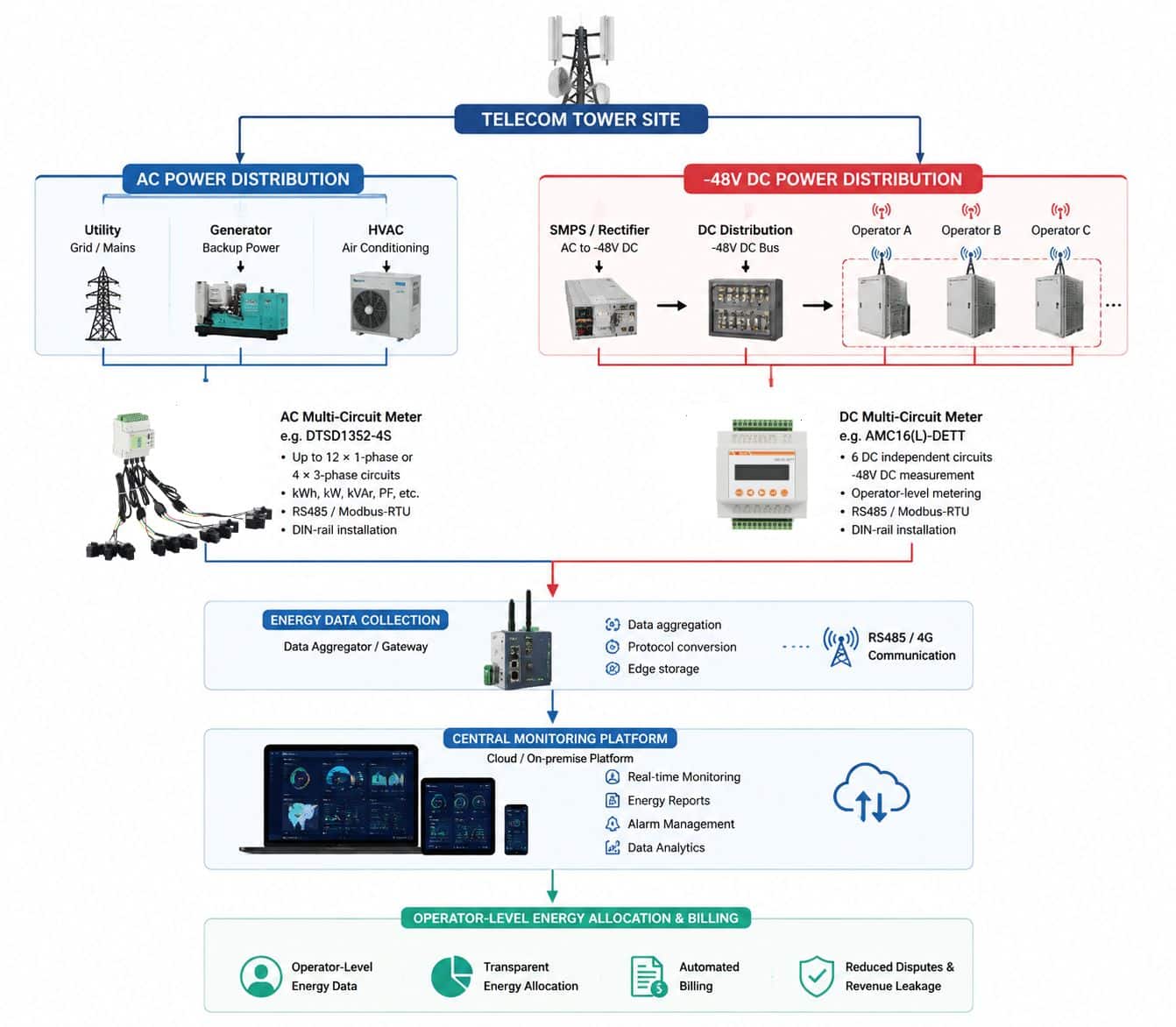
AI and GPU data centers, HPC centers, colocation facilities, hyperscale and cloud data centers, telecom sites, enterprise facilities, and edge data centers.
Why AI Data Centers Need Precision Power Monitoring
Higher Rack Power Density
AI workloads are driving rack densities far beyond those of traditional data centers. Higher power concentration requires more granular monitoring to ensure reliable power distribution and avoid overload risks. This makes GPU Cluster Power Monitoring, High-Density Rack Monitoring, and High-Density Rack Power Distribution Monitoring increasingly important.
More Complex Power Distribution
Modern AI data centers have multiple power distribution levels, including A/B feeds, UPS, RPPs, head cabinets, precision panels, and rack PDUs. Data Center Power Distribution Monitoring, Data Center RPP & Head Cabinet Monitoring, and Intelligent PDU Monitoring provide the end-to-end visibility needed to maintain reliability.
Reliable Energy Efficiency Management
Accurate power data supports PUE calculation, energy analysis, and operational optimization, helping operators improve energy efficiency and sustainability. Real-time PUE Optimization and Power Metering requires both reliable measurement data and operational action.
Capacity Planning for Future Expansion
As AI computing infrastructure continues to grow, operators need accurate branch-level power data to identify available capacity and plan future expansion with confidence. In colocation facilities, Colocation Tenant Energy Metering and Sub-billing also depends on accurate circuit-level data.
Common Power Monitoring Challenges
Limited Visibility
Main incoming meters cannot identify overloaded branches, underutilized racks, or individual load conditions.
High-Density Branch Circuits
Monitoring dozens or hundreds of branch circuits with conventional meters increases installation complexity, wiring, and maintenance costs.
AC and DC Monitoring Complexity
Modern data centers may include both AC and DC power systems, making unified monitoring and centralized management more challenging.
Fragmented Monitoring Systems
Power monitoring, environmental monitoring, and DCIM data are often managed separately, reducing operational efficiency and slowing fault diagnosis.
Lack of Real-Time Alarms
Without continuous branch-level monitoring, overloads and abnormal conditions may remain undetected until they affect system reliability.
These challenges highlight the need for a centralized precision power monitoring solution that delivers real-time visibility, branch-level measurement, and seamless system integration.
Why the Precision Power Monitoring Solution Works
Branch-Level Visibility
Instead of relying on aggregate measurements, the solution monitors every outgoing circuit independently. This provides accurate branch-level visibility for load balancing, overload detection, capacity planning, and energy analysis. A Branch Circuit Monitoring System (BCMS) for RPP applications extends this visibility across high-density outgoing circuits.
Integrated Multi-Circuit Monitoring
The monitoring system uses a modular design. It brings many measurement points together into one unit. This reduces space in the panel. It lowers wiring complexity. It decreases communication nodes. Installation takes less time. These steps simplify system deployment. They also make maintenance easier.
Real-Time Monitoring and Intelligent Alarms
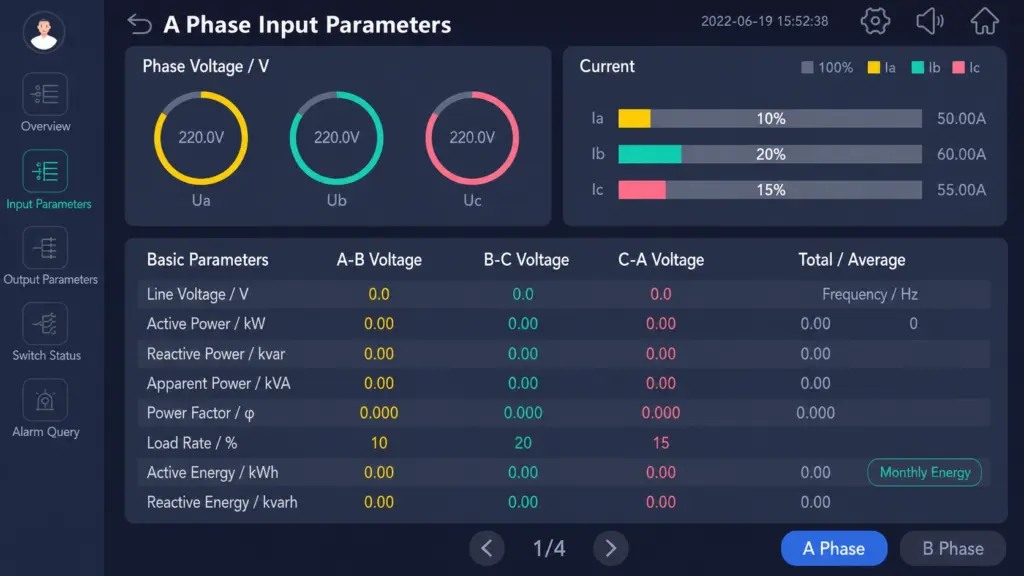
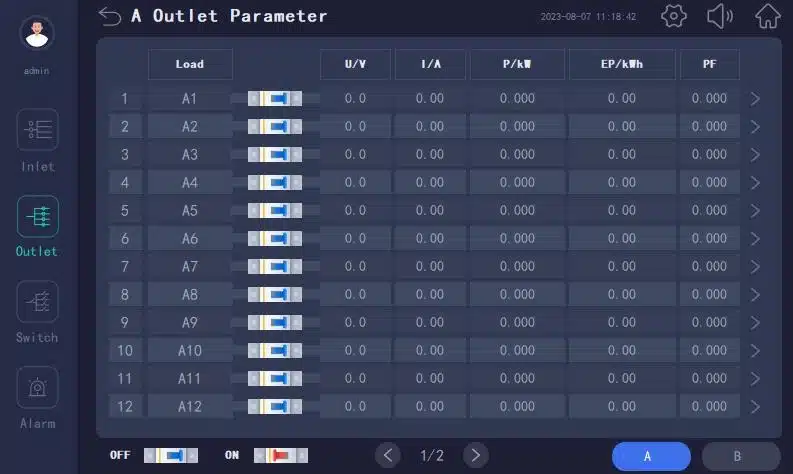
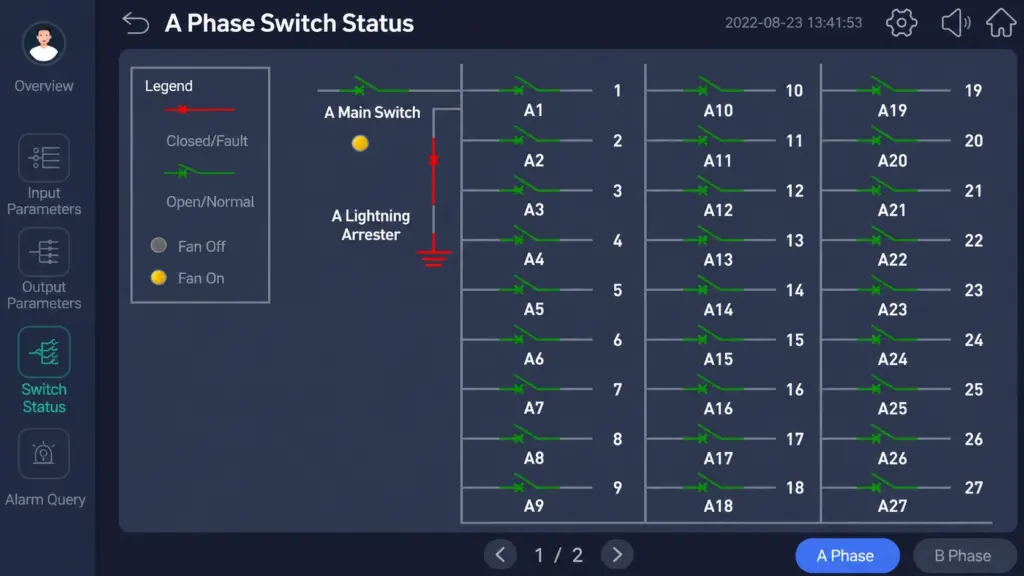
The system supports Incomer and Outgoing Circuit Power Telemetry and Multi-Loop Current and Voltage Telemetry. It delivers real-time electrical data, reports branch status clearly, and provides configurable alarms. Circuit Breaker Status and Event Logging helps operators identify unusual conditions and act before they affect critical loads.
Unified AC/DC Monitoring and Open Integration
The solution works for both AC and DC power monitoring. It relies on dedicated modules and sensors. This provides unified visibility across different power distribution systems. Open communication protocols support smooth integration with HMI, DCIM, BMS, and energy management platforms. The architecture also supports RS485 / Modbus-RTU Power Monitoring for DCIM integration.
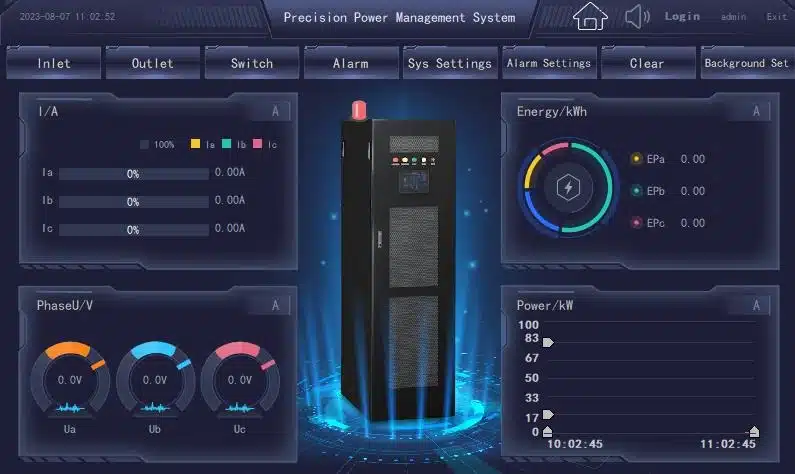
Recommended Solution Architecture
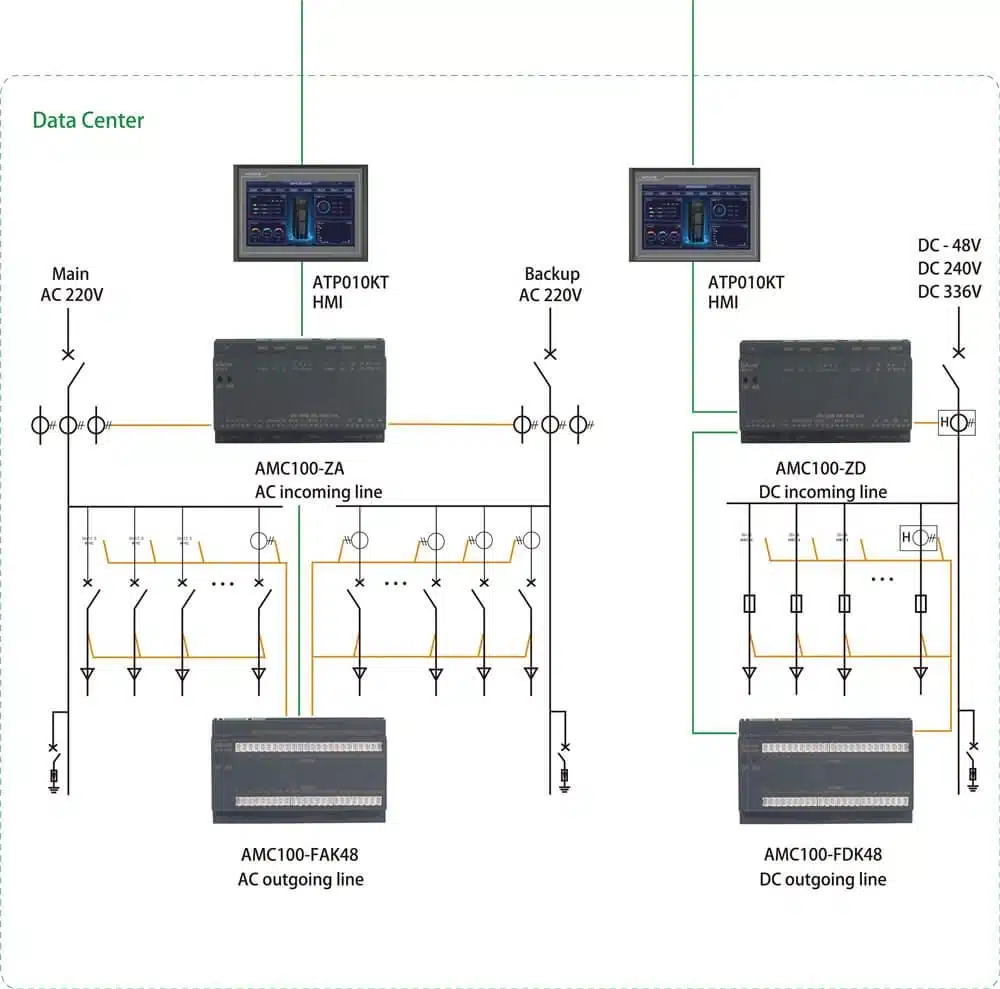
Architecture Layers
1. Power Distribution Layer
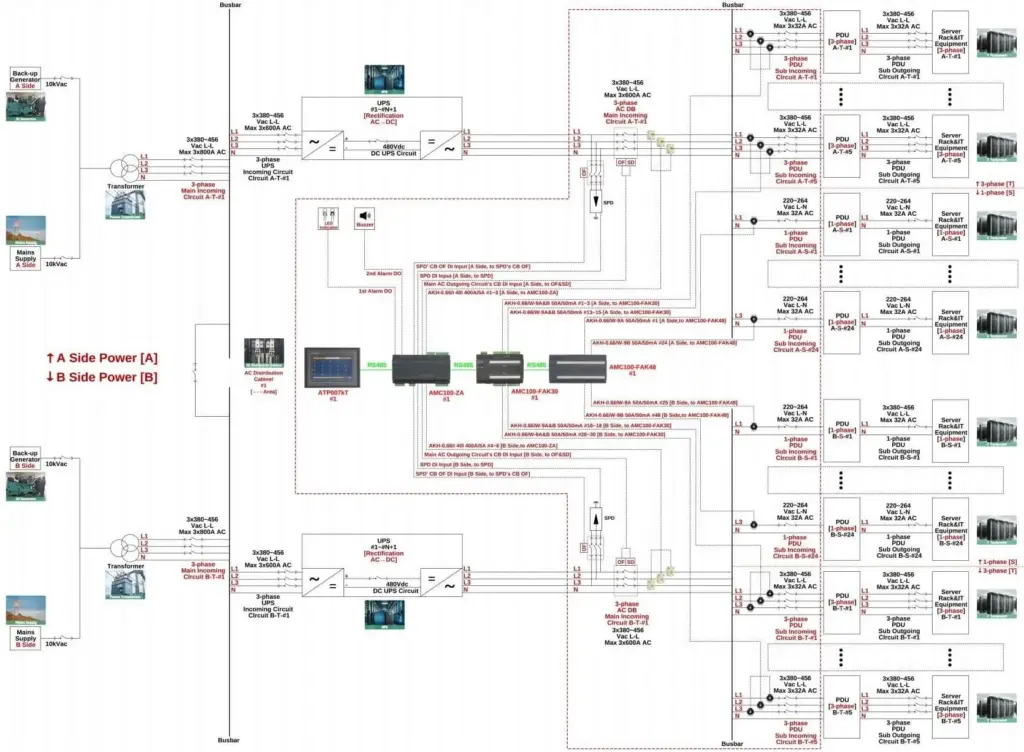
Monitor the complete power path from A/B incoming feeders, RPPs, head cabinets, precision panels, rack PDUs, to AI server and GPU loads, providing end-to-end power visibility.
2. Sensing Layer
Collect electrical and environmental data through AC current transformers, DC Hall sensors, voltage inputs, breaker status, leakage current sensors, and temperature/humidity sensors.
3. Monitoring Layer
Deploy AC/DC incoming monitoring modules and multi-circuit branch monitoring modules to measure feeder loads, branch circuits, rack power consumption, and critical equipment.
4. Communication & Visualization Layer
Transmit data through RS485/Modbus RTU, Ethernet/Modbus TCP, and gateways. Local HMI provides real-time display, alarms, and event records.
5. Management Layer
Integrate monitoring data with AcrelEMS-IDC, DCIM, BMS, EMS, or other energy management platforms for centralized monitoring, analysis, and capacity planning.
System Workflow
Sensor → Monitoring Module → Local HMI → RS485/Ethernet → Gateway → DCIM/BMS/EMS
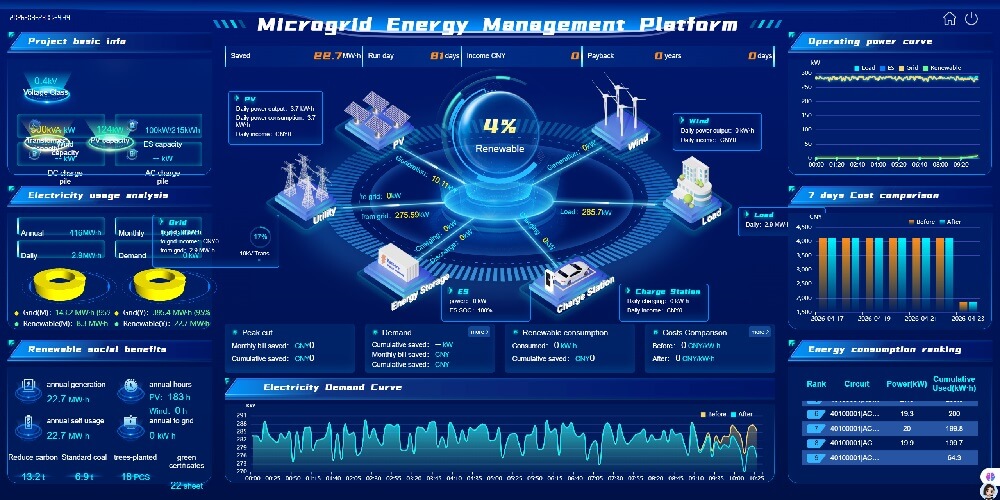
The HMI displays parameters, alarms, historical data, and events. Central software can provide dashboards, branch-utilization analysis, A/B comparison, PUE data, tenant reports, and circuit-to-asset mapping for centralized AI infrastructure monitoring.
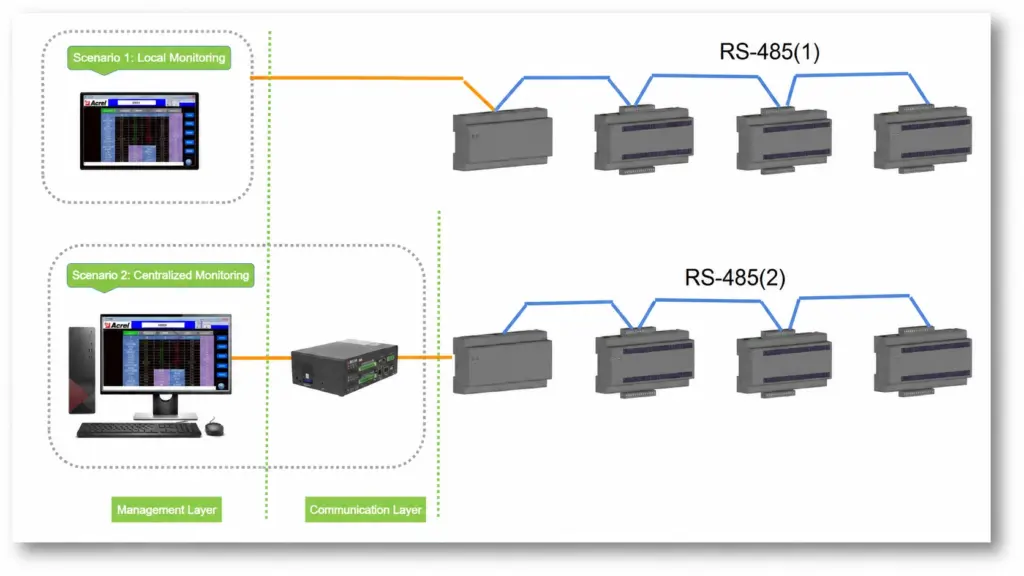
Recommended Monitoring Points
| Monitoring point | Main data | Purpose |
| A/B incoming feeders | Voltage, current, power, energy | Total load and redundancy |
| Outgoing circuits | Current, power, energy, status | Capacity and alarms |
| Rack or PDU circuits | Load and energy | GPU or tenant allocation |
| Cabinet environment | Temperature, humidity, leakage | Safety warning |
Key Components of AI Data Center Power Monitoring Solution
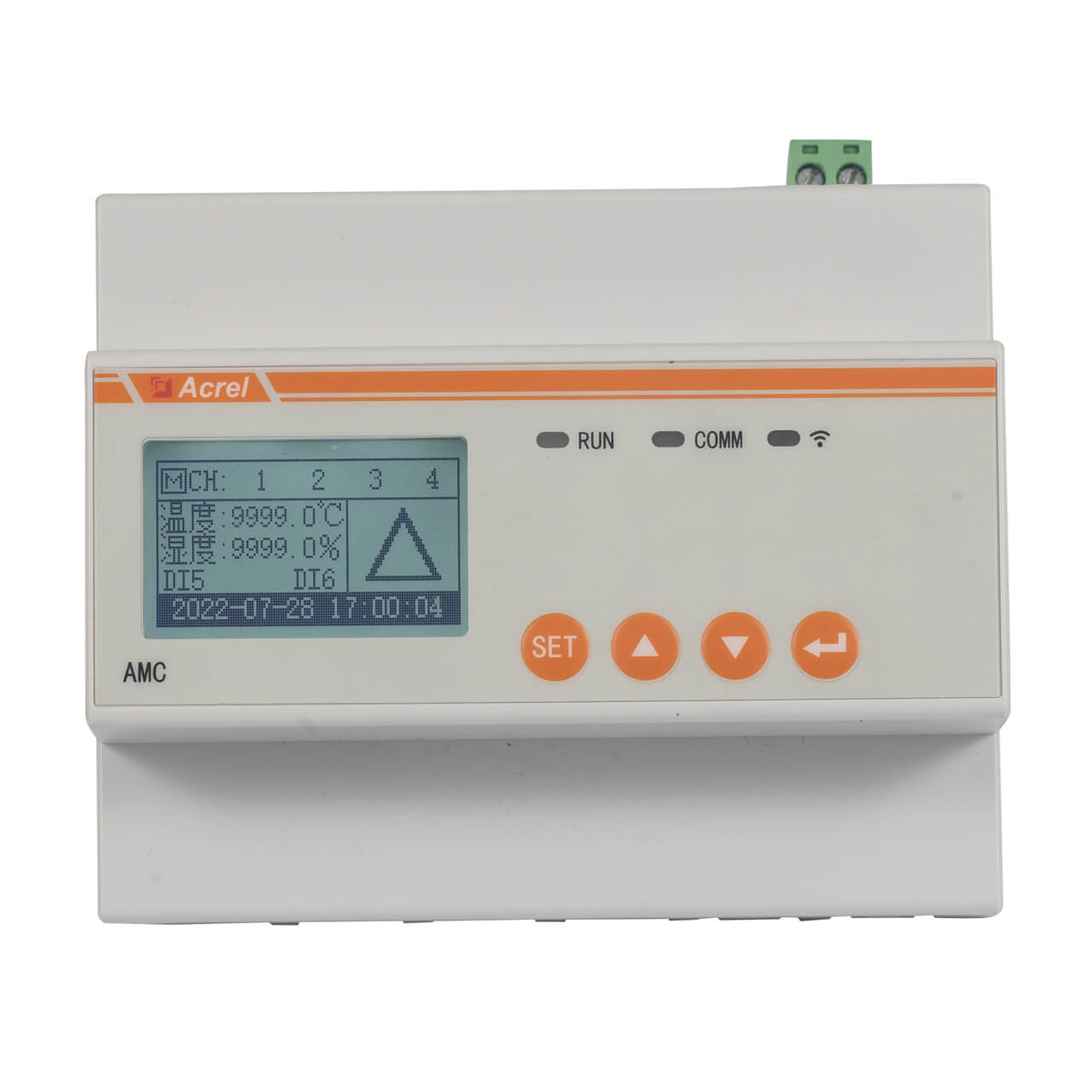
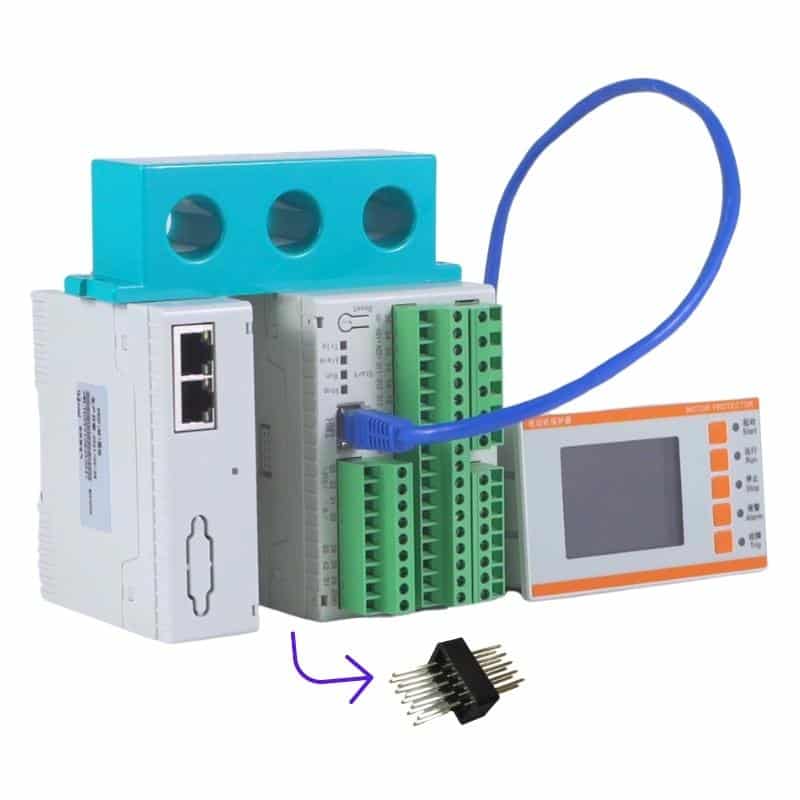
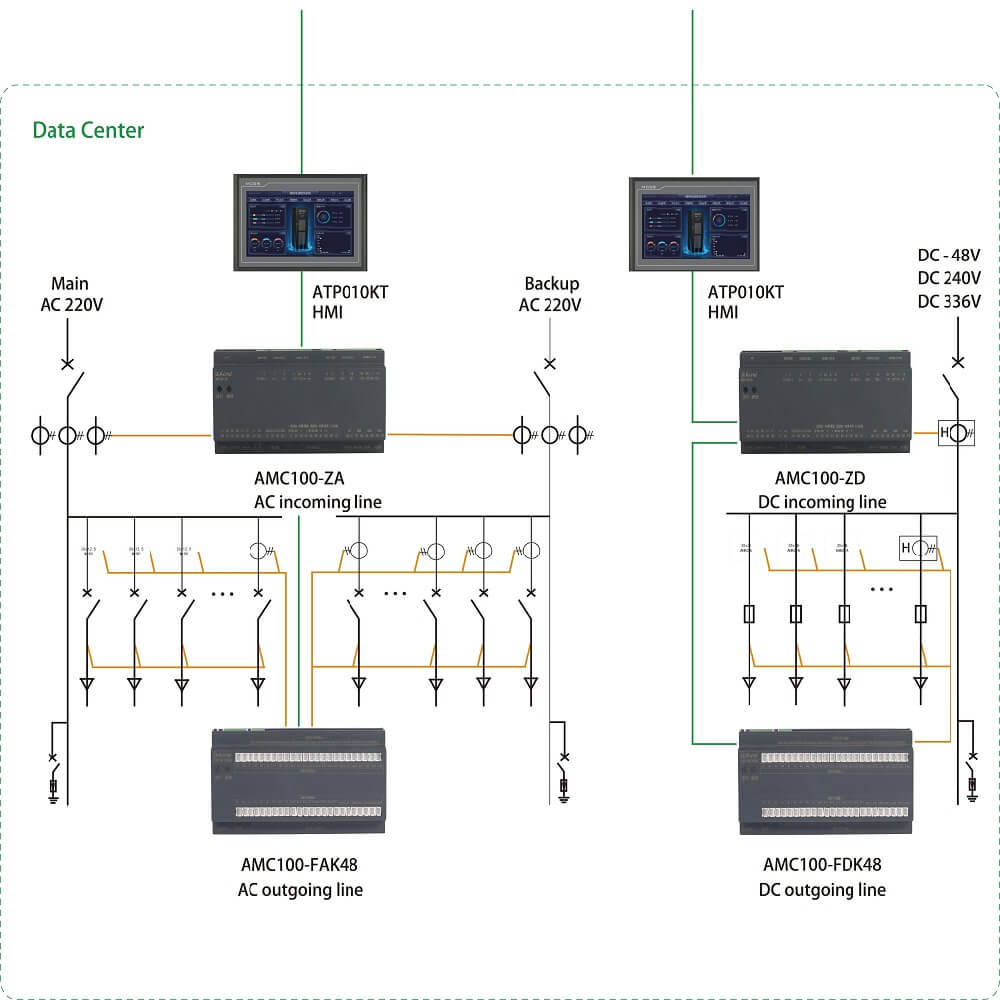
AMC100-ZA AC Incoming Monitoring Module
Monitors A+B three-phase AC incomers, including electrical parameters, harmonics up to the 63rd order, zero-to-ground voltage, leakage, environmental inputs, digital I/O, RS485, and optional Ethernet.
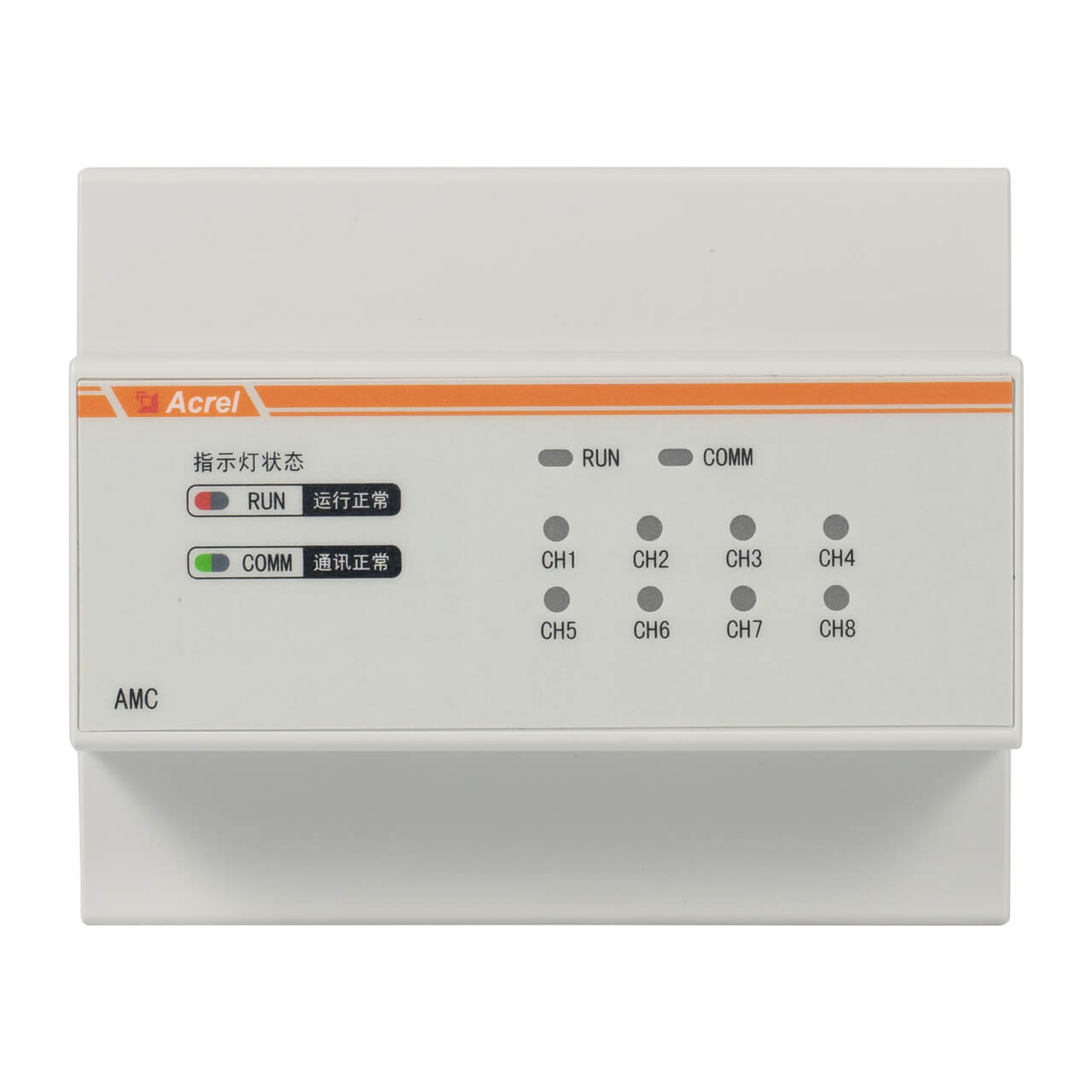
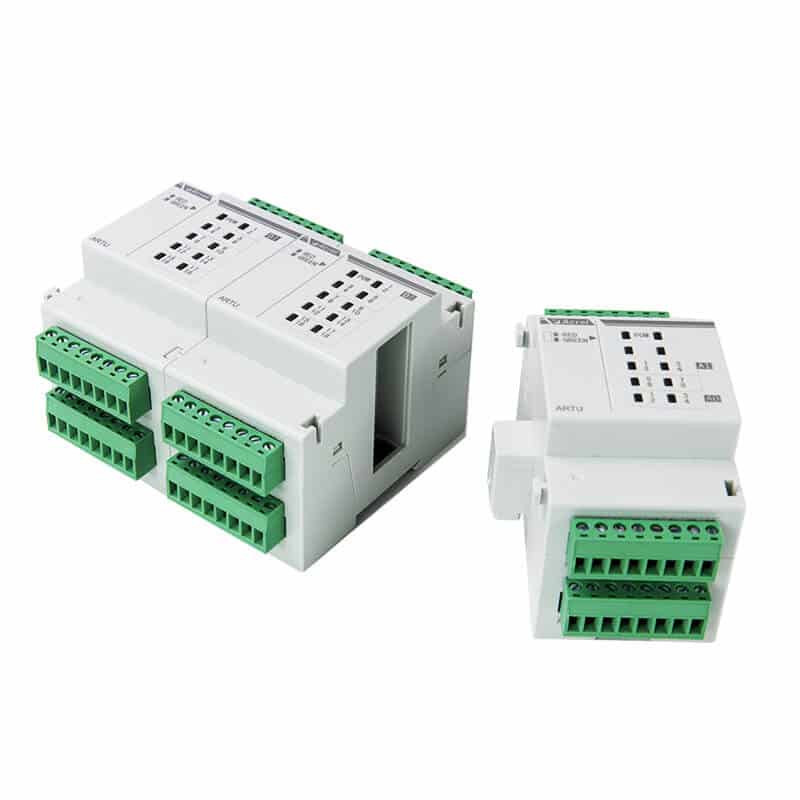
AMC100-FAK30/48 and AMC100-FA30/48 AC Outgoing Modules
Monitor 30 or 48 single-phase circuits, or 10 or 16 three-phase circuits depending on configuration. They measure voltage, current, power, energy, status, and independent alarms.
AMC100-ZD DC Incoming Monitoring Module
Monitors dual −48 V, 240 V, or 336 V DC incomers, including voltage, current, power, energy, status, temperature, and humidity.
AMC100-FDK30/48 and AMC100-FD30/48 DC Outgoing Modules
Monitor 30 or 48 DC circuits, including voltage, current, power, energy, status, and alarms.
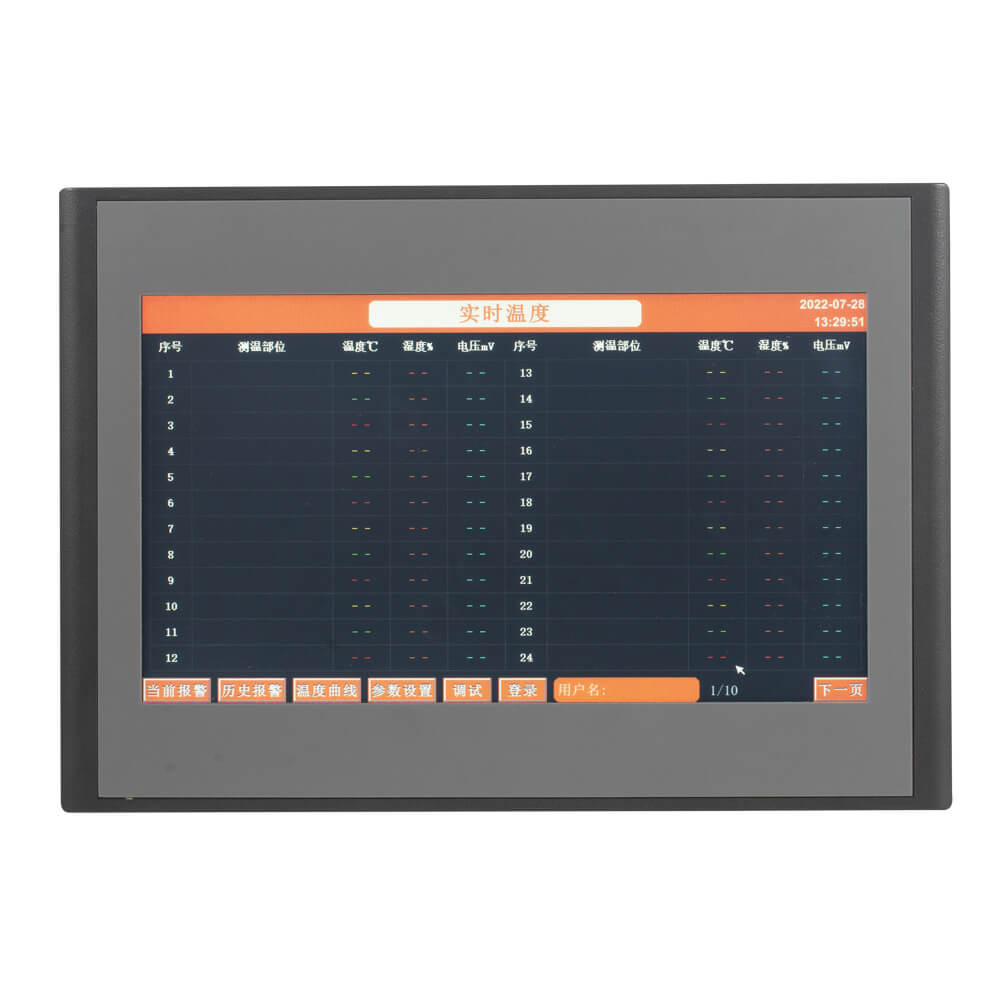
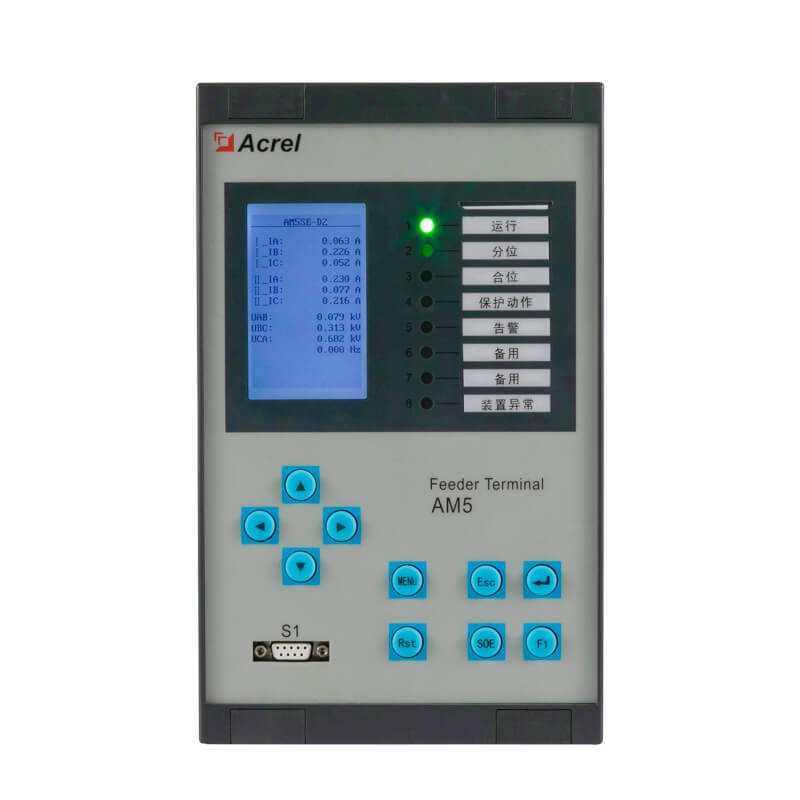
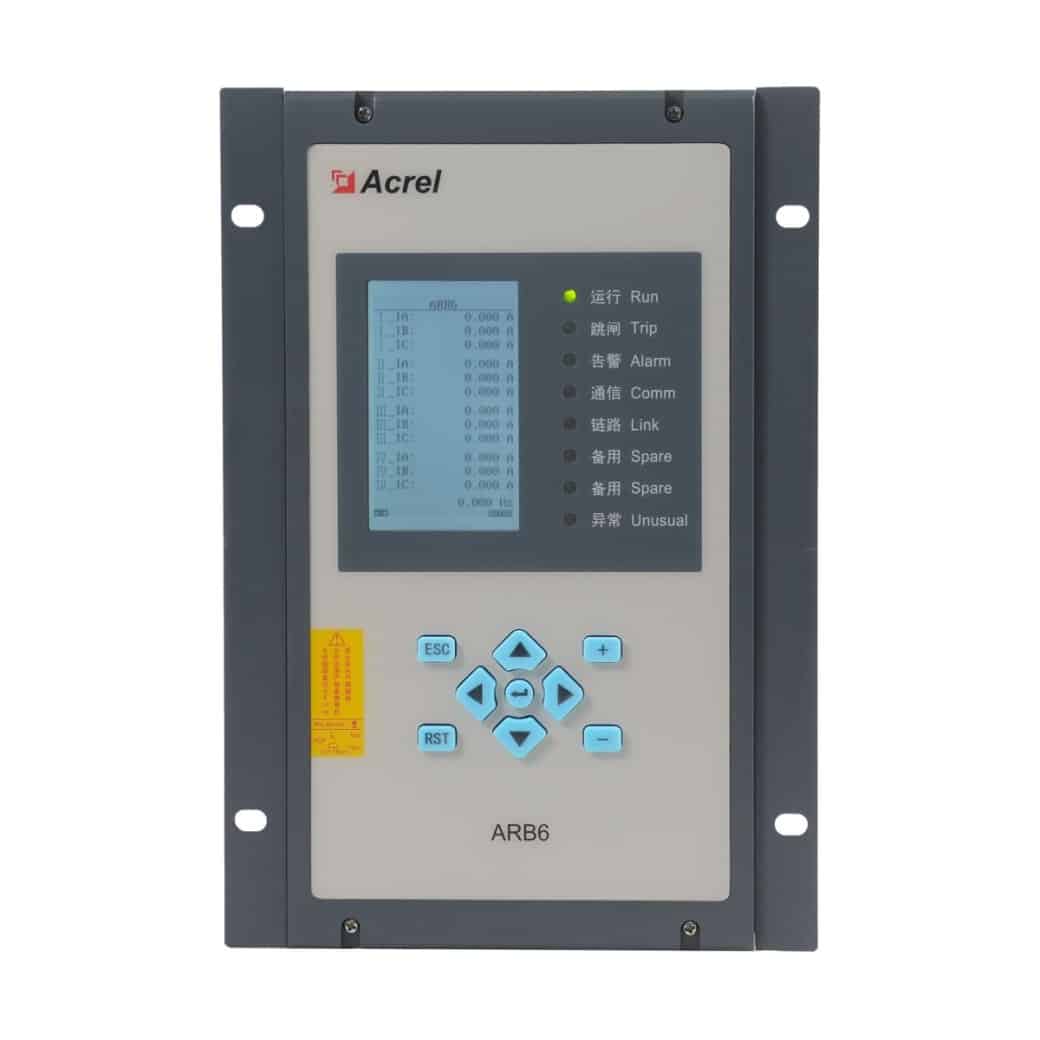
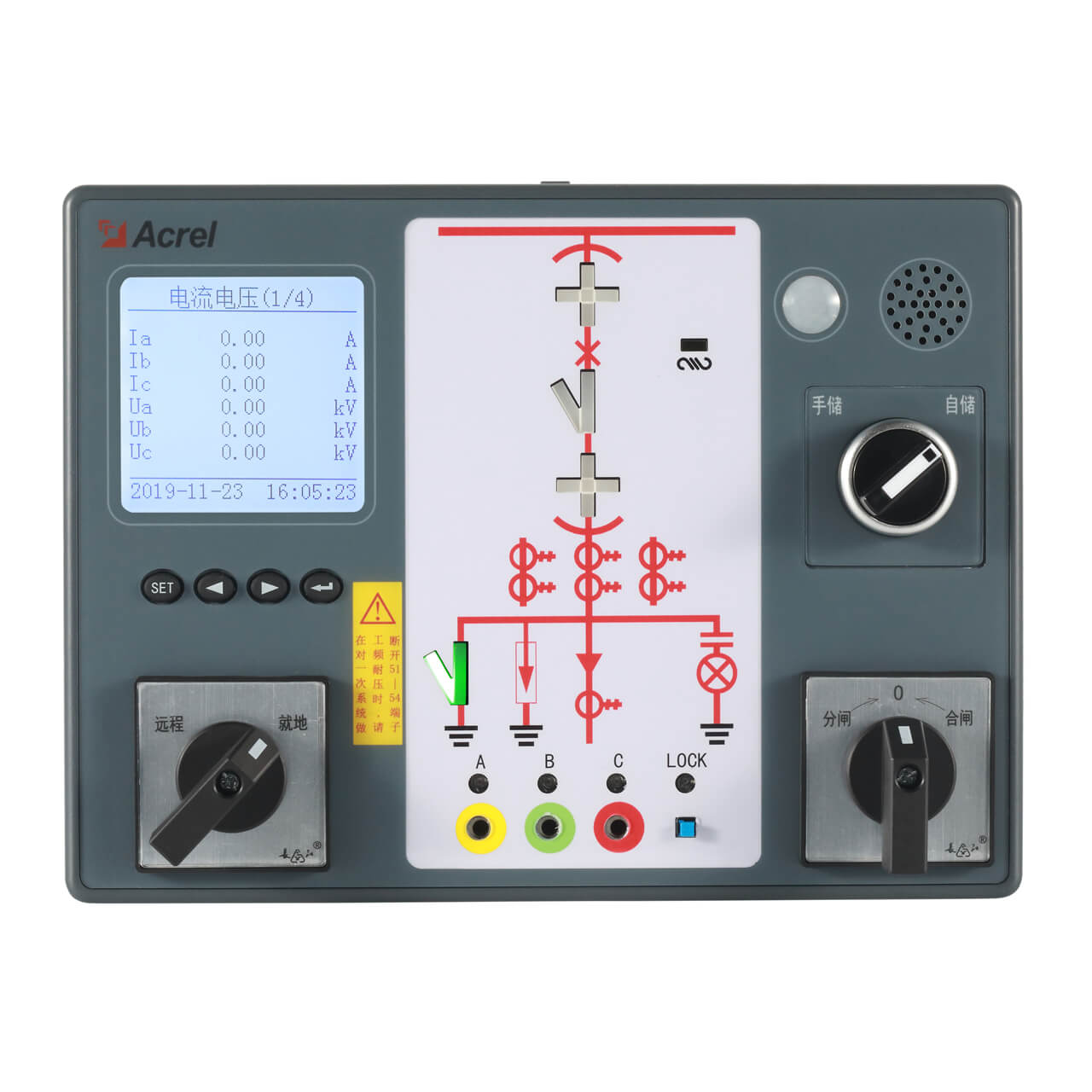
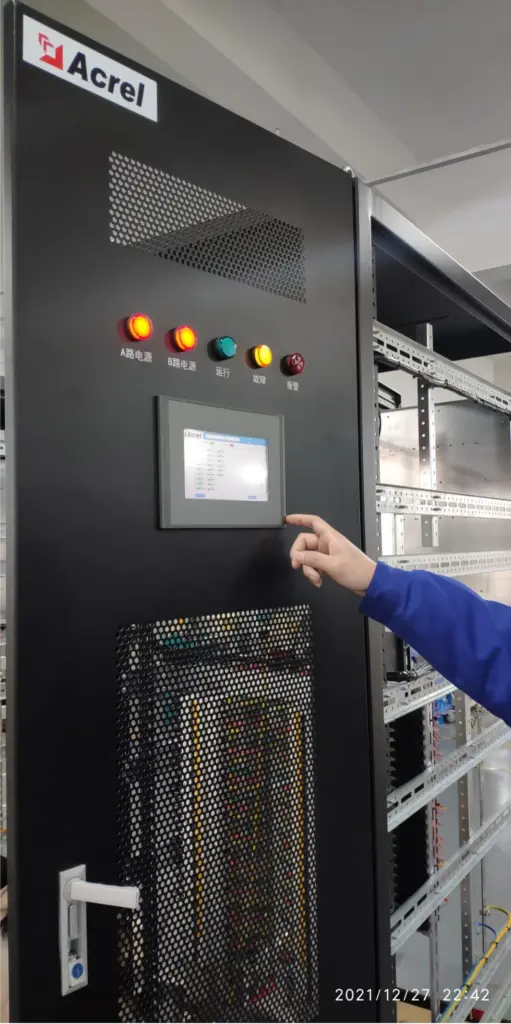
ATP007/010Kt Local HMI
Provides virtual meter views, incoming and outgoing circuit pages, alarm summaries, historical records, event logs, and RS485 or Ethernet upload.
Sensors, Gateway, and Software
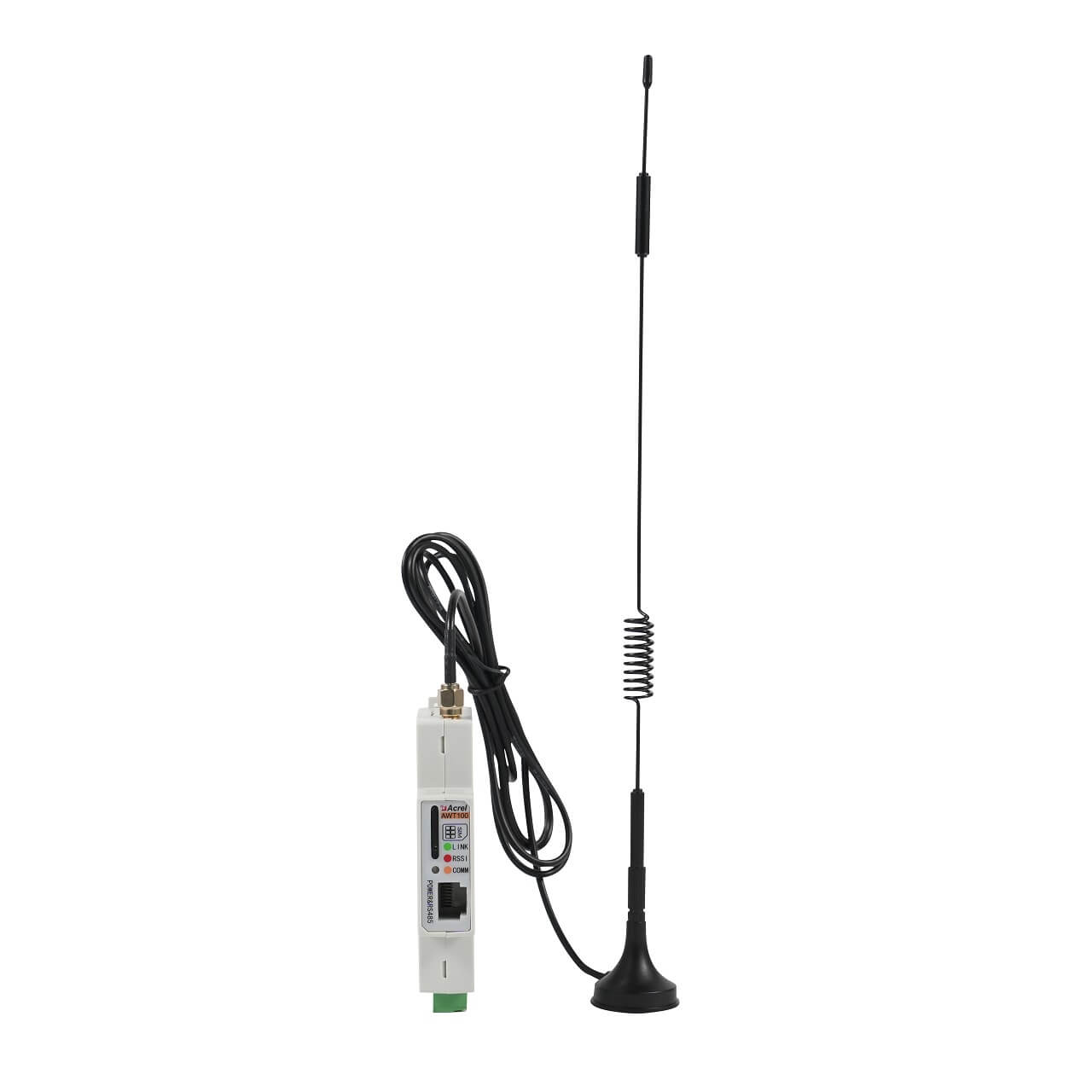
AC CTs and DC Hall sensors are selected by circuit type, current range, space, and accuracy requirements. A gateway aggregates devices and converts protocols. AcrelEMS-IDC or third-party DCIM software provides trends, alarms, PUE data, capacity analysis, and tenant reports.
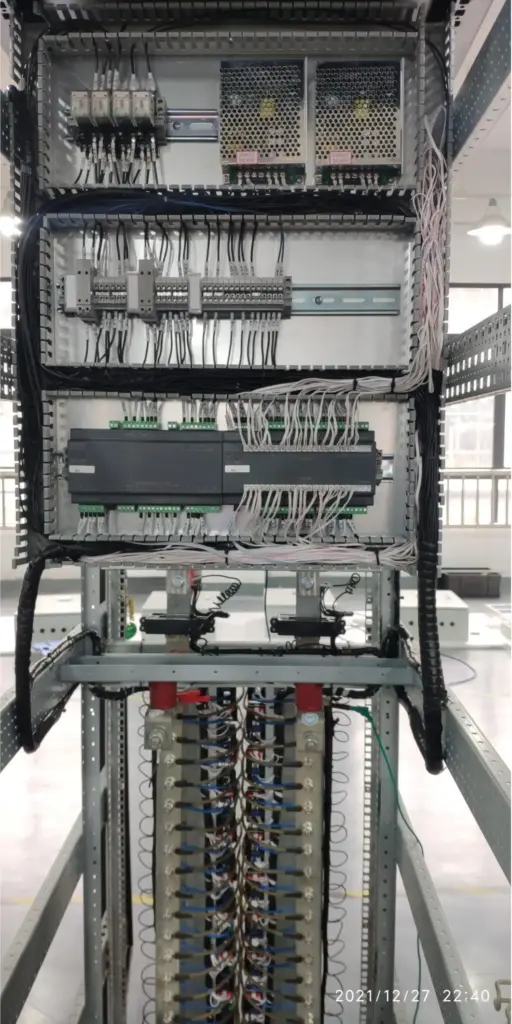
Typical Deployment Scenarios
AI and GPU Data Centers
Rack power monitoring helps identify branch utilization, load concentration, and available capacity for additional GPU servers.
High-Performance Computing Centers
Historical branch data supports changing computing loads and expansion planning. The supplied material includes supercomputing and data center references.
Colocation Data Centers
Circuit-to-tenant mapping supports energy allocation, customer reports, cost-center accounting, and billing transparency.
Hyperscale, Telecom, and Edge Data Centers
The modular architecture supports large circuit quantities, mixed AC/DC distribution, remote operation, and limited panel space. It also suits GCC AI data center power efficiency monitoring projects requiring centralized measurement and facility-system integration.
Project Case Study
ByteDance Large-Scale Data Center Power Monitoring Project
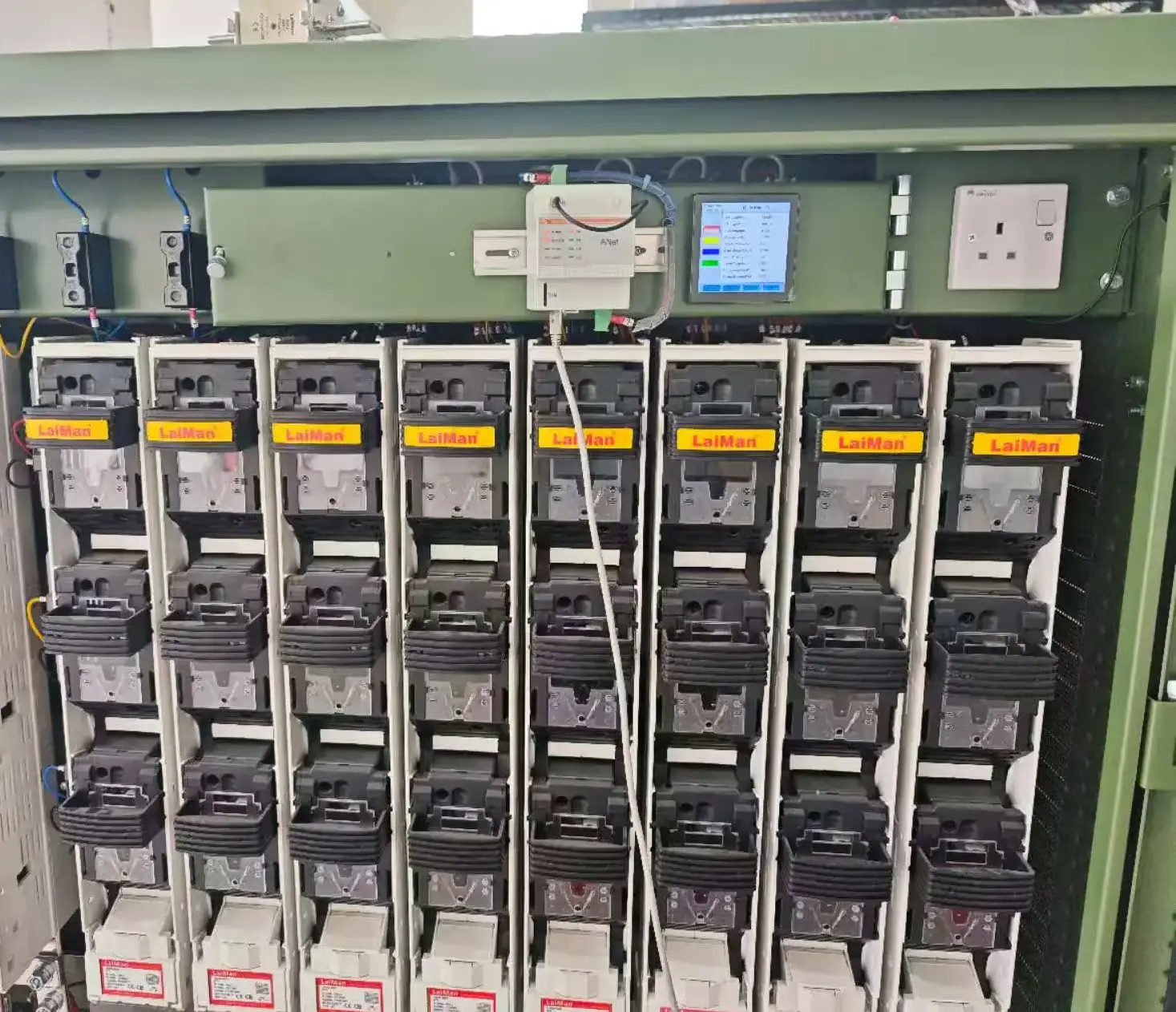
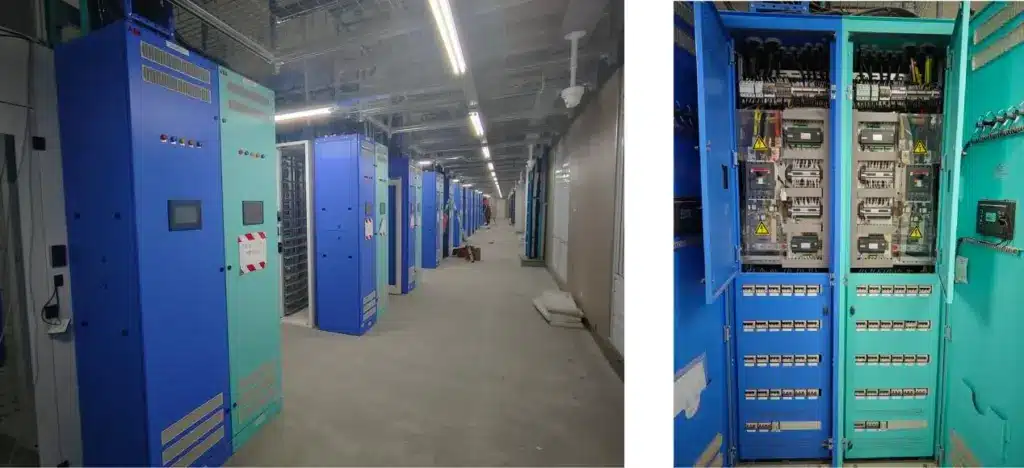
Acrel provided a precision power monitoring solution for ByteDance’s large-scale data center project in Datong, Shanxi Province, China. The project includes multiple data center buildings and supporting power infrastructure, with capacity for up to 600,000 high-performance servers.
The solution deployed AMC100 series multi-circuit power monitoring devices, precision current transformers, local HMIs, and sensors for column-mounted power distribution cabinets. In the initial deployment, 592 column cabinets were equipped with Acrel monitoring systems, with further expansion across additional data center buildings.
The system provides real-time power monitoring, branch circuit visibility, and operational data analysis, supporting efficient power management, capacity planning, and reliable data center operation.
Frequently Asked Questions
The selection depends on:
Number of monitoring points
AC/DC distribution structure
Rack density
Required accuracy
DCIM integration requirements
Acrel engineers can provide customized monitoring architecture based on project requirements.
Yes. Acrel provides complete solutions including:
Monitoring devices
Sensors
Communication gateways
Local HMI
Energy management software
Technical support
Yes. The modular design supports retrofit applications where existing power panels require additional monitoring without major electrical modifications.
It measures incoming and outgoing electrical data and maps circuits to racks, PDUs, GPU clusters, or tenants.
BCM shows actual utilization, identifies overload risks, and supports capacity checks before high-density equipment is added.
Yes. The AMC100 family includes separate AC and DC incoming and outgoing modules.
A configured system can monitor up to 192 outgoing circuits. Individual modules commonly support 30 or 48 branches.
Depending on the module: voltage, current, power, energy, frequency, power factor, harmonics, leakage, environmental data, breaker status, and alarms.
Yes. It provides granular data for PUE calculation and analysis. Improvement depends on actions taken from the data.
It provides branch- or tenant-level energy data. Regulated settlement may require certified meters.
Yes, through RS485/Modbus RTU or optional Ethernet/Modbus TCP, depending on configuration.
Related Resources
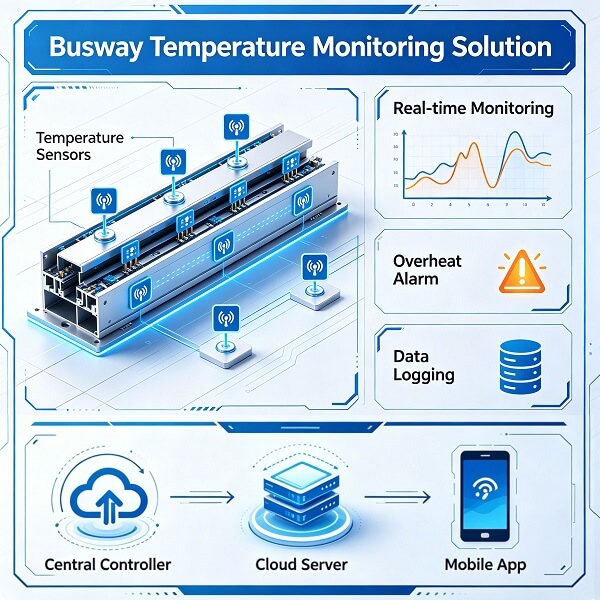
Busway Temperature Monitoring Solution
The official Busway Temperature Monitoring Solution covers tap-off units, joints, busway surfaces, and long-distance busways using contact, infrared, or fiber-optic monitoring with RS485 or LoRa communication.
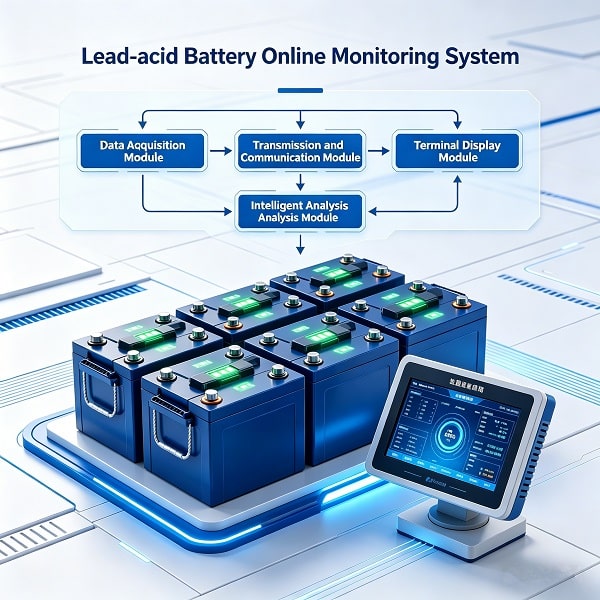
Lead-Acid Battery Online Monitoring System
The official Lead-Acid Battery Online Monitoring System measures battery voltage, internal resistance, temperature, string current, SOC, and SOH, with testing, alarms, records, and remote monitoring.
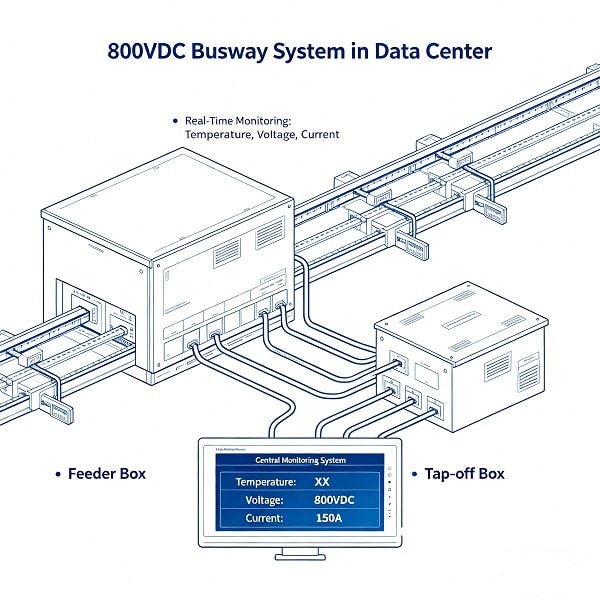
HVDC 800V Busway Monitoring Solution
The official HVDC 800V Busway Monitoring Solution monitors feeder and tap-off boxes for voltage, current, power, energy, temperature, leakage, digital status, and communication conditions.
Conclusion
Precision power monitoring provides branch-level visibility for capacity planning, PUE analysis, real-time alarms, rack or tenant energy allocation, and DCIM integration.
Acrel supports monitoring-point design, module and sensor selection, wiring diagrams, communication architecture, and platform integration.